
The UK's Former 'Village Of Millionaires' Is A Dreamy Escape Near Cromer With Fresh Seafood And A Sandy Beach
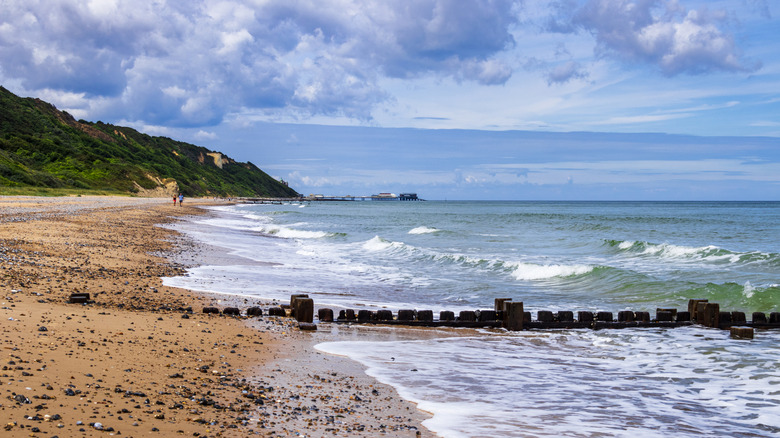
Standing on a continuously transforming cliff buffeted by the elements is a small, quiet village that appears as if in a dream. Victorian and Edwardian buildings, a medieval church, and remnants of historic buildings lost to coastal erosion create an evocative atmosphere in Overstrand, a Norfolk fishing village that became an unexpected 19th-century seaside retreat for some of the U.K.'s rich and famous. The village's transformation was thanks to Clement Scott, a theater writer for the Daily Telegraph, one of the U.K.'s most popular newspapers.
Scott stumbled upon Overstrand in 1883 while walking the cliffs from Cromer. He saw the original abandoned tower of Sidestrand's medieval St. Michael's Church surrounded by poppies and was so moved that he started writing about Overstrand as "Poppyland" (via Eastern Daily Press). Inspired by his poetic descriptions of Poppyland, some of London's elite started building in Overstrand. With a number of buildings designed by Sir Edwin Lutyens, one of the U.K.'s most renowned architects, Overstrand quickly became a stylish destination known as "the village of millionaires" (via Experience Norfolk). In fact, at one point, six millionaires had homes in the village, which only had a population of a few hundred.
Winston Churchill visited Overstrand, where his mother spent her holidays, and a patron of the arts, Liberal MP, and gay icon Lord Battersea built an impressive home that still stands. Today, Overstrand has 13 listed buildings, so visitors can experience a sense of what it was like in its heyday. It never lost its identity as a fishing village either, as seen in the fresh seafood served in some of these historic buildings. The village offers access to coastal walks and a tranquil sandy beach, making it clear why this was a favorite 19th-century getaway.
Fascinating history and fresh seafood in Overstrand
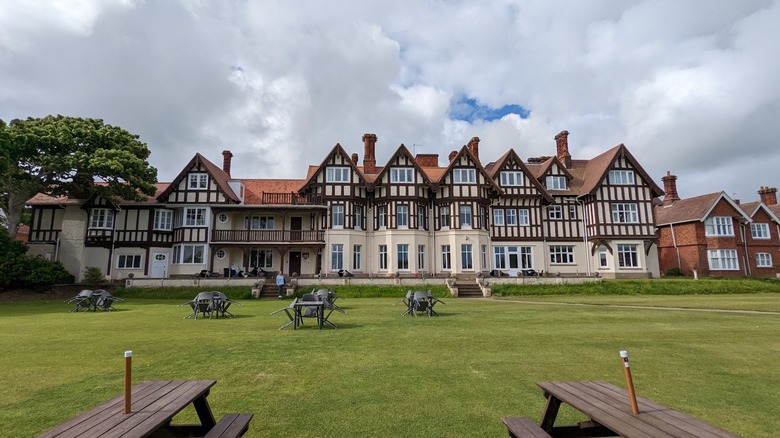
Architecture buffs can have a field day at Overstrand, which has several Lutyens buildings. The Pleasuance, now a Christian holiday center, consists of Lord Battersea's two villas that were constructed from 1897 to 1899. Secured behind imposing gates, The Pleasuance has wild and overgrown Italian gardens, and much of its land was divided up and sold after the death of Lady Battersea in 1931. Built in 1900, Overstrand Hall was once the home of Lord Hillingdon. Also designed by Lutyens, the building mixes stone, timber, flint, brick, and tile in a style that's Jacobean, classical, and Italianate.
But perhaps nowhere encapsulates Overstrand quite like the Sea Marge Hotel, built between 1908 and 1912. It was originally the home of Sir Edgar Speyer, a German-American financier who was forced to leave the U.K. after being accused of being a German spy during World War I. Winston Churchill made a telephone call from Overstrand on July 26, 1914, before returning to London as war approached. Feel the history permeating the walls of this Edwardian treasure before sitting down to a lunch or dinner of fresh seafood and sea views. The seasonal menu may include dishes with Cromer crab, haddock, and sea bass.
While England wasn't featured among the food destinations highlighted in this Islands article, coastal villages like Overstrand could make folks reconsider. Seafood lovers can also check out the White Horse, a traditional pub in an 18th-century building. Its focus is local, with fish smoked and ice cream churned on-site. Dishes include produce from the area like Cromer crabs when they're in season, plus fish and chips, smoked haddock, and mussels. Or head to the Overstrand car park and find the fisherman's hut nearby, where you can get fresh crab and lobster in season.
Overstrand's peaceful beach and coastal walks
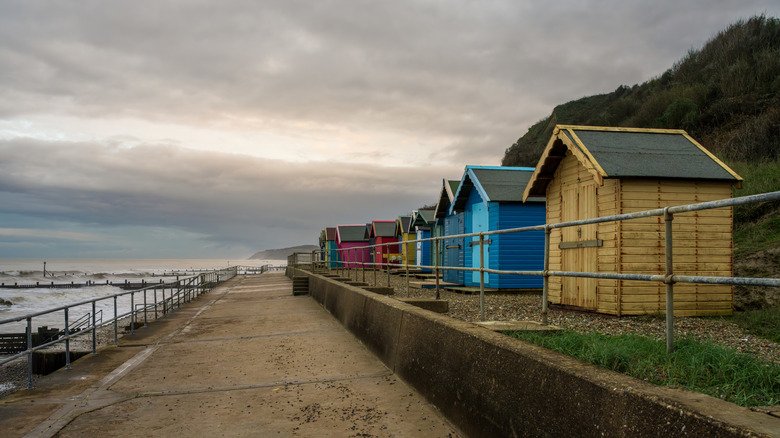
Overstrand's sandy beach is a quieter alternative to neighboring Cromer, whose beachside cliffs and picturesque pier have made it a popular destination. With its views of Cromer's pier and its colorful beach huts, Overstrand Beach is a lovely place to enjoy Norfolk's coast. There's a paved path down to the beach, which is accessible from the car park. When the tide is in, you'll only be able to get to the promenade. So, check the tide times here. Overstrand Beach is dog-friendly, but from May 1 to September 30, dogs aren't allowed on the central part of the beach and must be kept on a leash along the promenade and access slopes. Although amenities on the beach itself are limited, you can enjoy a meal and sea view from the Cliff Top Cafe a few blocks from the car park.
If you want to walk to Cromer, you can do so along the shore or the clifftops. The 5.9-mile Cromer and Overstrand Circular combines coastal and cliff paths, so just be aware of when the tide is coming in. Hikers can take their pick in Overstrand, which lies along the Norfolk Coast Path. You can walk the 2-mile section to Cromer or take the cliffside path towards Trimingham, known for its epic scenery. Note that the Norfolk Coast Path in Overstrand is currently diverted inland along the Paston Way because of a cliff fall that closed part of the promenade.
Overstrand is just 40 minutes from the unique shops and historic delights of Norwich, so it's ideal for a day or overnight trip to explore the Norfolk coast. If you'd rather not drive, you can take a bus from Norwich. It takes about 1.5 hours and requires a connection. Norwich Airport (NWI) is the closest hub and serves international destinations.