
Between Birmingham And The Shropshire Hills Is A Market Town With Quiet Charm And A Wildly Scenic Cliff Railway
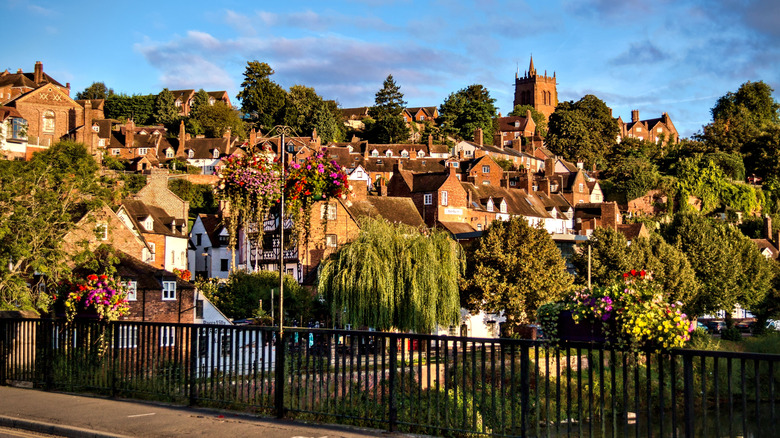
Sitting just 31 miles west of Birmingham, England, and roughly an hour's drive from the city's international airport, Bridgnorth is a historic market town in Shropshire with views that King Charles I reportedly proclaimed as the "finest in my domain". That famous panorama can be enjoyed from Castle Walk, overlooking the River Severn and the town's sandstone cliffs. Today, the town's charming downtown is full of eclectic businesses offering a quiet getaway for the day or for a long weekend.
Bridgnorth leans into its history and location as an important economic driver in the county. It continues to uphold its historic reputation as a market town, with both independently owned shops and chain stores lining its historic roads. But it truly comes alive every Friday and Saturday when it hosts its market on High Street, with a Sunday specialty market taking place twice a month. Bridgnorth is also home to several outdoor festivals, such as the grassroots Music and Arts festival and the Beats Festival, which held its inaugural event in summer 2026 to raise awareness for Cardiac Risk in the Young.
While river traffic helped fuel its reputation as a market town and river port, Bridgnorth is most easily accessible by car. Bridgnorth's location makes it a prime base for exploring the Shropshire Hills National Landscape, a scenic escape with abandoned ruins, trails, and rolling hills. The town is only 20 miles east of the protected landscape, which spans more than 308 square miles, making it an ideal home base for anyone looking to explore heritage destinations in Britain.
Bridgnorth's beloved Cliff Railway
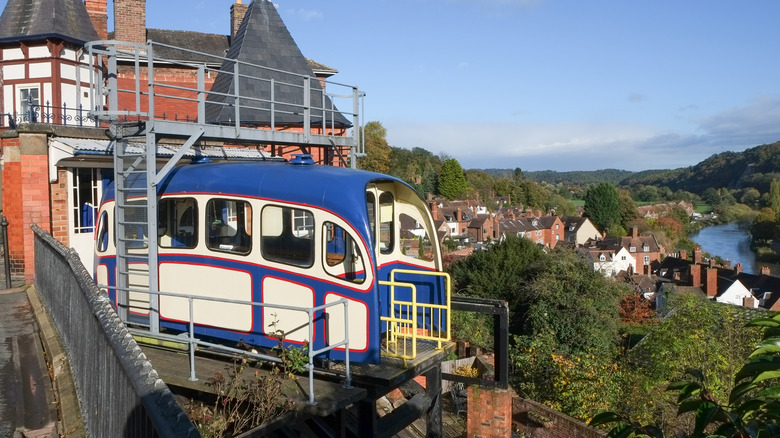
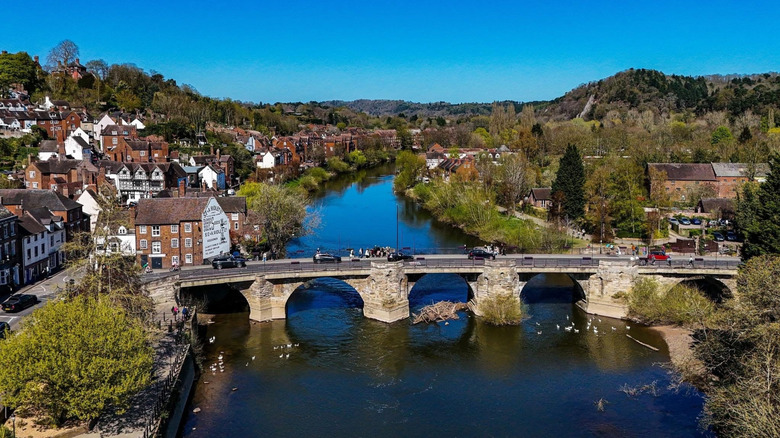
The name Bridgnorth comes directly from the bridge built over the River Severn further north than an earlier crossing, and the town's High Street also lives up to its name. The commercial street is in High Town overlooking a cliff 111 feet above the Severn River. Fortunately, reaching High Town is much easier than it was a few centuries ago. Before the 1890s, getting between High Town and Low Town meant tackling the steep Cartway, the only route wide enough for carts until New Road opened in 1786, or the Stoneway Steps. The Cliff Railway, proposed in 1890, offered a much easier alternative. While funiculars in Europe may bring to mind images like Lisbon's most photographed street, Bridgnorth Cliff Railway has assisted travelers since the 19th century and more than holds its own on the scenic front.
The railway was created in 1892 and is the oldest and steepest inland funicular in England. The funicular was once powered by gravity and water, but the current cars are fully electric. Two tracks run parallel up the steep incline, offering regular service to riders for a small fee. The funicular is accessible to those with limited mobility, but those boarding the Cliff Railway must be able to walk a few steps in order to get on the train.
Low Town in Bridgnorth offers a more peaceful experience than High Town, thanks to its walkways along the River Severn, the longest river in Britain. A short walk from the Cliff Railway's Low Station is the Bridgnorth Railway Station, part of the Severn Valley Railway system. From there, trains connect to Kidderminster in Worcestershire, a river town full of Victorian streets and a nearby safari park.
What to see and where to sleep in Bridgnorth
One of the more popular historic sites to visit here is the Bridgnorth Castle and Gardens, where only a little of the original building remains. Erected in the early 12th century, the original castle was demolished in the 1600s, leaving only one tower standing at a peculiar 15-degree angle. Today, the 3-acre garden includes a war memorial and panoramic views of the river valley below.
One of the oldest buildings within Bridgnorth dates to 1580. Bishop Percy's House, built by a wealthy barge-master, still showcases the oak beams salvaged from ships to aid its construction. It's believed the building was constructed around a defensive tower, and it is one of the few medieval structures to have survived the 1646 fire that destroyed much of the town. Today it operates as a high-end tea room that also offers holiday rental apartments.
Bridgnorth's charm is fueled by a number of historic inns and pubs that welcome guests, including the Golden Lion Inn, a traditional 17th-century coaching inn. A reminder of its former role is the mounting block that still stands outside, once used by guests climbing onto their horses. The historic Shakespeare Inn, first licensed in 1792, regularly hosts live music on weekends and serves traditional English food every day of the week.