
Don't Put This On A Luggage Tag If You Want To Keep Your Identity Safe
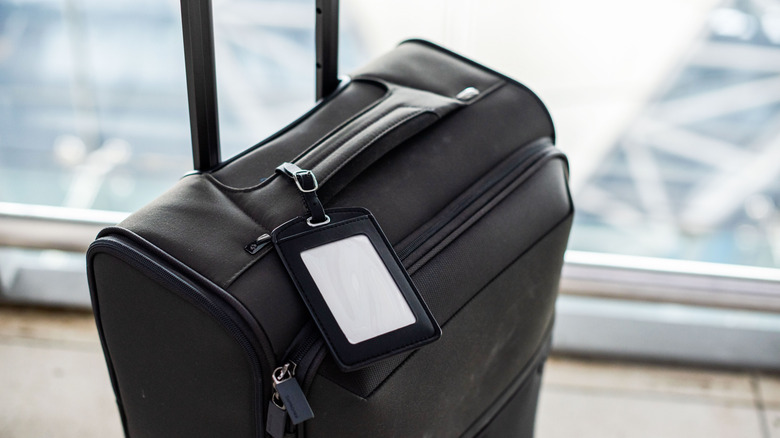
Luggage tags are small objects with a big function. While it's important to travel with one, it's even more important to consider what you're putting on it. Many travelers add their contact information, so if the bag is lost, people know where to send it. In 2025, 24 million bags were mishandled (meaning delayed, lost, or stolen), according to Euronews. That's a lot of personal information floating around, which is why it's not a good idea to put your home address on your luggage tag.
Although sometimes there are mishaps and Mercury retrogrades that lead to mishandled luggage (particularly if you're flying with American Airlines), it's not always a case of being misplaced. SITA reported that 8% of bags were lost or stolen in 2024. If someone steals your bag and it has your home address, then that person now has that information. Your bag doesn't even have to be stolen for it to be an issue. Although in the modern world, privacy mostly feels like a hazy dream, a visible home address on your bag tag lets others know where you live and that you're not home, allowing for potential break-ins while you're traveling. The Zebra reports that only about 28% of burglaries occur when someone is at home, meaning that the other 72% happen when the house is empty. Keeping this information private can only protect you.
The airline uses a bag tag to track luggage. But since they can get ripped off en route, you'll still want a luggage tag. The best information to include is your name, phone number, and email address in case you're traveling somewhere with limited cell reception. This is all an airline needs to contact you, and then you can coordinate a return address with the airline.
How to keep your identity and bags safe
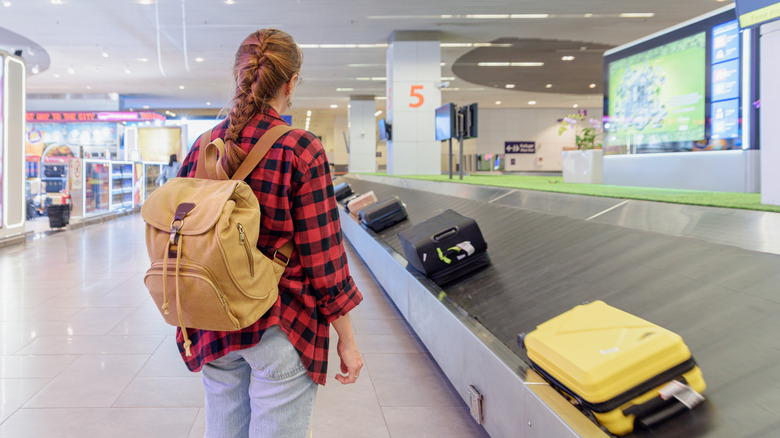
There are easy ways to keep your luggage and identity safe while traveling, especially if you're flying with airlines that are the most likely to lose your luggage. Consider putting a Bluetooth tracker in your bags to find your misplaced baggage, like an Apple AirTag or Chipolo Loop (for Android users). According to SITA Baggage IT Insights 2026, the use of Apple AirTags and the Find My app reduced lost luggage by 90% and significantly sped up recovery times too.
Some airlines, like Alaska Airlines, Swiss, Lufthansa, and Qatar, have electronic luggage tag options. These devices connect to your smartphone to create a digital bag tag for your flight, allowing you to check in at home and input your contact information so the airline can access it if the bag is lost. You can also use a QR luggage tag, which allows anyone to scan a QR code and message you anonymously without seeing your information. Regardless, it's best to get a tag with a flap or cover so people can't easily spot your info. It's also recommended to have your basic contact information on a card inside your luggage in case the tag gets ripped off.
It's also wise to take pictures of your luggage before departing, which you can share with the airline if your bag gets lost. Make sure to remove old baggage stickers, and hold onto your current baggage tags until you get your luggage — that ticket number is important for tracking your things. And if your luggage does get lost, file a report immediately with the airline's on-site baggage representative. If they're not available, call the airline to start your report. What's important is to file your report before leaving the airport.