
What A Hotel Do-Not-Disturb Sign Means For Housekeeping
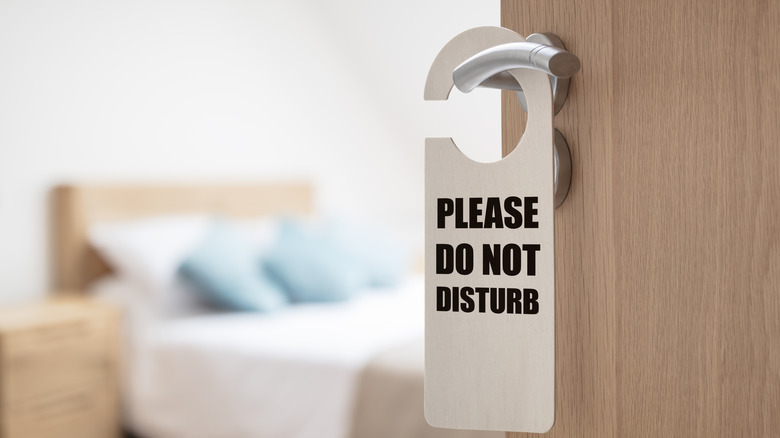
Whether you hope to get some extra shut-eye or plow through work undeterred, gracing your hotel doorknob with a "do not disturb" sign can bring you instant peace of mind. However, that's hardly the case for housekeeping, who you've just inadvertently tasked with a fresh set of record-keeping and important protocols. If you've ever wondered what "do not disturb" means for housekeeping, at first sight, it simply signals "please skip cleaning this room." But the meaning of "DND," as it's known in industry parlance, changes significantly the longer the sign stays up, requiring housekeeping to handle your stay with some carefully nuanced rules.
Generally, the first time housekeeping sees the DND placard — or, in some hotels, a small light next to the doorframe that's activated by a privacy button – they avoid knocking, instead noting and sharing your room status with their supervisor. If the sign is hung in the morning, housekeeping may circle back sometime before 3 p.m. to see about cleaning your room during the afternoon shift, according to SupplyClub. But if your DND sign remains, housekeeping once again makes a note and might alert their supervisor. Depending on the hotel, the supervisor may then call your room or pop a note under the door to gauge your cleaning intentions.
Leaving the sign up for 12 hours or more is where things get sticky with the hotel's obligation to conduct a welfare check. After the 2017 mass shooting at Mandalay Bay in Las Vegas, during which the shooter's preparations went undetected while a "do not disturb" sign hung on his door for three consecutive days, several hotels, including Walt Disney World Resorts, Hilton, Marriott, and Hyatt, changed their timelines for performing welfare checks. Now, depending on the hotel, you may receive a knock on your door after having a DND sign displayed for 24, 48, or as little as 12 hours. And if housekeeping has reason to suspect a safety issue or security threat, they may enter your room without permission.
How to use the do-not-disturb sign correctly

Only hang your "do not disturb" sign on the door to temporarily pause regular room cleanings. Otherwise, the best way to avoid inconveniencing everyone involved is to share your privacy plans in advance. Hotels know fussy babies, sleep, and work commitments shouldn't be interrupted, which is why many properties honor requests to spruce up your room or drop off clean towels at a time of your choosing. Some hotels even reward sustainable stays that avoid rote cleanings, gifting guests with perks like points or vouchers for minimizing water and product consumption.
Incorrectly using the DND sign is also one of the most common things hotel housekeepers can't stand. Hotel staff on Reddit's r/askhotels mention meticulously recording which rooms had DND signs, only to later be accused of skipping cleanings by guests who used the placard. One hotel worker shared that their property does DND sweeps a whopping three times per day, while another documents "do-not-disturb" status by taking timestamped photographs. Help housekeeping out by learning the hotel's cleaning schedule and removing the doorknob sign during servicing hours.
If you didn't share your privacy plans in advance, respond to any of the hotel's calls or notes, especially if the sign has been up for more than 12 hours — it's just one small way to be a much better hotel guest. If you'd rather avoid the DND hoopla altogether, an Airbnb might be a better choice for you than a hotel.