
Between Kirkcaldy And St. Andrews Is A Historic Village With Coastal Charm, Art, And A Sandy Beach
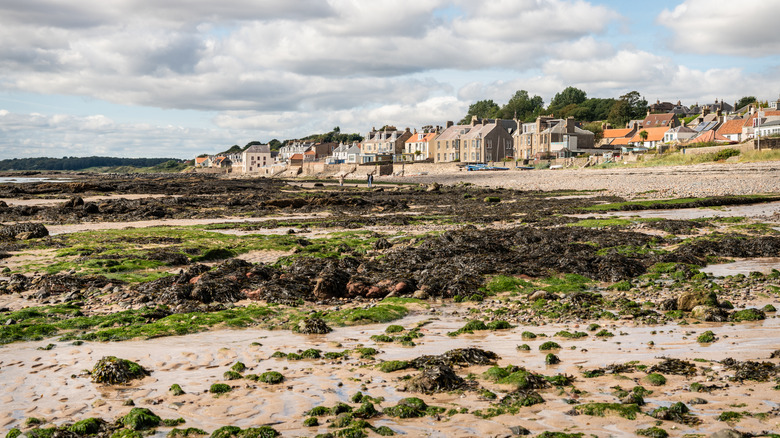
On the coast of Scotland lies Lower Largo, a historic village with a quirky art scene, a sandy beach, and a famously fascinating tie to a beloved work of literature. Wander through the quaint streets and look for public art — the Malagan Sculpture, for example, was carved by local artist Alan Faulds out of Scottish oak. It was inspired by the Roofed Poles in Lithuania and overlooks the sea in his garden along Main Street. And if you visit during Largo Arts Week, held in July every year, you'll get to engage even further with the town's creative scene via folk music, poetry, sculpture, and programming featuring renowned artists.
Lower Largo is nestled right along the shore on the northern end of the Firth of Forth estuary. Situated in Fife, this fishing village is approximately 12 miles, or a 25-minute drive, from St. Andrews. From Kirkcaldy to the west, it's 13 miles, or a 26-minute drive along the coast. But however you get there, just make sure you don't call Scottish people English or British when you arrive.
Lower Largo and its surrounding area enjoy mild temperatures — in July, the warmest month, temperatures average around 58 degrees Fahrenheit; in January, temperatures average about 39 degrees. Whenever you take a trip to Lower Largo, just expect plenty of rain. You'll want to bring a rain jacket, layers of clothing, waterproof walking shoes, and a waterproof daybag.
Lower Largo was home to the real Robinson Crusoe
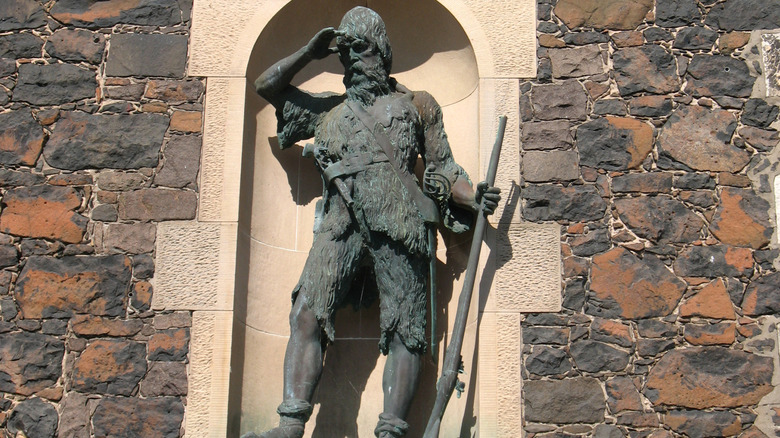
Perhaps the most popular reason to visit Lower Largo in Scotland is to dive into the world of Robinson Crusoe. In fact, Alexander Selkirk, the man who inspired the fictional character, was born right here in 1676.
His birth name was Alexander Selcraig, and he was a bit of a rebellious spirit in the Fife fishing village. He was in his 20s when he started going on sailing expeditions, and in 1703, he joined pirate William Dampier on a journey to South America as a navigator (it was around then that he started going by Selkirk). But he really was marooned — after a tussle with the captain of one of the expedition's ships in 1704, he asked to be put on Más a Tierra Island, located 400 miles off the coast of Valparaíso, Chile. When none of the crew joined him, he was left to fend for himself until he was rescued in 1709.
Selkirk would inspire the work of many writers. Many believe that Daniel Defoe's 1719 novel, "Robinson Crusoe," is based on his adventures. And today, it's one of the most enduring and recognizable works of literature. So when you're in Lower Largo, you'll want to visit the large statue of him along Main Street, erected on the site where he was born.
There are so many outdoor things to do around Lower Largo
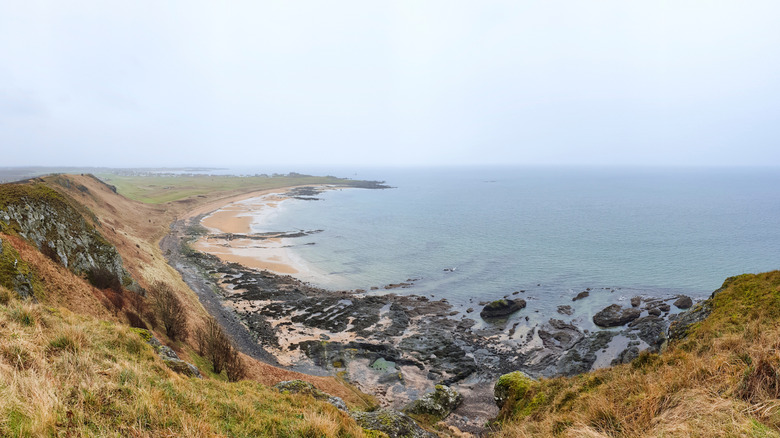
There's a lot to do in Lower Largo when it comes to outdoor activities. For one thing, the town's sandy beach is lovely. With big, craggy rocks jutting out of the damp sand, it's a great place to wander and go tidepooling.
When you've had your fill of beach time, wander a little inland through the town to the Standing Stones of Lundin, structures believed to date to the Bronze Age. Today, they tower over the green on Lundin Links, a women's golf course — Fife is known for the sport and is home to plenty of other charming villages with golf courses like Crail.
For those who fancy more of a hike, the Fife Coastal Path runs right through Lower Largo, a 117-mile-long trail along Scotland's coast from West Fife to North Fife. The East Wemyss to Lower Largo section spans just 7.25 miles and takes a little over three hours to walk. It's a fantastic option for those who want to spend a day outside — this section of the Fife Coastal Path passes seaside viewpoints, windswept fields, and even the 14th-century ruins of Macduff's Castle. It was constructed by the Wemyss family, descendants of the namesake Macduffs. The Macduffs served as Mormaers (Gaelic earls) of Fife during the Middle Ages, crowning royalty like Robert the Bruce. The King of Scots would spend some time in Dumfries, Scotland's Queen of the South.