
What Does A 'Tender Port' Mean On A Cruise Ship?
A tender port sounds like a sensitive, soft-hearted destination. However, the term actually refers to how cruise ship passengers access land-based attractions in a particular port of call. If you are on a cruise and not familiar with the term, you may be surprised when your ship doesn't actually pull up to a dock. This in no way means you won't be able to step on dry land, but it does mean you will need a tender to get you there.
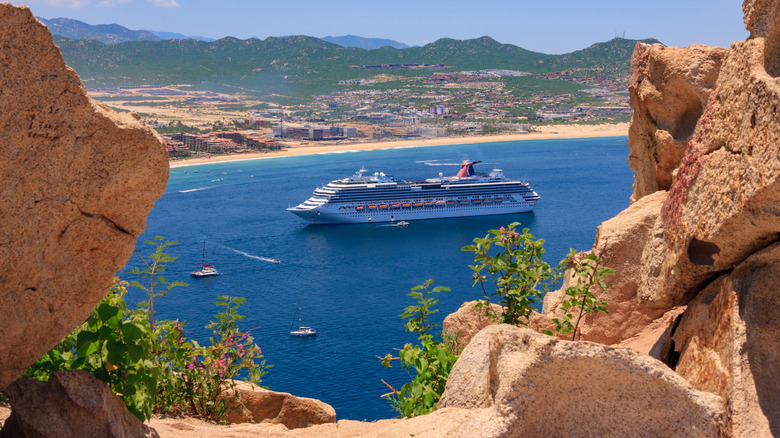
Tender ports are not necessarily uncommon. However, they likely aren't what most people envision when planning a dream cruise. When a cruise ship pulls into a tender port, it doesn't dock. Instead, it anchors or moors offshore. So, it is not possible to simply walk down the gangplank to reach shore. In order to get on land, smaller boats, referred to as tenders, are used to ferry passengers back and forth.
The most common reason this is necessary is that a particular port is not deep enough or lacks sufficient room for a massive, modern cruise liner. Inexperienced cruisers may assume tender ports are relegated to remote or downtrodden destinations. That is far from accurate. Some of the world's more popular cruise stops, such as Cabo San Lucas, Mexico, and Santorini, Greece, are tender ports. Furthermore, ports that are scheduled as docking ports may become a tender port stop for a particular cruise line at the last minute for various reasons. To that end, it may not always be possible to guarantee you won't be stopping at a tender port during your cruise. So, it's best to understand how it affects the experience.
Tender ports can be a rough experience
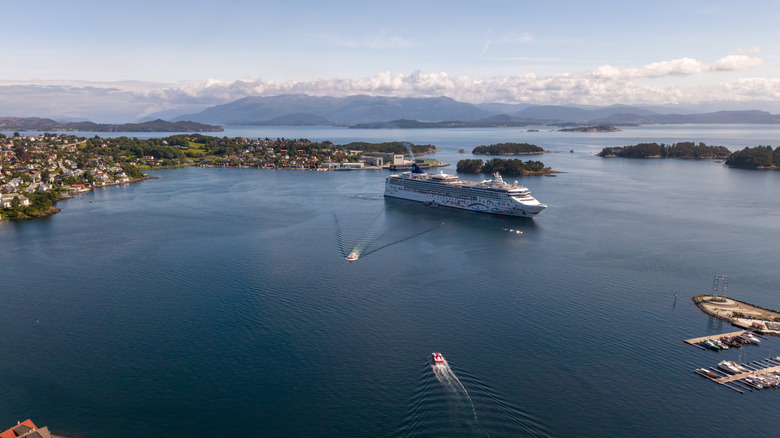
The general principle of a tender port is the same across the cruise industry – ships anchor offshore, then smaller boats pull alongside, load passengers, and ferry them to shore. However, the specifics of how the process plays out vary among cruise lines and even specific cruise ships within the same line. Tender boarding on some ships is first-come, first-served, while others require tickets for the tender in order to disembark. There are also cruise ships that give boarding priority to certain groups. It is important to find out how the boarding process works before your ship arrives at port so that you are adequately prepared.
Tendering can also limit who gets to go ashore. Unfortunately, many tenders are not wheelchair accessible. This means those who use wheelchairs or walkers or have other mobility limitations may not be able to leave the cruise ship while it is in a tender port. Another issue is the weather and sea conditions, which can effectively cancel the tender service on any given day. That means no one is able to leave the cruise ship. Even when you are able to leave, the time it takes to tender to and from the boat can eat into the time you are able to spend on land.
Such issues are one reason some claim a cruise ship is arguably the worst way to visit Santorini and why many cruisers try their best to avoid tender ports. However, most cruisers can still enjoy the best things to do in Cabo and other tender ports, so long as the weather allows and they plan accordingly. If you require mobility accommodations, check if the ship's tenders are accessible before booking. Additionally, if you are hoping to avoid tender ports, study the cruise itinerary ahead of time.