
What Does A Buoy With An Orange, Crossed Diamond Mean?
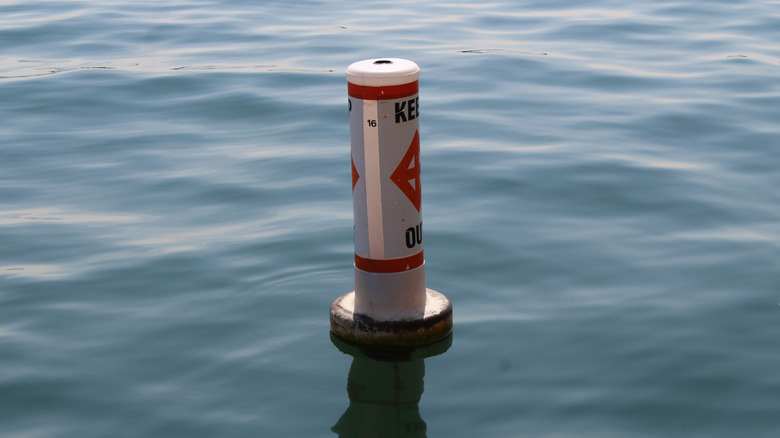
Boaters on inland waters throughout the United States are prone to seeing a number of buoys of various colors and shapes. It is important that recreational boaters understand that each of these buoys is designed to provide information, convey a message, or give instructions. Some floaters may be imprinted with text to provide specifics, but the overall meaning of a buoy is conveyed through color, shape, and symbols. To that end, a white buoy with an orange, crossed diamond is essentially a nautical "keep out" sign.
These buoys, which are literally referred to at times as "keep-out buoys," fall into a category known as special purpose buoys. There are several other white buoys featuring orange markings in this group as well. Collectively, these markers are also sometimes called regulatory or warning buoys. There are four types of white and orange special purpose buoys. Each is solid white with two orange stripes. Between the stripes is an orange symbol. This symbol denotes the difference between the various meanings of each buoy. Black lettering may be included to clarify the meaning or add specifics. However, the symbol tells you the general meaning. An orange crossed diamond indicates that an area is closed to boat traffic.
Where to expect keep-out buoys
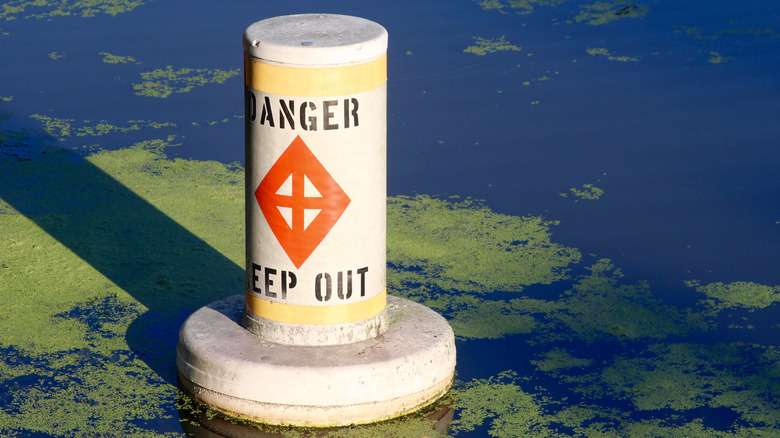
Many of the buoys boaters encounter are part of the buoy system set forth by the International Organization for Marine Aids to Navigation (IALA). The color and shape of the buoys in the IALA system, such as red and green striped bifurcation buoys, are meant to provide navigational directions to boaters and mariners. White and orange special purpose buoys, however, are not part of the IALA. They are found only on inland waters in the US. So, you won't see them while cruising in the Boating Capital of the Bahamas, but you will certainly find them on America's most scenic reservoirs and other inland waters throughout the US.
There are a number of areas in which keep-out buoys are commonly placed. On reservoirs, they will typically be found near the dam and around the spillway. These areas are usually cordoned off due to strong currents when water is being discharged through the dam. Often, several keep-out buoys will be placed in a line accompanied by a safety boom to prevent boats from entering. This same system of keep-out buoys and safety booms is also frequently utilized around designated swimming areas to prevent injuries to swimmers. Environmentally sensitive areas or protected habitats for rare species are other instances where keep-out buoys are regularly utilized.
Regardless of where keep-out buoys are located, the response is the same – do not enter the area beyond the buoys. To ensure you don't accidentally encroach on these waters, slow your speed as soon as you see any white and orange buoy until you can plainly see the symbol and any accompanying text. This is a prudent action when nearing special purpose buoys, as other white and orange buoys may be warning hazards or alerting boaters to a no-wake zone.