
Nestled Next To Leeds Is An Ex-Mining Town With Parks, Local Eats, And A Medieval Church
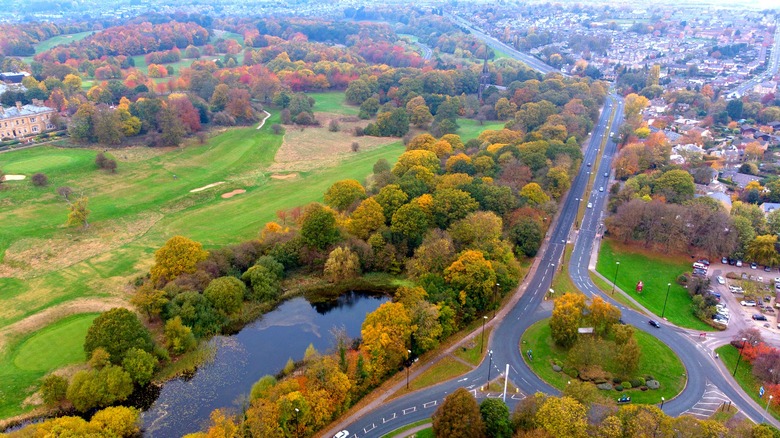
Just a few miles from Leeds is Rothwell. Known for its fascinating history, medieval Holy Trinity Church (more on that shortly), traditional pubs, and mining heritage, it promises a breadth of experiences fit for many kinds of travelers. Whichever category you fall into, be sure to look for the 100-year-old Rothwell Arch on the northern edge of town. It's made from the jawbones of a whale.
Traveling to Rothwell isn't too difficult, as it's only about a 20-minute drive from Leeds — from Sheffield, it's under an hour. When you get here, make sure to stop by The Hare & Hounds for British fish and chips or other traditional bites. If you're more in the mood for pizza, though, Wood Fire Dine is a great family-run restaurant that slings Neapolitan pizza pies. And if you're here earlier in the day or just fancy a coffee and pastry, head straight to Gray's.
When you've had your fill of the local cuisine, walk over to Springhead Park for a lovely stroll through trees, gardens, and stream banks — there's also an on-site eatery called The Pavilion Café. Meanwhile, Rothwell Country Park is not far and features plenty of open space and woodlands. And as the climate in Rothwell is classically English (short and mild summers with long and dark winters), you'll want to take a rain jacket and waterproof yet comfortable walking shoes with you. Warm layers, an umbrella, and an extra pair of wool socks also never hurt.
What is the history of Rothwell?
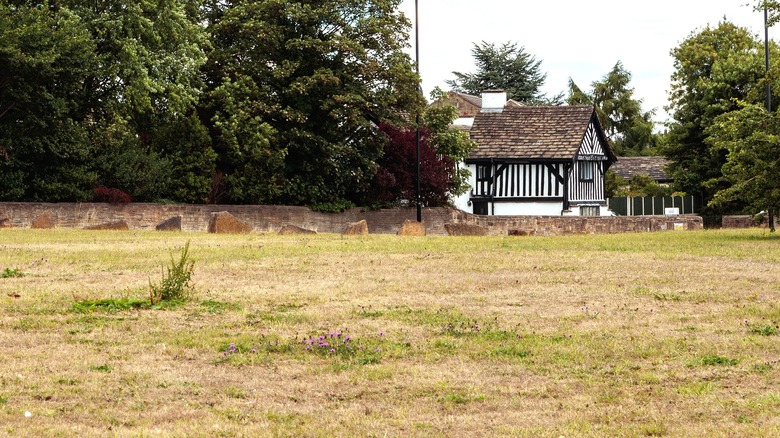
Rothwell has archaeological evidence of Bronze Age and Romano-British period occupants, but its name comes from Old English for "well by the clearing." And while it likely suffered during the Norman Conquest, it later became a hub for royalty, mining, and rhubarb.
In the Domesday Book, Ilbert de Lacy was listed as the tenant-in-chief of Rothwell in 1086. With his power granted by King William I, Ilbert built a wooden castle right across from the church (a stone structure was later added). Today, only small bits remain of Rothwell Castle, but in the early 13th century, it caught the attention of King John — the surviving de Lacy descendant was too young to fulfill his duties, so the castle temporarily became the property of the king (who called it his "Hospitium de Rowell," so it would have been more of a manor than a fortress). It was this king who would grant Rothwell its charter in 1204.
Rothwell hosted royal hunting parties in what is now Rothwell Country Park — legend has it that John of Gaunt slew England's last wild boar here in 1398. But while Henry VIII reverted the hunting grounds to pastoral green space in 1530, coal mining would later scar the land (similar to Wakefield, another ex-mining city next to Leeds). The deep mining sites closed in 1983, but resources remained: Rothwell is part of the Rhubarb Triangle, a 9-square-mile area where forced rhubarb is harvested between January and March every year.
Holy Trinity Church in Rothwell is a medieval site worth seeing
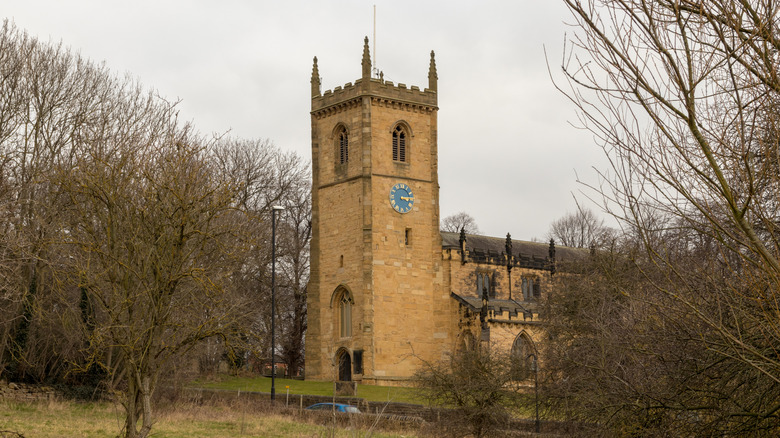
Holy Trinity Church in Rothwell is not to be confused with the church of the same name in Stratford-upon-Avon, where Shakespeare was buried. Built by the aforementioned de Lacys in 1130, the Norman-style church's site includes the remains of Rothwell Castle and the old manor grounds. When you visit, you'll want to wander around Churchfields, the outdoor space attached to Holy Trinity, to see where such important pieces of Rothwell's history once stood.
The architecture of Holy Trinity Church is classically medieval, much like that of St. Mary's Church in Fridaythorpe, a village between Bridlington and York. Inside the historic site in Rothwell, look for the weeping chancel (where the nave looks off-axis) and gilded, beamed ceilings. The square stone tower is also from the 15th century and is built in a style typical of the region at the time. If you're lucky, bells might be ringing when you visit.
The Rothwell building has undergone plenty of restoration projects throughout the years, so while it's not all purely medieval, it's still a fascinating look at the era thanks to the surviving elements. And today, you can take guided tours of Holy Trinity Church on the first Friday of the month between 10 a.m. and 12 p.m., or you can visit the publicly accessible parts of the space during a regular church service.