
A New Supersonic Jet Could Let New Yorkers Reach California Faster Than Ever
Want to fly from New York to California in half the time? It could mean you don't need to spend six hours on a plane or resort to long-haul massaging hacks like packing a tennis ball in your carry-on bag. Instead, with the possibility of supersonic passenger jets, you could manage the trip in only 3.5 hours. With over 5 million passengers flying from New York City to Los Angeles every year, that could completely change national travel for a lot of people.
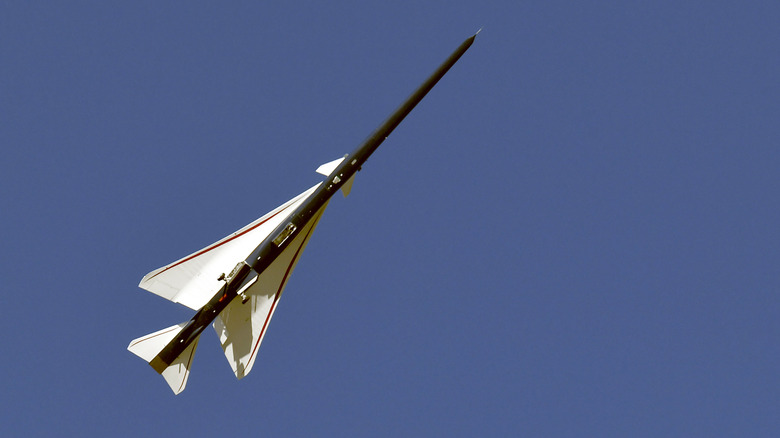
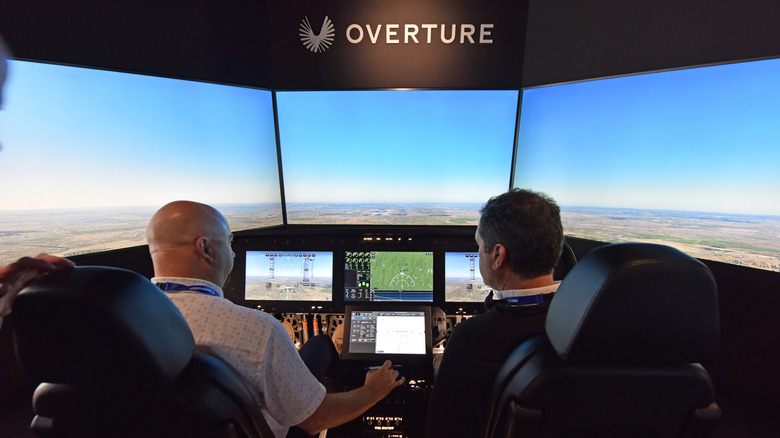
These high-speed passenger jets may soon be a reality. A recent test flight conducted in California by NASA and aerospace manufacturer Lockheed Martin of their supersonic passenger jet, the X-59, achieved supersonic speeds without creating the sonic boom that causes serious noise pollution. As well, Denver-based Boom Supersonic has been developing it's supersonic passenger plane, the Overture, claiming it can fly at Mach 1.7 (1,300 mph), twice as fast as current planes, without the boom.
Noise reduction is crucial for supersonic ambitions in the airspace over the U.S. The sonic boom's noise pollution and impact on lives was a prominent concern when the Concorde, the first-ever supersonic passenger plane, was in the skies — which is why it never flew from New York to California, only trans-Atlantic flights. Now, with the possibility of supersonic flight without the boom, U.S. President Donald Trump issued an executive order calling on the Federal Aviation Administration (FAA) to make moves that will usher in supersonic travel over the country and "deliver the next generation of air travel" while upholding safety and sustainability standards. In Congress, a new bill is proposing lifting the FAA's ban on supersonic overland flights that's been in effect for over 50 years. All of this could open the way for direct, supersonic flights from New York to California.
Are supersonic jets really feasible?
The idea of spending half as long traveling from New York to California is appealing for all the obvious reasons. But there are tradeoffs that come with flying at supersonic speeds that'll need to be dealt with before it becomes a reality — first is the environmental impact. Boom Supersonic's passenger jet burns up to seven times more fuel than current passenger planes. Most vehicles these days are lowering fuel consumption to mitigate climate change, so it's hard to imagine supersonic passenger jets getting a free pass on environmental conservation simply because they're faster — especially when climate change is creating more turbulence, a dangerous in-flight phenomenon on the rise.
Price is another hurdle. It costs billions of dollars to make a single supersonic passenger jet, which then needs to be sold to airlines. These airlines, if they're willing to purchase the jets, will then need to price seats accordingly to make back what they spent initially, plus the additional fuel. This could increase the cost of a seat by almost 40%, which prices out too many passengers for these jets to be flying every route. They'll likely all be business or first-class passengers initially, and hypothetically routes with deep pocketed business travelers like New York to California. But these passengers have a lot of luxury choices already, including Air France's new La Première suites, a stylish and comfortable transatlantic flight option.
There will still be regulatory requirements, and noise and environmental standards are right at the top of these. While recent tests have been positive, more testing is currently underway for achieving ideal efficiency, noise, and safety. However, with current technology, market demand, and legislative moves, supersonic travel between New York and California may not be so far away.