
Pennsylvania's 'Utopian Arts And Crafts Community' Brims With Beauty And Creative Vibes Near Philly

As the home of landmarks like Independence Hall and the oldest residential street in America, the Philadelphia area has no shortage of historic sites. One of the most unique historic areas in Delaware County is Rose Valley, which started as a farm and mill town and evolved into one of America's oldest artist communities. A small borough, Rose Valley is home to about 1,200 people. It's easy to miss if you don't know what to look for, tucked into the hills just south of the larger town of Media. While it feels secluded, it's not hard to reach, only about a 20-minute drive from the Philadelphia International Airport and about 40 minutes from downtown Philly.
The beautiful landscape around Rose Valley enhances its vibe as a creative paradise. There are two nature preserves flanking Ridley Creek in the southern part of the borough. Maurice Saul Wildlife Preserve, at the end of Old Mill Lane, is a 17.5-acre bird sanctuary with hiking trails that go past the ruins of an 18th-century dam. You'll also find natural landmarks like the 150-year-old Wolf Tree and Saul's Roost, a stand of white pines. More trails, such as Long Point, wind through Chadwick Wildlife Preserve across Ridley Creek, where you can also see the chimney of the Seekers After Knowledge Cabin, a remnant from the earliest days of the Rose Valley artist community.
The history of Rose Valley
Rose Valley's history predates the arrival of European settlers, when the Great Minquas Path served as a trade route for the Lenni Lenape people. In 1681, William Penn granted the land to the Vernon brothers, Quaker farmers from England. In the late 1700s, a snuff mill was built along Ridley Creek, later converted into a wool factory in the 1860s. Some of the housing built for the workers is still standing today.
It's at this point that Rose Valley's history takes a turn from the typical. In the early 1800s, the Arts and Crafts movement began to push back against the mass production of the Industrial Revolution, and Philadelphia was its center in the United States. A mill fire in 1885 had left Rose Valley mostly abandoned, paving the way for architect William Lightfoot Price to buy the land in 1901. His vision was to turn the town into a utopian community similar to the Byrdcliffe Arts Colony outside Woodstock, New York. Price designed and built workshops and stores, attracting craftspeople who grew the community to 250 residents by 1923, when the borough was officially established.
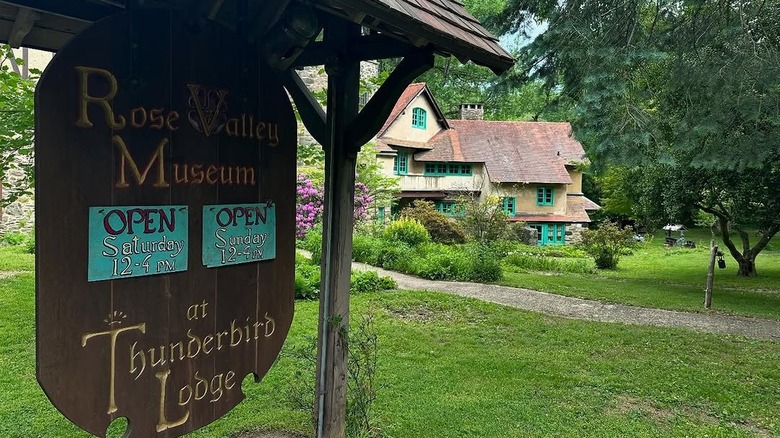
Visitors today can learn more about this history at the Rose Valley Museum. Located in the Thunderbird Lodge, a 1790s barn converted into a home by Price, the museum is open on weekends or by appointment and costs $10 to tour. There are other historic buildings in Rose Valley, too. Randal Vernon's home in the Rabbit Run area is among the area's oldest standing structures, along with the Bishop White House, believed to have been built by Robert Vernon around 1695. The Hedgerow Theatre, the oldest resident repertory theater in the United States, is in the old Hutton's Mill building, which was built in the 1840s.
Shows, food, and lodging around Rose Valley
History and the arts are Rose Valley's main draws, and you can enjoy both at the Hedgerow Theatre Company, which regularly puts on concerts and stage shows. This isn't the only way to enjoy the arts here, either. The community group, the Rose Valley Folk, has been organizing activities since its founding in 1901, ranging from variety shows to bingo nights. They also organize the Valley Voices, a local choir whose performances at the Old Mill include a popular annual holiday concert.
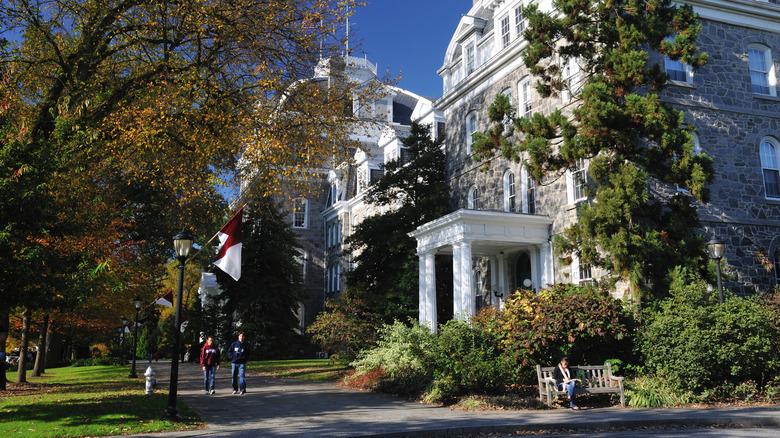
In keeping with its utopian, communal past, Rose Valley doesn't have a commercial Main Street. There are plenty of places to stay and eat nearby, though. The artsy college town of Swarthmore is just a few minutes to the east. Here, you'll find The Inn at Swarthmore, a modern three-star hotel whose in-house restaurant, Broad Table Tavern, pairs dishes made from locally sourced ingredients with beverages from local vineyards and breweries. The Inn is located in Swarthmore's quaint downtown, surrounded by several nearby cafes and restaurants along Park Avenue and Dartmouth Avenue.
Visiting foodies will want to head north to Media. The Tattooed Pig serves up an eclectic menu of barbecue, burgers, and sandwiches (their cheesesteaks get especially rave reviews). Ariano is a local favorite for Italian cuisine, including brick oven pizzas and homemade pasta. For Asian flavors, you can get authentic Vietnamese dumplings, banh mi, and pho at Nom Nam House or Thai and Japanese food at Tora Sushi. There are places to stay in Media, too, ranging from budget-friendly motels to the elegant Gifford-Risley House, a B&B whose themed suites reflect the 1877 home's Gothic Revival Victorian architecture.