
Pittsburgh's Unique Public Transportation System Offers Sky-High City And River Views
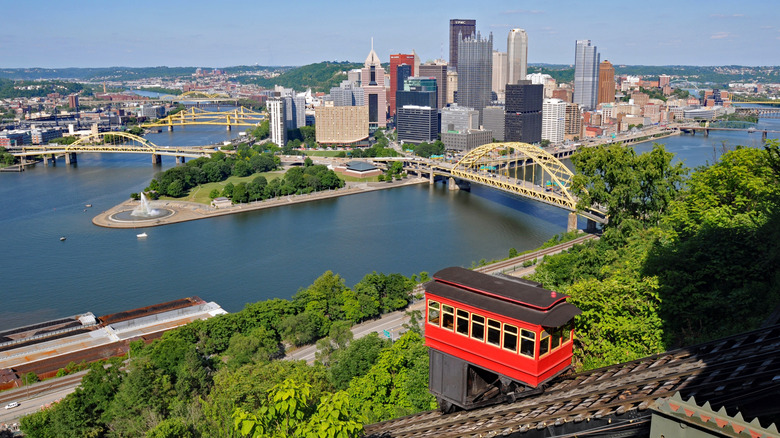
The street at the top of Mount Washington is called Grandview Avenue, and the name is quite literal: Grandview Overlook rises 450 feet above the Monongahela River, and all of Pittsburgh seems to spread out below you. From this walkway, you can gaze onto the skyscrapers of Downtown, the green triangle of Point State Park, and dozens of the city's 450 or so major bridges. You'll see the confluence of the Allegheny River and "The Mon" as they join together into the Ohio River. As this Rust Belt capital continues to enjoy a post-Industrial renaissance, its hillside overlook offers a front-row seat. There are many ways to ascend this modest mountain, from driving up the P.J. McArdle Roadway to walking up the steep curves of East Sycamore Street and the hard-to-find Saddle Trail. But first-time visitors are basically required to take either the Monongahela or Duquesne Incline, a funicular train car that ascends and descends Mt. Washington all day long.
At the time of this writing, for a meager $3.50 round-trip, you can step inside the bright red box of the Monongahela Incline and levitate up these forested slopes. Large windows provide 360-degree views of the water and cityscape as they slowly fall away beneath you. No matter what the season or weather patterns — Pittsburgh gets a lot of rain — the Incline offers a quick and pleasant journey to the scenic plateau. Yet the Incline is more than just a fun ride for tourists. The funicular hearkens back to Pittsburgh's working-class heritage, having served as vital mass transit since its opening in 1870. And its clever engineering works just as well today as it did in the Victorian Age.
The Incline is a moving part of Pittsburgh history
Pittsburgh is a very hilly town, with entire neighborhoods built on breakneck slopes and many streets composed of hairpin turns. In fact, the steepest street in the country is Canton Avenue, with an average grade of 30% along its 600 feet. The Steel City is also famous for its bridges, and pedestrians have long relied on a network of more than 700 outdoor staircases, which behave like vertical sidewalks. Spend a weekend in Pittsburgh without a car, and you'll get a serious workout. Just watch your step: Pittsburgh earned the infamous title "America's Death Stair Capital."
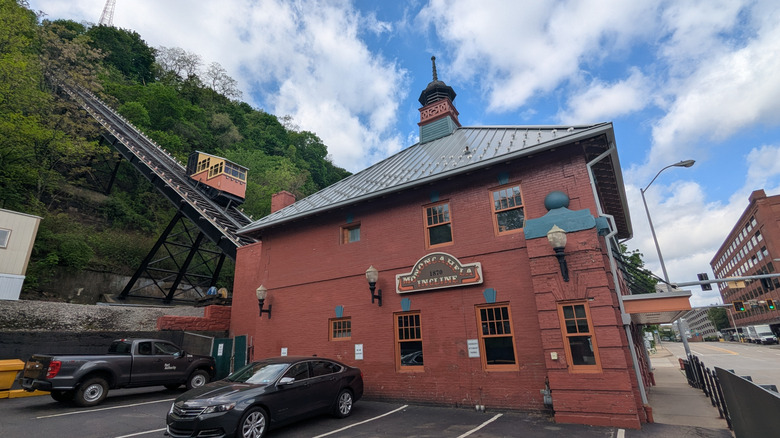
Then there's the Incline and its storied past. This system was first built to transport laborers up Mount Washington, which was then known as Coal Hill. Shortly after the Civil War, engineer John J. Endres oversaw the construction of the Monongahela Incline. Urban funiculars were still a brand-new technology; prototypes for passengers were installed in Lyons, France, only eight years earlier. The system used two pairs of tracks, with two separate cars connected to cables and pulleys. Each car served as a counterweight for the other, passing each other in the exact middle of each trip. The Incline was electrified in 1935 and has undergone several upgrades over the years, but the cars and tracks retain their antique aesthetic.
Seven years after the Monongahela Incline was completed, the city built a second funicular, the Duquesne Incline, about a mile downriver, under the direction of Samuel Diescher. At their height of popularity, Mt. Washington had four funiculars in all; only these two are still in operation. The Duquesne Incline's cars also take you to Grandview, with more direct views of Point State Park, although the price is a "steeper" $5 round-trip (at the time of writing).
Visiting Pittsburgh and enjoying the Incline
Pittsburgh has a newly renovated airport, and you can usually drive or taxi into Downtown in under 30 minutes. You'll find dozens of hotels, either in Downtown or across the river, most of them costing between $100 and $200 per night (at the time of writing). This is a great location for travelers without cars, as Downtown is a hub for the Port Authority bus system, and the city's modest light rail — known as "The T" — has several stations here. This area is nicknamed "The Cultural District," and it's a hub for theaters, art galleries, dining, and sports. Indeed, Pittsburgh's revitalized, bustling downtown in America's one-time steel capital is criminally underrated.
Both Inclines are located next to Station Square, a former railroad depot that has been converted into an entertainment complex. You can cross the Smithfield Street Bridge by bus, car, or on foot and walk right up to the Monongahela Incline station; the Duquesne Incline is just a little farther down Carson Street. There's no need to reserve your seat; just buy your tickets at the window or vending machine and wait for the next available car.
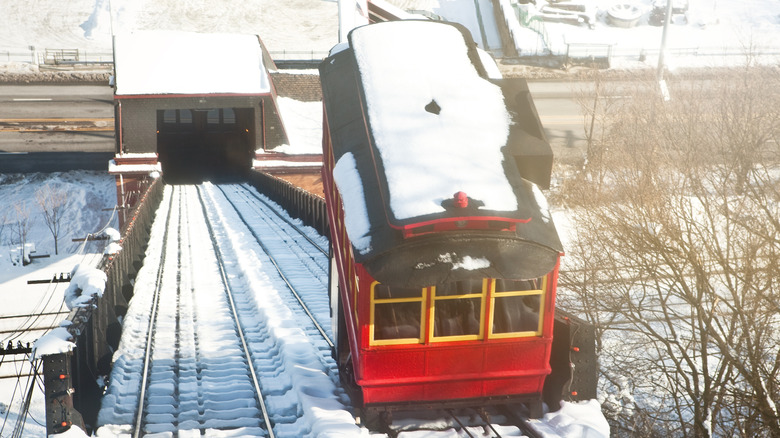
The Incline's benches are composed of polished wood, and they are first-come, first-served. Note that the Incline's cars do not have air conditioning, so they can get stuffy in the summer and frigid in winter, but the trip takes only a few minutes each way. Our advice: bring the best camera you have. And once you're done snapping photos, make your way over to another picturesque perch in Pittsburgh that promises stunning skyline views of the bustling city, the West End Overlook, less than 10 minutes away.