
This Historic 'Gateway To Texas' Is A Laidback City With Small-Town Charm And Cajun Culture
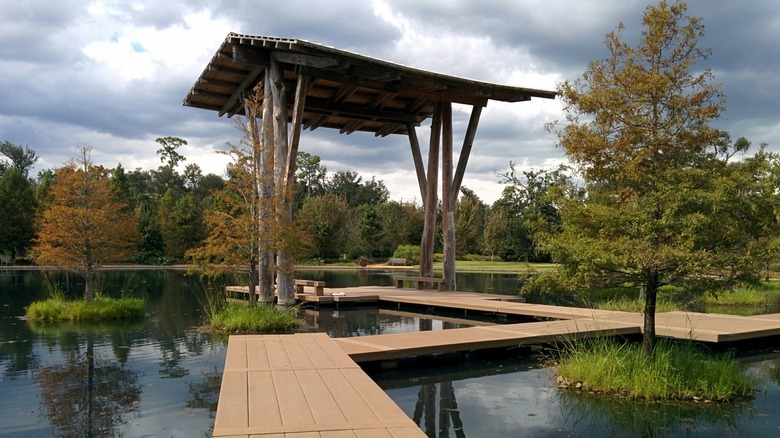
Texas' easternmost city of Orange has a pretty position right along the banks of the winding Sabine River. Known as the "Gateway to Texas," it's the first city you'll hit as you enter the Lone Star State from Louisiana while traveling west on Interstate 10. Though, if you do go this route, drive carefully because apparently Louisiana drivers are known for having the worst road rage in America.
Serving as the county seat of Orange County — not to be confused with Orange County, California, the original locale of Bravo's "The Real Housewives" — Orange is a melting pot of Cajun culture, owing to its proximity to the Bayou State. The laid-back community of about 20,400 residents also teems with small-town charm and historic flair, with roots stretching back hundreds of years. The city of Orange has had many names throughout its history, including Green's Bluff, Huntley, Madison, and the Lower Town of Jefferson. But the orange groves that blanketed the region served as fresh inspiration during the town's incorporation in 1858, when Orange was officially born.
If you're arriving by plane, there are several regional airports close by, including the Jack Brooks Regional Airport in the nearby city of Beaumont. For a good night's sleep, there are plenty of accommodations in this part of Texas, with top-rated traveler picks including La Quinta Inn & Suites by Wyndham, Best Western Orange Inn & Suites, and the Holiday Inn Express & Suites.
Immerse yourself in the Cajun culture of Orange
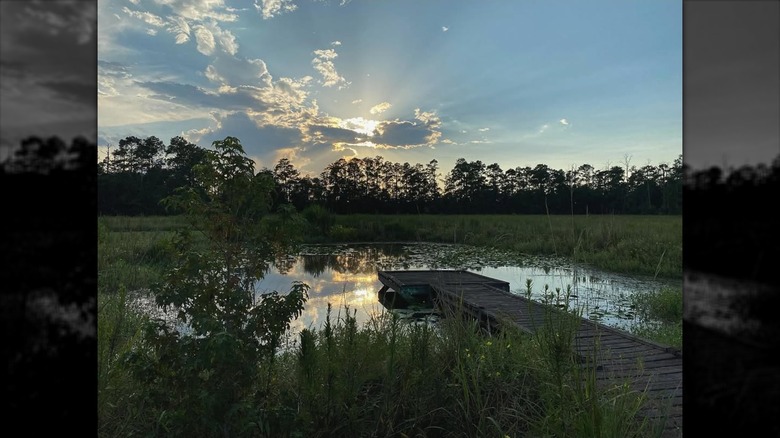
Port Arthur, which lies about 22 miles southwest of Orange, may be lauded as Texas' "Cajun Capital" city on the Gulf Coast. But Orange is steeped in Cajun heritage much the same. The two cities and Beaumont — located roughly 30 miles west of Orange — form what's known as the Golden Triangle, a region in Southeast Texas that greatly prospered back in 1901 when a vast oilfield was discovered near Beaumont. Lured by the promising oil industry, Cajuns — descendants of the French-speaking Acadian people who had settled in South Louisiana — flocked to the area in search of opportunity.
A great many Cajuns still reside in Orange today, and there's perhaps no better way to immerse yourself in the culture than by trying the delicious cuisine. Thibodaux's Divine Cafe, Cajun 88, Kajun Seafood & Wings, and Bliss Box are just a few of the Cajun restaurants to try in town. Tia Juanita's Fish Camp is another beloved a Texas chain. "This joint serves up some of the [best, finger lickin', innovative, tasty Cajun food with a bit of Latin flair]," reads one of many glowing reviews on Yelp.
History and natural beauty in Orange, Texas
Beyond its fantastic restaurants, be sure to visit the bevy of historical gems sprinkled throughout Orange. A variety of historic homes still stand in the city today, including the W.H. Stark House, an opulent Victorian home built back in 1894, just steps away from the Sabine River. The striking structure, which spans 14,000 square feet and has 15 rooms, has been fully restored to its original glory and features much of the original furnishings of its owners, industrial leader and philanthropist William Henry Stark and his wife, Miriam M. Lutcher Stark.
Other historical homes in the area include the Stephens House, built in 1889, and the Bland-Bazzano House, which dates back to 1902. The old Jimmy Ochiltree Sims home was built that same year and was restored to host the Heritage House Museum, which offers tours every Tuesday to Thursday. The Victorian-style Orange Train Depot Museum, constructed in 1902 by the Southern Pacific Railroad, is also close by.
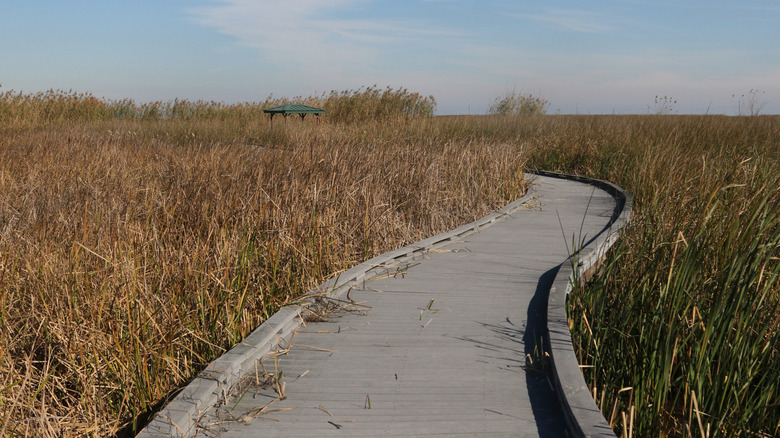
You'll find plenty of breathtaking natural spaces in the area, such as the Shangri La Botanical Gardens and Nature Center and the Riverfront Boardwalk & Pavilion, which hugs the Sabine River. The Lower Neches Wildlife Management Area in nearby Bridge City is only about a 15-minute drive away. Spanning almost 8,000 acres, the wildlife area is home to coastal plains and birds of all kinds. You can also cross over into Louisiana to see the Sabine Island Wildlife Management Area or the Sabine National Wildlife Refuge, an unmatched wildlife haven and the largest coastal marsh refuge on the Gulf.