
The Tourist-Friendly Country In South America Where The US Dollar Goes Furthest
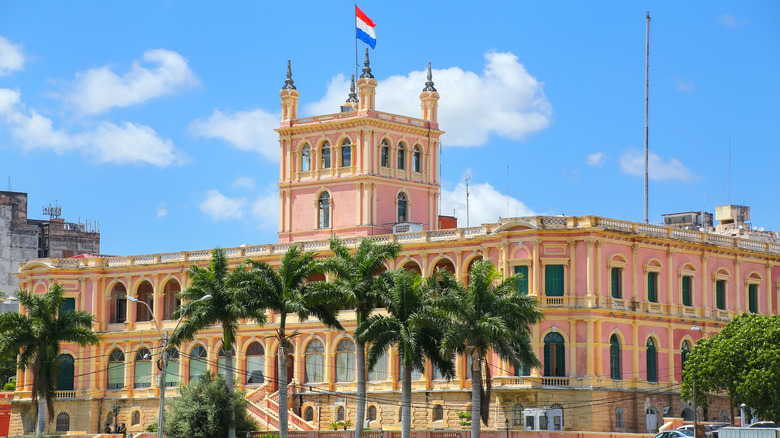
If you haven't had Paraguay on your radar, now's the time. The often-overlooked South American country is shifting from "hidden gem" into "next big thing," attracting curious travelers, prospective expatriates, and retirees — thanks to its low cost of living, emphasis on education, high quality of life, and lush natural landscapes. Sometimes dubbed "the Silicon Valley of South America" for its hydroelectric capacity, Paraguay has drawn global attention for its potential to power large-scale data-center infrastructure. Add in a rich cultural heritage, welcoming cities, and a notably young population — the median age is just 27 – and the country feels energized by a forward-looking momentum. Even its president, Santiago Peña, is part of this youthful wave.
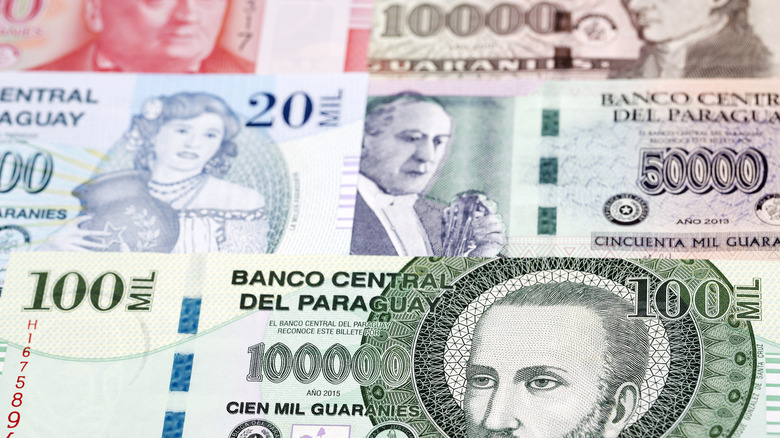
Hydroelectric energy fuels roughly 90% of Paraguay's domestic grid, and the country exports a significant surplus. Combined with political stability, financial reforms targeting inflation, low tax rates, and foreign investment incentives, Paraguay is positioning itself as a global hub for tech and business. The national currency, the guaraní (PYG) is maintained by the Central Bank, not pegged to foreign currencies. Exchange rates fluctuate, but one U.S. dollar (USD) typically trades for just under 7,000 guaraní, giving visitors strong purchasing power.
Travelers naturally gravitate toward destinations where their money stretches – like Argentina, where high inflation has boosted the dollar's value. But as economies in those countries work toward stabilization, Paraguay — roughly the size of California – is emerging as a compelling contender for budget-friendly exploration. To determine where the dollar goes the furthest, we consulted local reporting from The Asunción Times" and insights from experts, including New Horizons and Reside Paraguay. We also gathered price estimates from transport companies, businesses, local menus, and cost-comparison tools like Numbeo, Budget Your Trip, and the global Big Mac Index.
Comparing costs in Paraguay
Travelers to Paraguay often start in its capital, Asunción, a youthful and artsy city with a long history. The city is well connected, with flights arriving at Silvio Pettirossi Airport (ASU) from hubs around Latin and South America. A regular taxi from the airport to the city center costs approximately $29, or closer to $10 via rideshare apps like Bolt or Uber, which tend to be cheaper here than in other countries. Public buses are affordable, averaging $0.50 per ride when using a Más bus fare card. Public transport's also undergoing modernization, promising electric buses, integrated fare systems, and other improvements. Alternatively, renting a car can cost roughly $20 per day.
Founded in 1537, Asunción is one of South America's oldest cities, earning the nickname "The Mother of Cities" and featuring a blend of colonial and modern architecture. Nearly half of Paraguay's population lives in the greater Asunción metro area, which is considered the priciest part of the country. That said, it remains affordable for USD holders. Reside Paraguay estimates comfortable living costs around $600 per month, per person, and Budget Your Trip estimates mid-range travelers can spend about $85 per day, including lodging. According to Numbeo's cost of living calculator, a small bottle of imported beer costs $1.72, a dozen eggs $1.85, and a one-bedroom apartment in the city center approximately $455 per month (cheaper further out, more if furnished). Paraguay isn't officially on The Economist's Big Mac Index, but New Horizons Paraguay, a consulting agency for helping travelers and expats to Paraguay, reports that a Big Mac costs roughly $2.80 in late 2024, compared with $5.69 in the U.S. While travelers and expats note slight discrepancies, Numbeo remains a useful cost guide for the country.
Embracing Paraguay's affordable happiness
Though Finland often ranks as the happiest country in the world, Paraguay notably ranked second in global happiness for 2025 according to Gallup's State of the World. The distinction reflects how people report their daily lives: Paraguayans frequently experience positive emotions, laugh often, learn new things, and feel valued. The country also scores favorably for safety and peace, with lower crime rates than some neighbors. Combined with friendly locals and a relaxed, welcoming vibe, Paraguay is a genuinely inviting place to explore.
Asunción neighborhoods like Villa Morra — loosely including adjacent San Blas/Recoleta and Carmelitas — are among the easiest areas for visitors to settle into local life. The district is safe, upscale, and largely walkable, with standout restaurants, comfortable hotels, high-end shopping, cultural spots, and lively nightlife. Rentals typically range from $22 to 70 per night, and hotels from $54 to just over $100. Downtown, around 20 minutes away, offers an older, more colonial atmosphere with bars, restaurants, and historic sights — another solid choice for first-time visitors. Note that Paraguay's bilingual: Spanish is widely spoken, but Guaraní is also common, so a translation app can help if you're not fluent. Take free walking tours and try inexpensive empanadas and local fare at Ña Eustaquia. From Asunción, many travelers explore the country by bus, heading to Ciudad del Este, Paraguay's second-largest city, just across the river from Brazil. The 5-hour trip costs around $18.
Although summer in the Southern Hemisphere runs from December to March, and winter from June to August, Paraguay's low tourism volume lacks a true "peak season," so prices don't fluctuate as dramatically, allowing travelers to plan trips with more predictable costs. As Paraguay steps onto the global stage, here's your motivation to go now, before everyone else catches on.