
These Sustainability-Minded Places In Europe Are The Latest To Reward Tourists For Conscious Travel

Europe has set a lofty goal: to slash its greenhouse gas emissions by 55% by 2030 as a crucial milestone toward reaching a climate-neutral status by 2050. Taking the goal to heart, Copenhagen — a European gem that earned the title of world's most livable city in 2025 — stepped up to the plate with CopenPay, a rewards system that debuted in the summer of 2024, encouraging tourists to take part in small yet significant sustainable choices. Biking or taking public transportation, for example, was rewarded with free bike rentals or guided city tours; volunteering to collect litter along Copenhagen's canals earned free boat tours; picking seeds in a garden co-op was rewarded with a home-cooked meal.
Sustainability is no stranger to Copenhagen, a city that's proudly woven environment friendly schemes into its day-to-day rhythms. The city is equipped to nudge residents toward a more sustainable lifestyle with its comprehensive network of bike lanes, its local and organic food options and initiatives, and smart urban planning.
How successful was the program? Successful enough for its social impact to earn a spot in Time Magazine's Best Inventions of 2025. CopenPay attracted 25,000 participants in 2025 during its nine-week run, a significant jump from the 5,000 participants in 2024's four-week debut. And successful enough to inspire three other European cities — Berlin, Helsinki, and Bremen — to jump on the eco-rewards movement. Add them to the list alongside similar green incentive schemes already operating in Switzerland, Normandy, and several Alpine ski resorts, and the CopenPay system could very well be Europe's new normal for sustainable tourism.
Berlin plans a similar rewards scheme

Berlin announced its intention to follow a CopenPay approach tailored to Berlin, expected to start in 2026. Similar incentives, such as museum discounts, waived bike rental fees, or free meals, could be awarded to a tourist's eco-friendly initiatives: taking the train instead of a plane, longer city stays, and taking part in sustainable activities. While CopenPay operates on trust, Berlin is envisioning a mobile app for consulting points, rewards, and engagement processes.
But Berlin isn't new to the sustainability bandwagon. The German capital's Tourism Plan 2018+, which had been temporarily sidetracked by the COVID-19 pandemic, remains the tourism framework of visitBerlin, the city's official destination marketing and management organization. Aside from boosting Berlin's attractiveness to tourists, the program focuses on sustainable measures with a positive impact on both residents and tourists.
Recently, Berlin ranked fourth on the Global Destination Sustainability Index (GDSI)'s list of the world's most sustainable metropolises, a reflection of its efforts to support and promote sustainability. One such effort is visitBerlin's Sustainable Berlin program, which grants sustainability certifications to local businesses in the tourism and events sector. Until their version of CopenPay launches, Berlin has quite a list of eco-friendly initiatives in place: a bring-your-own-cup initiative at restaurants and cafés, urban gardening centers, and a number of sustainable restaurants and second-hand shops.
Helsinki sets its sustainable tourism goals beyond its borders
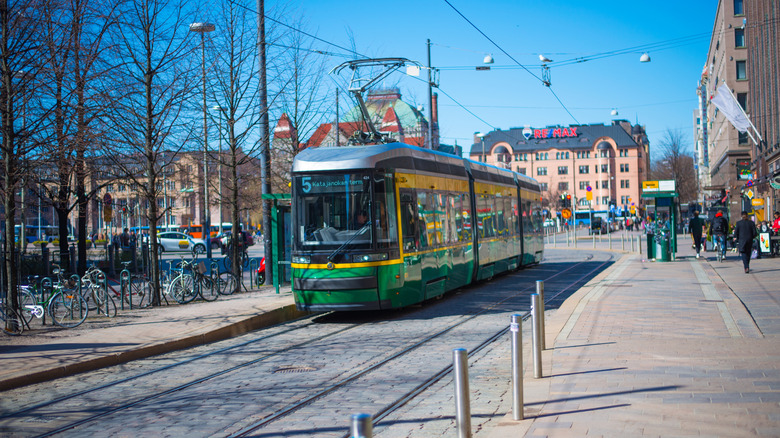
Named the world's most sustainable city for two years in a row by the Global Destination Sustainability Index, Helsinki is understandably keen on adopting Copenhagen's scheme, but the city is planning to cast a wider net: to take the concept beyond sustainable tourism and spark a collaboration with neighboring Nordic and Baltic countries toward restoring the polluted state of their shared Baltic Sea waters. Tourism director Nina Vesterinen also addressed Helsinki's plans to invest in regenerative tourism, ensuring tourism has a positive environmental impact on the city.
Far from being newcomers to the sustainability game, the Finnish capital clearly has what it takes to pull off such a feat. The city's landscape — composed of swathes of green spaces, access to the forest and the sea, and a smattering of saunas and Art Nouveau buildings — invites travelers to travel light and slow. Public transport is dependable, and the city has over 746 miles of cycling routes, allowing visitors to pedal across greenery and shorelines. With the increase of tourists — the City of Helsinki's official website reported a 5.6% uptick in overnight stays during 2025's summer holidays compared to 2024 — there is comfort in the fact that 99% of rooms in larger hotels have obtained environmental certification.
Bremen has taken the first step toward a sustainable program
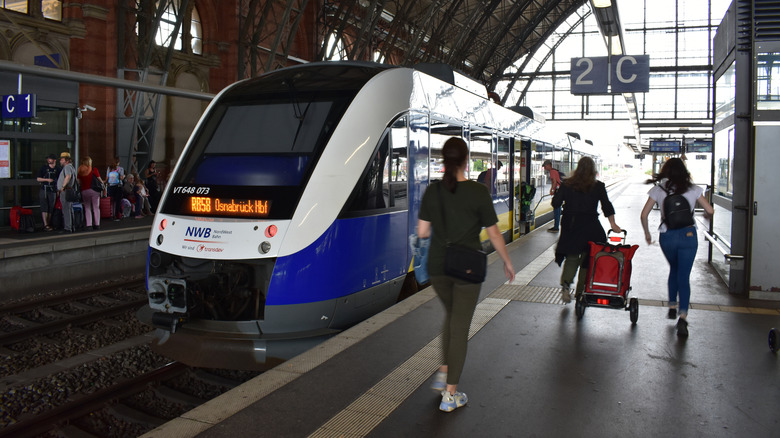
While taking a night train can be a game-changing hack for a smart, scenic travel experience across Europe, there are also incentives that can come along with it, especially if your stop includes Bremen, Germany. Taking pointers from Copenhagen, Bremen Marketing and Tourism and national railway company Deutsche Bahn piloted a campaign that offered gift bags containing vouchers to inbound tourists who traveled by train as a reward for their environmentally friendly choice of transport into the city. The campaign proved fruitful and is set to be developed on a larger scale in 2026.
While waiting for a CopenPay-like rewards system to be established, Bremen's hospitality and transportation sectors, along with other tourist-related businesses, are already very much invested in their sustainable efforts. Bremen Online, the city's official online portal, provides a list of eco-conscious hotels with sustainability certifications granted by organizations like Socotec, Green Key, and GreenSign, among others. Plus, the Bahnhit Bremen package offers round-trip rail tickets and three nights at a hotel at reduced rates to encourage the use of sustainable transport.
Switzerland's sustainable travel pass

Steering Switzerland's tourism industry toward a more eco-friendly direction is Swisstainable, the country's sustainable tourism program. Much stock is put on experiencing nature, local culture, and regional products in a healthy, relaxing setting, and the cooperation of over 2,200 tourism-related businesses is helping to achieve that goal.
Life in Switzerland is expensive, so the Swiss Travel Pass comes as a relief to travelers on a budget. Passes are available for between 3 and 15 days, granting unlimited use of the country's public transportation system. The pass also covers famous panoramic trains, including the Glacier Express, Bernina Express, and the GoldenPass Express, which offer some of Europe's most scenic train rides — just don't forget to reserve a seat ahead of time. Switzerland's mountain railways and cable cars aren't included in the pass, but you do get a significant 50% discount on them.
The pass also offers free access to more than 500 museums across the country. You'll have unlimited access to cultural attractions, including Montreux's Chillon Castle or Bernese Oberland's Thun Castle; or get to breathe in a stunning variety of art in different galleries and museums included in the Swiss Museum Pass — not a bad incentive for sustainability.
Normandy limits its carbon footprint
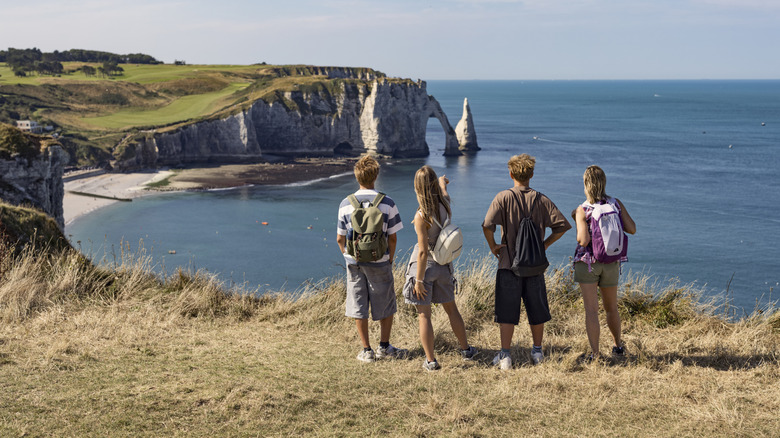
Fancy a trip to Normandy, France? Limiting your carbon footprint in the region can actually reap you sweet holiday rewards, thanks to Normandy's Low Carbon Rate program, which the region launched in 2024 following its recognition by the international sustainable community Green Destinations in 2023 and 2024.
The program rewards eco-conscious travelers with a simple incentive: present your bus stub, train ticket, or bike photo at any of the over 90 participating establishments to avail of discounts of 10% or more. Museums, castles, bike rental companies, and local tours are just some of the cultural and tourist attractions offering discounts, showing the region's commitment to sustainable tourism.
Known for being the birthplace of Impressionism, having inspired artists like Claude Monet, Camille Pissarro, and Eugène Boudin, the Normandy tourism board has streamlined car-free visits to its Impressionism attractions. An electric-powered shuttle takes tourists from the Vernon-Giverny train station (50 minutes away from Paris) to Claude Monet's House and Gardens in Giverny in 20 minutes. Otherwise, pedal down a scenic bike route along the Seine to Giverny with bikes that can be rented at the train station. Other attractions, like the Eugène Boudin Museum in Honfleur or the Thomas-Henry Museum in Cherbourg, are reachable by foot or bike from bus or train stations.