
The World's New Largest City Was Just Crowned, Surpassing Tokyo
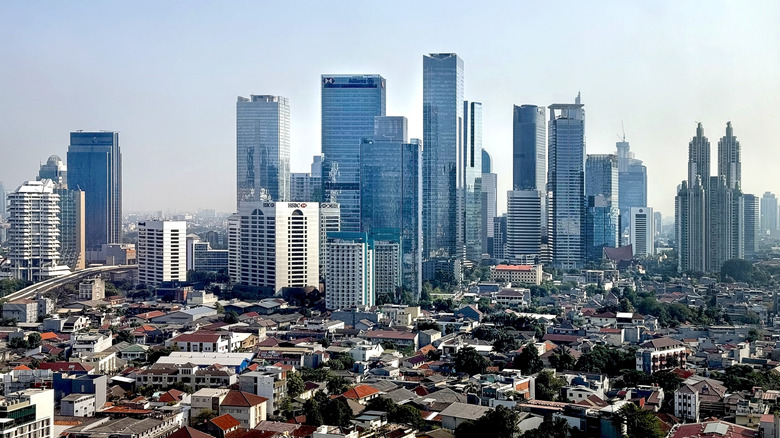
Tokyo was long considered the world's largest city. A megalopolis of 37 million people — according to the last official count in 2018 — it encompasses greater Tokyo and three adjoining prefectures: Saitama, Chiba, and Kanagawa. But according to a new United Nations report, it has lost its title to a fellow Asian megacity. Jakarta, capital of Indonesia, the world's largest island country, now stands atop the global rankings with a whopping 42 million residents, as per an estimate from the UN Department of Economic and Social Affairs (DESA).
The UN report, titled World Urbanization Prospects 2025, discusses increasing urbanization — almost half of the planet's 8.2 billion people now live in cities — and its impacts on economic and social development and environmental sustainability. Asia has seen the biggest population boom over the last 50 years, particularly in areas like the Indo-Gangetic Plain, an urban corridor stretching from Pakistan across northern India all the way to Bangladesh, and including Lahore, Delhi, Kolkata, and Dhaka. Nineteen of the world's 33 megacities (those with a population exceeding 10 million) are now in Asia, while Cairo, Egypt, is the only non-Asian city inside the top 10 with a population of 25 million.
The Bangladeshi capital of Dhaka now sits in second place in the global population table with 37 million inhabitants. While Tokyo, considered the world's best city for a workation, now sits in third, with a population of 33 million. Tokyo, amid Japan's demographic crisis, is expected to slide further, while Jakarta is set to keep growing. Despite plans to move the Indonesian capital to Nusantara in Borneo due to rising sea level concerns, UN estimates predict another 10 million could be living in Jakarta by the middle of the century.
Why has Jakarta, Indonesia grown so large?
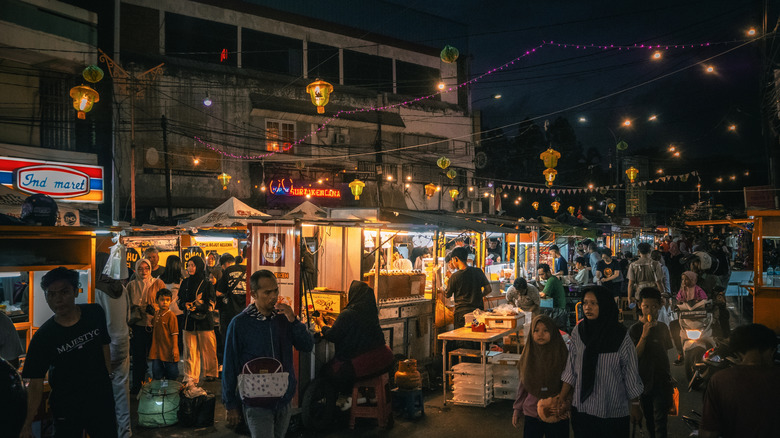
Jakarta has ballooned into the world's largest city due to Indonesians' exodus from rural areas of the country. Another factor that's brought it to the top of the population pile is methodology. Earlier analyses of urban populations were based on inconsistent definitions, meaning the new approach was designed to level the playing field. Patrick Gerland, head of the Population Division within DESA, was quoted in The Guardian, saying that, "The new assessment ... provides a more internationally comparable delimitation of the urban extent based on similar population and geospatial criteria."
Jakarta's explosive growth has come with some drawbacks, like poor air quality, overcrowding in residential areas, and infrastructural challenges due to the fact that 40% of the land is now below sea level. But it's not all doom and gloom. Tourism has boomed in Indonesia, with travelers drawn to paradisiacal islands like Bali, Borneo, Flores, and Komodo. Jakarta, too, is benefiting from the influx, whether visitors are coming to participate in the Jakarta International Marathon (JAKIM) or are drawn in by new tax cuts in the city's hotel and restaurant industry.
There are plenty of cool things to do in the city. Jakarta is an under-the-radar haven for foodies and art lovers, hosting world-class exhibitions at the National Gallery of Indonesia and the Museum of Modern and Contemporary Art in Nusantara (MACAN). Throughout the city, street and market vendors dole out vibrant dishes like bakmi goreng noodles, soto ayam chicken soup, gado-gado salad, and tahu tempe. Travelers can also visit Old Jakarta, which retains some of its Dutch colonial influences, the sprawling Merdeka Square in the heart of the city, and Jakarta's centuries-old Chinatown.