
Boeing Vs Airbus: Which Planes Are Safer According To Accident Stats?
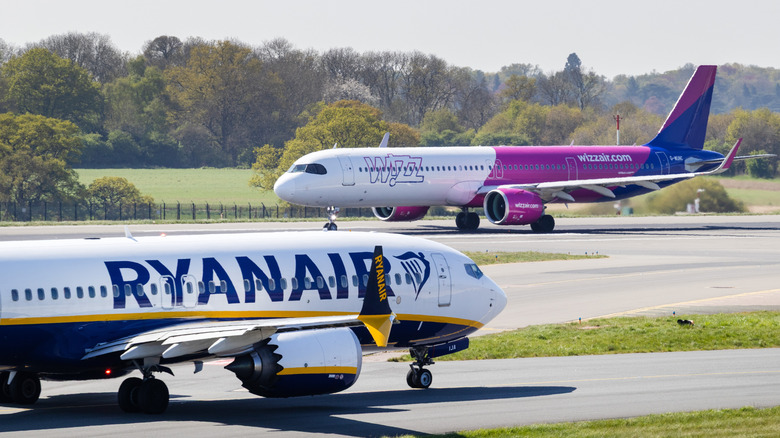
It's been a rough couple of years for the Boeing Company's reputation. First, there was the infamous Alaska Airlines incident in January 2024 when a Boeing 737 aircraft's door flew off during the flight. Then, in June 2025, Air India Flight 171 crashed just after taking off from Ahmedabad, killing 241 people aboard a Boeing 787-8 Dreamliner. So why are so many Boeing airplanes having accidents, and is traveling on an Airbus, Boeing's longtime competitor, actually safer? Spoiler alert: When it comes to accident rates, there's not a significant difference between the two manufacturers.
According to a recent analysis of data furnished by the U.S. National Transportation Safety Board (NTSB) and reported by Jalopnik, a news website covering the transportation industry, Boeing and Airbus have very similar safety records. The information looks at accident rates for flights operating in the United States between 2014 and 2024.
It's important to note, of course, that aircraft manufacturers are not responsible for all in-flight incidents. Bad weather and bird strikes are among the most common plane problems that lead to accidents. To properly consider the safety records of Boeing and Airbus, it's essential to focus on accidents caused by equipment malfunction or mechanical issues related to the engine or landing gear. And in the ten-year period in question, with six million flights in the air each year, both manufacturers experienced just two to six such accidents. And none involved fatalities of passengers or crew.
Boeing and Airbus planes are equally safe
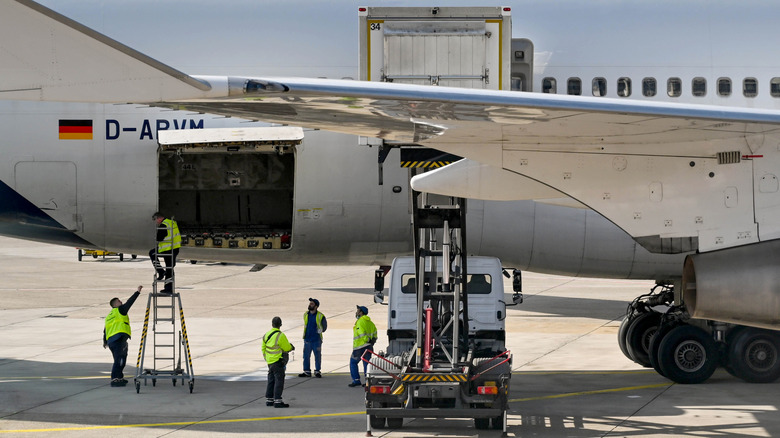
If Boeing and Airbus have nearly identical records when it comes to accident rates in U.S. airspace, why does the former seem to have a worse reputation? It's partly because Boeing operates notably more flights than Airbus does, so in terms of sheer numbers, Boeing has more accidents. It should be noted that the Jalopnik report adjusts the data for the number of flights to more fairly compare the two manufacturers' records.
Boeing's bad rap is also amplified by other factors, including quality control issues widely reported in the media. As the NTSB acknowledged in a statement, the blowout of a faulty door plug produced at a Boeing factory was the cause of the Alaska Airlines incident in 2024. There's also misinformation circulating. Last year, a chart comparing Boeing and Airbus "airline incidents" was spread on LinkedIn and other social media sites, but it was later revealed that the data included incidents involving Boeing-manufactured aircraft (World War II bombers, cargo jets, and the like) that were built decades before Airbus was founded. Needless to say, the information was skewed, and the analysis therefore, was flawed.
The bottom line is clear: Boeing and Airbus aircraft are similarly safe for travelers, and plane accidents are still extremely rare. Still nervous about flying? Consider these expert tips for feeling safe in the air, from deep breathing to chatting with a therapist.