
Europe's Under-The-Radar Village In The Swiss Alps Has Once-In-A-Lifetime Skiing And Mountain Views
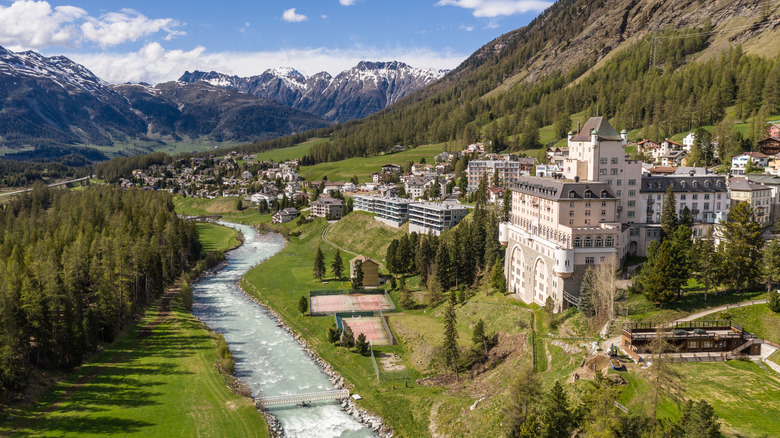
The Swiss Alps are a dream destination for mountain adventurers and photographers, but they wouldn't be so endearing without the fairy tale Swiss Alps villages. Those villages in the southeastern pocket of Switzerland, known as Graubünden, are some of the most underrated and unique. Though it's the least densely populated of Switzerland's cantons, Graubünden is where you'll find the high-altitude village of Pontresina, one that embodies some of the region's most captivating landscapes and historic ski areas. Enveloped by the glacial Bernina Massif, Pontresina is also home to the highest peaks of the Eastern Alps.
Pontresina may not be nearly as well known as villages like Zermatt and Lauterbrunnen, and it sometimes gets overshadowed by its neighboring city St. Moritz, one of Switzerland's most iconic can't-skip destinations. But Pontresina has still concretized its place as a beloved and welcoming destination for those who enjoy its skiing and cozier atmosphere, with direct access to famed train routes and Belle Époque hotels. St. Moritz was described as "soulless" and "glitzy" by travel writer and Rick Steves' protegé Cameron Hewitt on Instagram. He recommended that visitors "Instead, stay in nearby Pontresina and have a grand ol' time riding lifts to lofty panoramic perches."
Hiking and skiing in Pontresina
For nature lovers, it's the mountains cradling Pontresina that have made it a superior destination for ages. Pontresina got its initial renown in the 19th century as a resort town, distinguished as a less expensive and less showy alternative to St. Moritz, while still providing access to the same ski areas. It even, according to The Telegraph, served as a cohost of two winter olympics games alongside St. Moritz in the early 1900s.
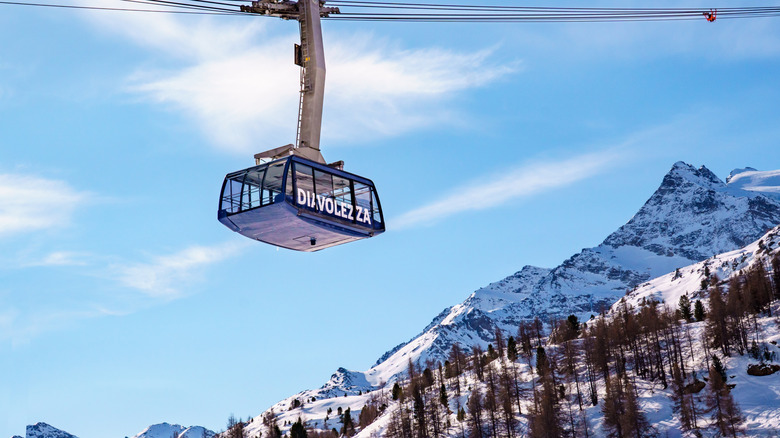
Today, two of the village's frequented local ski resorts are Diavolezza and Lagalb. Diavolezza is famous for having the longest glacier run in Switzerland, coursing over the Pers and Morteratsch glaciers. It also has slopes that reach up to nearly 10,000 feet. Visitors can take a bus from Pontresina to Bernina Diavolezza, and from there take a cable car to the ski area itself. The Lagalb ski area is a bastion of steep pistes, and it's a bit more difficult to get to. You can ski from Diavolezza to Lagalb, but not in the other direction. There's also a bus that operates between the two mountains.
With its glacial cirques and super high peaks, Pontresina offers a rare experience for hikers, too. Its Morteratsch Glacier Trail leads right through the heart of some of the area's most stunning glacial views. The trail starts at Diavolezza, then continues along some rugged moraines and sweeping glacial basins for a total 7.5-mile round-trip trek. However, be warned that some parts of this trail are treacherous and it is recommended to go with a guide. Another, somewhat shorter option is the Val Roseg Trail. It's about 4.5-miles long, and is a gentler route through a gorgeous alpine side valley with views of the gigantic Roseg Glacier faces.
Tips for getting to and staying in Pontresina
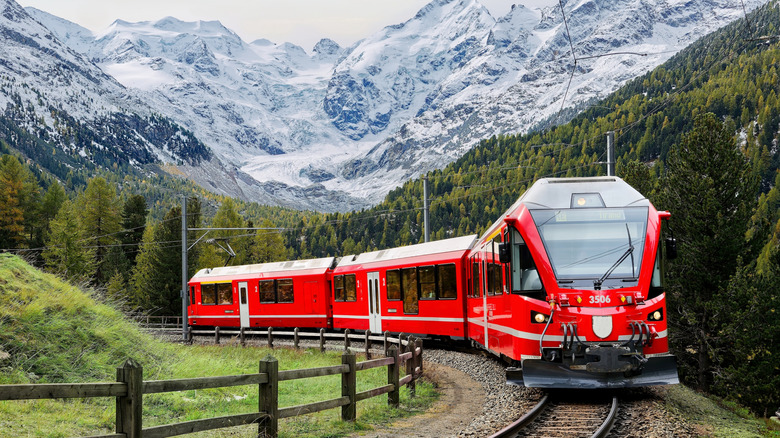
Pontresina is a bit more out of the way than some other Swiss destinations — the nearest international airport, Zurich Airport, is about a three-hour drive away — but it's connected to one of the most legendary train routes in the world: the Rhaetian Railway. Not taking the train is a mistake to avoid at all costs on a Switzerland trip. The Rhaetian Railway is a UNESCO World Heritage site, and was built in 1904 to connect isolated settlements along two passes in the Swiss Alps. Coming from Zurich, you could first take the Swiss InterCity Express train to Chur (taking just over an hour), then transfer to the Bernina Express of the Rhaetian Railway, which is a roughly two-hour journey to Pontresina. Along the way, you'll ride over historic stone viaducts, astride snow-topped glaciers, and through helical mountain tunnels.
In Pontresina, you'll find a few wonderful hotels that showcase the architecture of the Belle Époque and older, Ssgraffito-decorated farmhouses. The five-star Grand Hotel Kronenhof is a local treasure and a feat of mid-19th century architecture, with two Michelin keys. For something less lavish (and more budget-friendly), many rustic mountainside Airbnbs are available in town, some for under $100 a night, and there's even a youth hostel available. A must-see in the village is the Museum Alpin, housed in an 18th-century Engadine building. Inside are exhibitions about the area's natural and cultural history, which dates back to the Middle Ages, and you might even learn why you hear people in town speaking a distinct, ancient language called Romansh.