
The 5 Best Backpacking Tents For 2025, Per Reviews
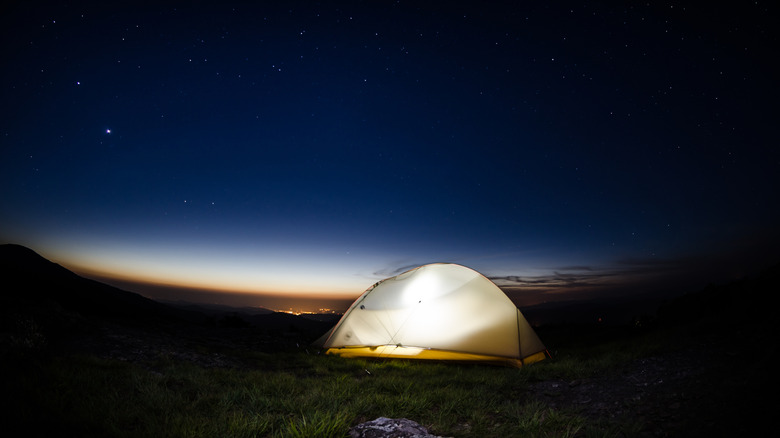
There are so many fantastic multi-day hiking trails across North America to explore, ranging from the iconic Appalachian Trail to America's oldest long-distance hiking trail (located in Vermont). Or, tucked away in Canada is the Canol Heritage Trail, known for being the toughest hiking trail in North America. If you're spending some serious time adventure hiking on these types of multi-day trails or doing remote backcountry camping, a traditional tent from an outdoor store won't cut it. Minimizing the weight of gear in your camping pack is imperative, and when every ounce matters, so does the right backpacking tent.
Luckily, technology has advanced over the years, and now there are some unbelievably light tents out there that remain incredibly durable. Outdoor gear brands have perfected these designs and created ultralight, intuitive tents that cater to the real needs of remote camping. Some of these backpacking tents outshine the others, with high-end materials and thoughtful layouts that leave no detail overlooked. To help guide hikers through some of the products out there, this list will highlight the five best backpacking tents of 2025. From trekking pole-style tents to freestanding options, these tents were included in the top rankings based on field testing and analysis conducted by trustworthy outdoor sites and professional product reviewers who analyzed them for durability, design, weight, and user-friendliness (you can learn more about our methodology below).
Best Overall: Big Agnes Copper Spur UL2 Tent

At 2 pounds, 10 ounces, this two-person tent is fairly light (although there are definitely lighter options out there), so it's ideal for hauling your gear on long-distance overnight treks. Earning the top spot from both Gear Junkie and CleverHiker's tent analysis, a "best design" honor from Travel and Leisure, and an Editor's Choice Award from REI, the Copper Spur UL2 is the undisputed favorite. It has 29 square feet of floor space and can hold two people on narrow sleeping pads. However, it is a tight squeeze, so wider sleeping pads won't work well with this one. That said, all of these publications noted the design allowed an ample amount of space for most people. It's worth noting that they do have a three-person option (the UL3) if you want a little more room, but the trade-off of upgrading is that you'll add almost an extra pound to your travel pack.
In their review, the team at GearJunkie states that the tent has always been a favorite among their members, but it recently received an upgrade to remove PFAs (forever chemicals) from the material, making it environmentally conscious. With a setup time of under 10 minutes, a durable design that allows for stargazing, and the ability to keep everything dry, the tent earned 9.5 out of 10 stars from GearJunkie. CleverHiker noted that its freestanding design allows it to easily be set up anywhere, and Travel and Leisure also appreciated the color-coded design for easy assembly. However, with a price tag between $500 and $600, the tent isn't cheap, but it is a great long-term investment.
Best Runner Up 2-Person: NEMO Dagger OSMO 2
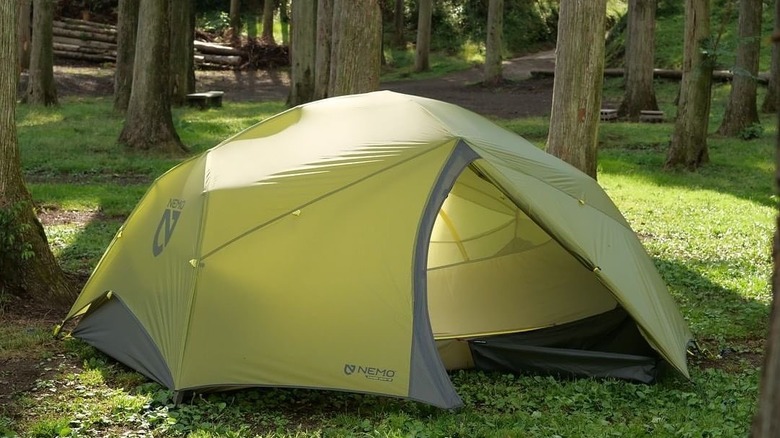
If you're traveling with a few friends or are carrying a lot of gear that you want to keep in the tent with you, a larger tent is the way to go. At 3 pounds and 15 ounces, the Nemo Dagger Osmo 2 is heavier than the Copper Spur 2, meaning it's not the best for long, intense hiking trips, but could be a great fit for shorter treks. Besides the drawback of the weight, the Nemo Dagger Osmo 2 has a spacious design measuring 88 by 50 by 43 inches, and some thoughtful features, like headlamp pockets and an exterior pouch outside of the tent, but under the rainfly so that you can keep wet or muddy shoes away from dry, clean items inside the tent.
Travel and Leisure voted it the best two-person tent, noting that the tent held strong during a thunderstorm while keeping everything dry (Nemo has a proprietary ripstop fabric that's incredible at repelling water). CleverHiker gave it high marks for ease of setup and durability and voted it the best crossover tent for hiking and car camping (for some inspiration, check out our guide to the best car camping spots along the Blue Ridge Parkway). If there's one major drawback of the Nemo (besides the higher weight), it's the price, which hovers around $500.
Best Budget: Durston X-Mid 2
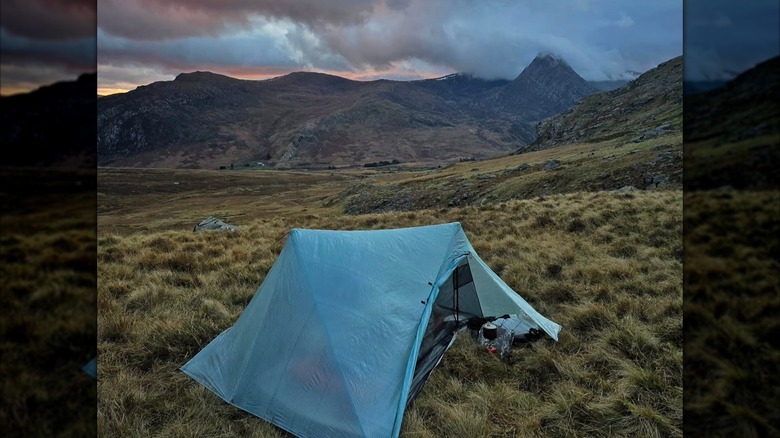
If the previous two tents were too high a price point, but you'd like something extremely high quality, take a closer look at the Durston X-Mid 2. This trekking pole tent (which uses your existing hiking poles as supports) clocks in at around $300 or less, and has a unique design that situates the main trekking pole near the head area, providing more ventilation and slope and making it ideal for wind and even snowy weather. Just shy of two pounds, the X-Mid 2 has a 92-inch-long, by 52-inch-wide floor that can accommodate taller campers.
It's not a freestanding tent, so you'll have to stake out tie-out points, which can take a little longer during setup to properly balance. However, if you practice a few times at home before your trip, setup should be fairly easy, and Durston offers a number of instructional videos to help. The editors at Better Trail give this tent high marks for its thoughtful and intuitive designs that step things up a notch, with reviewers saying that "everything from the magnetic doorkeepers and the tensioned bathtub floor to the refined headroom feels high-end." CleverHiker awarded it the best affordable option as a testament to its durability after trying it in several storms, and noted it's a solid lightweight option for solo campers.
Best Ultralight Tent: Zpacks Duplex Lite
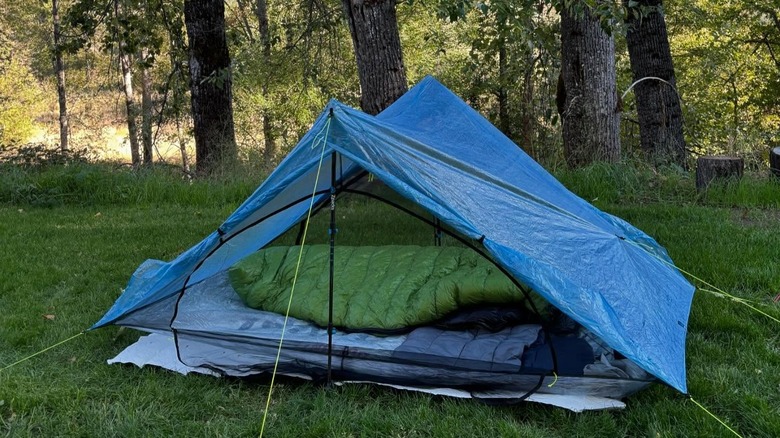
At a cost of more than $650, it's definitely one of the pricier options out there, but the Zpacks Duplex Lite earns high marks from GearJunkie for its durability and its incredibly lightweight design (just shy of 15 ounces). The tent measures 90 inches long by 40 inches wide, and although it's billed as a two-person tent, reviewers note that it is extremely tight for two people and would be better for solo travelers. The tent utilizes the trekking pole design and Dyneema Composite Fabric (DCF) that the company has continued to enhance with each new product release.
The bathtub-style floor of the Lite provides a solid 6.75 inches of water protection while allowing space for ventilation above it. Another standout of the Duplex Light is the headroom inside that allows you to sit up comfortably. The tent does share a similar "A-frame" design as its predecessor, the ZPacks Duplex Classic, which earned an "Editor's Choice" award from GearLab, although the Lite is the slimmer version for when every ounce counts.
Best 3-Person Tent: Hubba Bubba LT 3
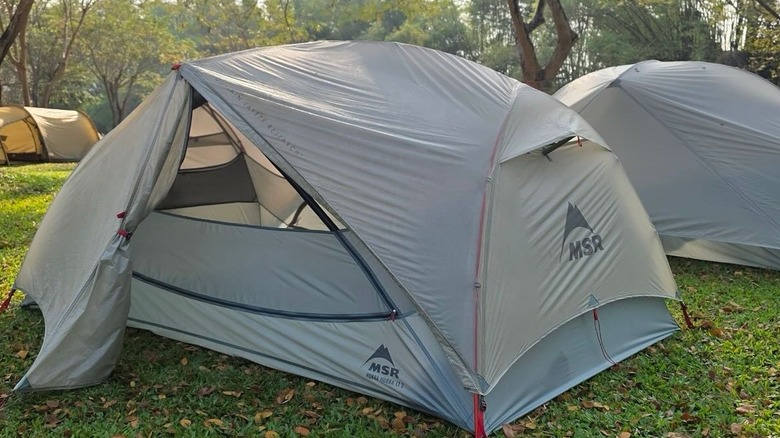
Measuring 90 inches long by 75 inches wide and 47 square feet of floor space, the MSR (Mountain Safety Research) Hubba Hubba LT 3 can comfortably fit three people (and could possibly even squeeze four people in). This roomy but lightweight design earned it some high marks for its interior space in a review from Better Trail. The team at GearJunkie noted that the LT 3 is an improvement from its already popular line of Hubba Hubba tents, but with some similar features like cable ports for electronics built into pockets, and door zippers easy to open and close.
Clocking in at 4 pounds, 6 ounces, the tent is very lightweight for the three-person size category, and uses DWR water repellent that is free of PFAs. Other draws to make this a "livable" option include vertical walls for more headroom and to comfortably sit up, as well as a dual-door design with updated vents for more air flow. Better Trail notes that its simple square design makes it easy to set up, but the height of the tent could make it more susceptible to low branches and catching wind. Besides that, the one major drawback is the $600 price tag.
Methodology
In determining the best backpacking tents for 2025, we looked for new tents on the market as well as ones that have been around for a while and continue to deliver. We didn't individually test the tents on the list outdoors, but instead, we researched the findings from trusted camping and testing sites that did. We looked at professional reviews from sites like REI, Better Trail, GearJunkie, and GearLab, as well as individual reviews from users in order to find consistent results. We factored in price in the analysis, keeping in mind that the most expensive tent doesn't necessarily mean it's the best.
Overall, we asked if it is a good value for the price and whether or not all the basic needs of a backcountry camping trip. Although loads of bells and whistles and extra pockets are great, if the tent is insanely heavy or doesn't keep you dry, all the "extras" don't outweigh those shortcomings. There are plenty of ultra-lightweight tents out there, but if they sacrifice durability or space, they didn't make the cut. The ease of setup is also incredibly important, since no one wants to burn precious time after a long day hiking, trying to navigate a complicated tent design.