
This Remote National Park Is A Birdwatcher's Paradise Where Forests, Mountains, And Rare Wildlife Flourish
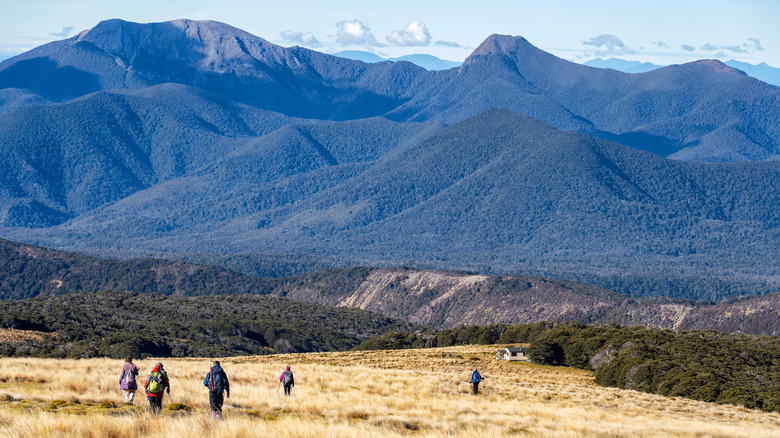
If you've ever been to New Zealand, you'll know that it is distant. Adrift in the South Pacific, even its closest neighbor, Australia, is 1,000 miles away. But it's worth the lengthy journey, because in terms of scenery and sheer geological drama, New Zealand is up there with the best. Few places typify that better than Kahurangi National Park, located in the northwestern tip of the South Island. Kahurangi, meaning "treasured possession" in the Maori tongue, is New Zealand's second-largest national park, home to rare, wild bird species and carnivorous snails, a network of marble caves and jagged mountain ridges, and forests mixing broadleaf trees, magnificent ferns, tangled vines, and nikau palms.
That the park's most popular trail, the Heaphy Track, is traversed by only 4,000 or so walkers a year (an average of around 11 per day) hints at how remote Kahurangi feels. The 78-kilometer (48-mile) track carves its way through subtropical rainforest and over the park's tussocky high country, following in the footsteps of the premodern Maori tribes who used it on their long journeys through the bush. Today, basic huts offer accommodation at regular intervals along the trail.
The park looks ancient, too, and the geology testifies to that. The oldest fossils ever found in New Zealand — dating to 540 million years ago, more than twice as old as the earliest-known dinosaurs — were uncovered from a bed of limestone in Kahurangi's Cobb Valley. They were trilobites, a group of long-extinct marine arthropods from the Cambrian period, a time when complex, multicellular organisms began to diversify into a vast number of different phyla. To visit Kahurangi is to literally walk through an ancient, unknowable age.
Birdwatching in Kahurangi National Park
People of a certain age see New Zealand through the lens of Peter Jackson's iconic film trilogy, a fantasy-filled realm full of hobbit holes and scenic waterfalls, where you can have the ultimate Lord of the Rings experience. But bird enthusiasts will know New Zealand for the diverse species that have evolved here in comparative isolation. This is the land where the giant moa, a towering species of flightless bird, once roamed — until Polynesian travelers arrived in the 13th century and made quick work of extinguishing them — and where you can still see albatrosses, flightless parrots, yellow-eyed penguins, and five different species of kiwi.
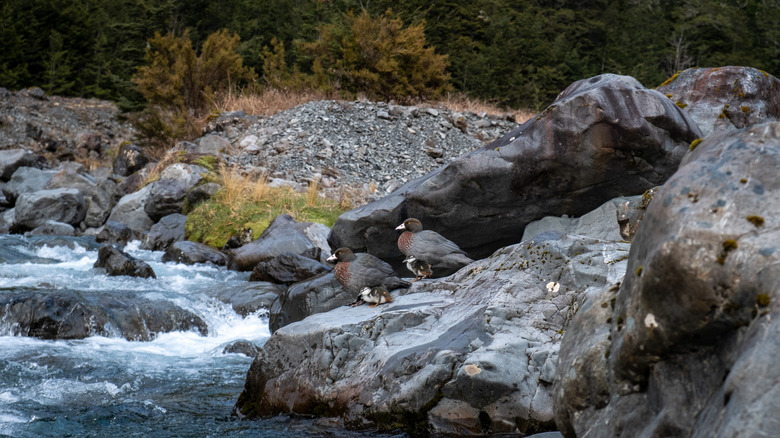
Kahurangi is home to 18 native New Zealand birds alone, including threatened species like the rock wren and the great spotted kiwi, one of the country's largest birds. In Cobb Valley, where those ancient trilobites were found in 1948, birdwatchers should look out for flightless wekas, stomping through the grass with their dinosaur-like feet, and New Zealand fernbirds zipping around near the Cobb River. Finches, robins, tomtits, and chorusing bellbirds have also made their habitats here, and in the forests, you might spot endemic parrot species like the kea, the kaka, and the kakariki yellow-crowned parakeet. In river rapids throughout the park, including in Cobb Valley and the Gouland Downs, keep an eye out for rare blue ducks known as whio, a species considered one of New Zealand's most threatened.
Birds aside, you'll discover other interesting, unique creatures, like the 20 species of carnivorous snail living in Kahurangi's 516,000 hectares or the gangly Kahurangi cave spider found in its deepest reaches. Giant wetas, grasshopper-like insects native to New Zealand, also live here, as do frogs, skinks, geckos, and diverse mammals, including seals, boars, and goat-like chamois.
Walking the forest and maountains of Kahurangi
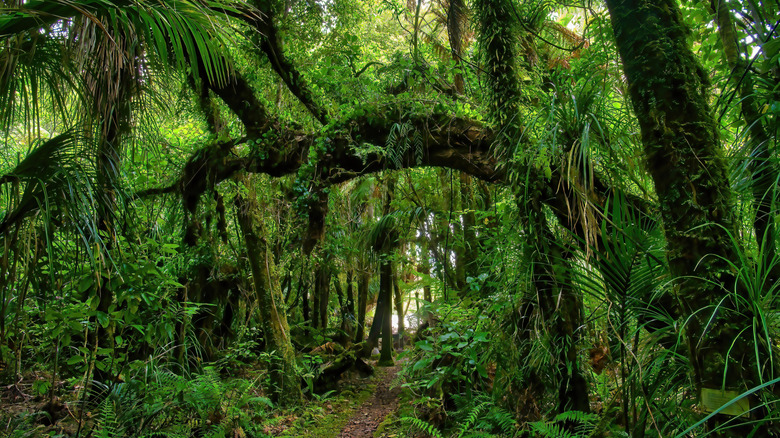
The Heaphy Track is the most-trodden of Kahurangi's trails. Hikers — or mountain bikers from May through November — traverse the mountains, river valleys, wildlife-filled forests, open grasslands, limestone outcrops, and tumbling falls, encapsulating the park's scenic beauty. At a decent clip, you'll cover the trail in four to six days (two or three if you're biking). If thru-hiking, there are six huts and nine campsites spaced at regular intervals, which should be booked well in advance. Lucky overnighters at the James Mackay Hut may meet a gang of kea birds living in the area. The world's only alpine parrot, the kea is known for its intelligence and sociability.
For a slightly different impression, walk the 28-kilometer (17-mile) Tableland Circuit on Mount Arthur, an exposed path that brings hikers over craggy mountain ridges. En route, you'll pass dense tussocks, babbling brooks, and strange geological features (like a rock that resembled a sphinx until it lost its head in 1929), and the aptly named Gordon's Pyramid. While you may get battered by the elements on this trek, the views are spectacular on clear days — the kinds that really do bring Middle-earth to mind.
Travelers can access Kahurangi National Park using public transport, though a car will give you more freedom. If you're entering Kahurangi in winter, snowfall and ice may necessitate snow tires or four-wheel drive. Most visitors will fly to Nelson, the closest big city, with an airport that fields flights from across New Zealand. For Heaphy Track-bound travelers, Golden Bay Air offers propeller-plane flights and shuttles between Nelson and the trailheads at Brown Hut in Golden Bay or Kohaihai on the west coast. If passing through Nelson, also consider visiting Rotomairewhenua, the clearest lake in the world, about a 1.5-hour drive south.