
The Biggest Cause Of Injury And Fatality In Yellowstone Isn't Wildlife Or Springs
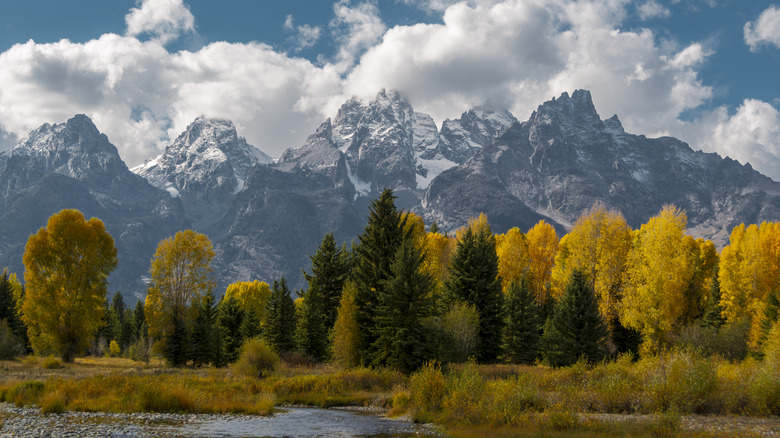
If given the choice to visit only one national park, many travelers would surely opt for Yellowstone. Opened as the world's first national park in 1872, the 2.2 million-acre sprawl of dramatic scenery and bubbling geothermal activity is home to half of the world's geysers and healthy populations of bison, grizzly bears, cougars, and wolves. Because Yellowstone sits atop an active (if mercifully quiet) supervolcano and houses some of nature's fiercest predators, there are dangers present for visitors to the park. Yet, while getting mauled by a grizzly or tumbling into a boiling spring are possibilities, traffic-related incidents are actually the number one cause of visitor death and injury in the park.
It's dispiriting to think that the real apex predator in Yellowstone is a distracted biped behind the wheel, but according to local law firm Beck, Amsden & Staples, between 2007 and 2023, 17 people died in traffic accidents while there were only three fatal wildlife encounters. Such figures serve as a reminder to observe the rules of driving in Yellowstone at all times. The speed limit is 45 mph, unless stated otherwise, while winding mountain passes, wildlife darting across the road, logjams in the height of summer, changeable weather conditions in winter, and unexpected potholes and soft shoulders combine to make driving trickier.
It's understandable you'd want to slow down or stop because you've spotted a herd of grazing bison or a pair of frolicking bear cubs. But in the likely event this happens when there's no obvious parking area nearby, stay attuned to what the cars are doing in front of and behind you. If you choose to pull over, all four wheels must be off the road, leaving enough space for other drivers to pass by safely. U-turning is also completely legal in the park.
Seeing Yellowstone Safely
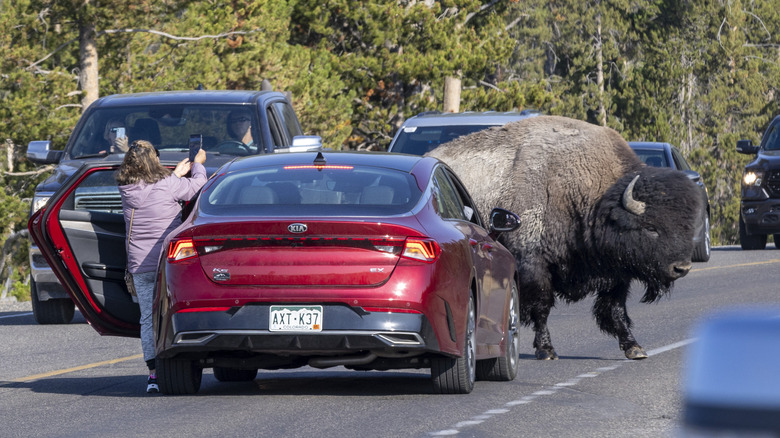
Tourists make lots of mistakes in Yellowstone — enough so that a popular Instagram account has branded these folks the "tourons" of America's national parks — most of which you can avoid with a dash of common sense. To reiterate: Driving with your full attention is of paramount importance, and not only to protect yourself and other drivers. If you trundle into a bison, even at a measured pace, that's a collision your vehicle is going to win.
Once parked safely, you're permitted to get out of your car and observe the wildlife on foot, but you should never stray too close. The general rule of thumb is to stay at least 25 yards away from grazing mammals like bison and elk and at least 100 yards away from carnivores like bears, cougars, and wolves. Nor should you approach, feed, or goad an animal in Yellowstone. Animals can transfer diseases to humans, while those that become dependent on human food often have to be killed. It's also illegal to wilfully approach wildlife within a distance that might alarm them — perpetrators could be hauled up to the Yellowstone National Park Jail and Justice Center to be detained and tried.
There are certain things you need to know before camping in Yellowstone National Park. There are 11 campgrounds and 2,000 established campsites in Yellowstone, and car camping and overnight vehicle parking are only allowed in these designated areas, something that further helps mitigate road accidents. Make sure you book sites in advance, plan for inclement weather, and ask park rangers or campground staff if you're unsure of the rules. And don't leave your perishable supplies out in the open. At best, this will attract small rodents; at worst, creatures that are far more imposing.