
Lake Superior's 5 Most Hauntingly Beautiful Shipwrecks
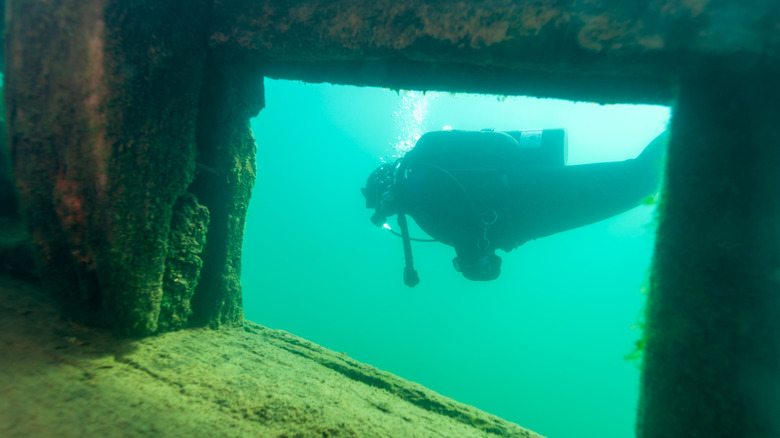
Picture yourself deep under the frigid waves of the enormous Lake Superior. As you skim along the rocky bottom, an enormous shape emerges from the gloom. This isn't something natural — the lines are too hard and angles too sharp. It is the remains of an enormous ship, wrecked on the stormy surface and sunk into the depths, never to be recovered. And it's not alone. While it might not be the first place that comes to mind when thinking about shipwrecks, maritime archaeologist Tamara Thomsen told the Smithsonian that around 6,000 ships have sunk in the Great Lakes. In the past, the best way of transporting goods to the middle of the country was by ships that sailed across the Great Lakes through often treacherous waters.
Lake Superior, in particular, is known for its shipwrecks, earning the nickname of "the graveyard of the Great Lakes". Today, the sunken vessels deteriorating at the bottom of one of the largest lakes on the planet are little more than hauntingly beautiful oddities. As you take the dive down into the depths to discover these lost vessels, remember that each one is a part of history and that real people lived and died on these decks.
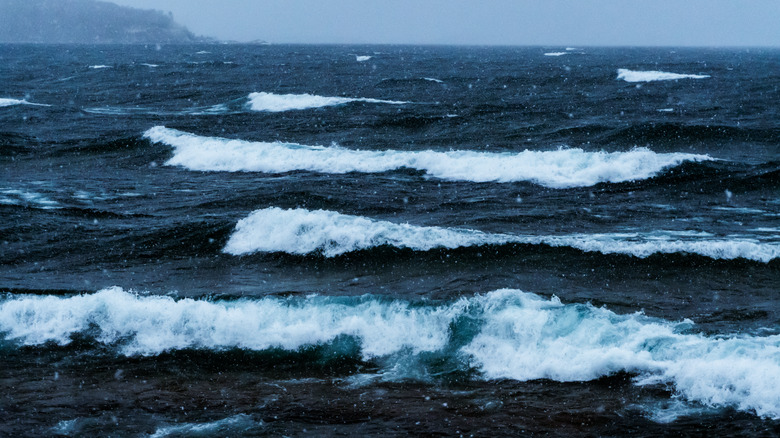
Diving in Lake Superior can be an incredible experience, but it shouldn't be taken lightly, as it's more similar to diving in the ocean than a serene lake. Anticipate powerful waves, weather that changes in the blink of an eye, and freezing cold temperatures. Make sure that you're ready for such challenging and remote dives, and plan ahead so that you can uncover some of the mysteries that Lake Superior has to offer before returning safely to the surface.
Madeira

Split Rock Lighthouse State Park is known for its cobbled beaches and historic lighthouse on a cliff that overlooks Lake Superior. While it's certainly beautiful, it wasn't put there to enhance the view. Over a century ago, a ship hit this towering cliff, and the lighthouse was erected to prevent more tragedies.
The ship was a schooner barge named the Madeira, a type of vessel that has sails but is designed to be pulled by a steam-powered tugboat, created to ship cargo around the Great Lakes. Unfortunately, the Madeira sailed into a terrible windstorm, and its tugboat captain cut the ship adrift. Neither survived, with the tugboat smashing onto the shore of the island and the Madeira hitting the cliff. One crew member, Fred Benson, managed to scale the cliff in the storm, allowing most of the crew to escape the sinking ship on a lifeline. They waited on this remote coastline for days before another tugboat came to their rescue.
Today, intrepid, experienced divers can challenge themselves to find the wreckage of the Madeira at the bottom of the lake. Simply go to Gold Rock Point Parking, show your Diving Certification Card at the park office, and head to the beach. Look for the buoys floating in the water to show you where to go. As you see the enormous shape emerge from the gloom, it's easy to imagine the horrors of the storm that destroyed it. One diver who visited the wreck told Minnesota Monthly: "It looked like it went through a blender. It was 2-inch-thick steel that got picked up and turned around like spaghetti noodles...it's amazing what can happen with the power of the lake."
SS Kamloops
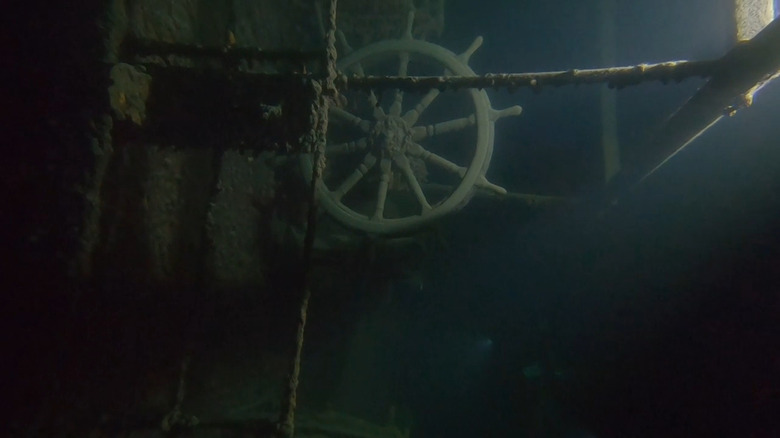
An almost perfectly preserved ship's wheel catches your eye below the surface of the lake. This ship looks like it could still sail, but it's at an unnatural angle, turned on its side. As you swim by, your light shines through its circular windows, sending strange, otherworldly beams of light through the murky water. Within the hold, you'll find 1920s era shoes, pipes, candies, jars of molasses and other items the ship was transporting when it went down. The closer you get, the more obvious the corrosion and damage is. This ship, once smooth metal, has an almost organic, bumpy texture unlike any vessel found on the surface. This is the final resting place of the SS Kamloops.
Sinking in 1927 in the midst of a terrible blizzard that took out five ships across the Great Lakes, the Kamploops wasn't seen again until 1979. Divers on a ship captained by shipwreck diving expert and captain of Superior Trips LLC Ken Merryman discovered it within the remote Isle Royale National Park. As reported by the National Park Service, the first thing these divers spotted at the impressive depth of 195 below the surface, was "a really big shadow, the Kamloops, and this other shadow coming out of it, which was the flagpole."
If you want to visit this incredible shipwreck for yourself, you can. Just be warned that the bottom is at about 265 feet below the surface, so this is far from an easy dive. Contact Isle Royal Charters, a shipwreck diving charter service, to discuss arranging a tech trip to the site of the wreck. Remember that the crew was killed in this wreck, and their bodies likely remain onboard. Proceed respectfully.
SS Hesper

While you might associate diving reefs with tropical islands, Lake Superior has its very own reefs, hiding below the freezing waters. These natural rock formations are incredible ecosystems — but they're also the reason the SS Hesper sank. A wooden steamship that towed larger cargo ships around Lake Superior, the makers of this ship chose the name Hesper instead of Hesperus, because they feared that people would associate it with a Henry Wadsworth Longfellow poem called "The Wreck of the Hesperus." Today, Hesper is also associated with sunken ships because of what befell the crew one fateful day in 1905. The ship encountered an unseasonably late snowstorm and was dashed on a reef where it broke apart. The crew was able to escape into lifeboats, but the Hesper was lost to the lake.
The ship predominantly broke into two pieces, which means that there are two sites you can dive today, located about 30 feet apart. Experienced divers can head to Silver Bay Marina [pictured], gear up at the break wall, and make their way into the water. Expect to swim about 75 feet away from the marina. It's not the most obvious access point, but keep your eyes open for a small, white sign that reads "divers access." Swimming around the ruined ship, it's fascinating to see the scattered debris, from wooden planks to rods sticking up out of the sand. As one member of the Minnesota Scuba Diving Facebook group recalled: "40 feet, 40 degrees cold, a beautiful wooden wreck."
Benjamin Noble
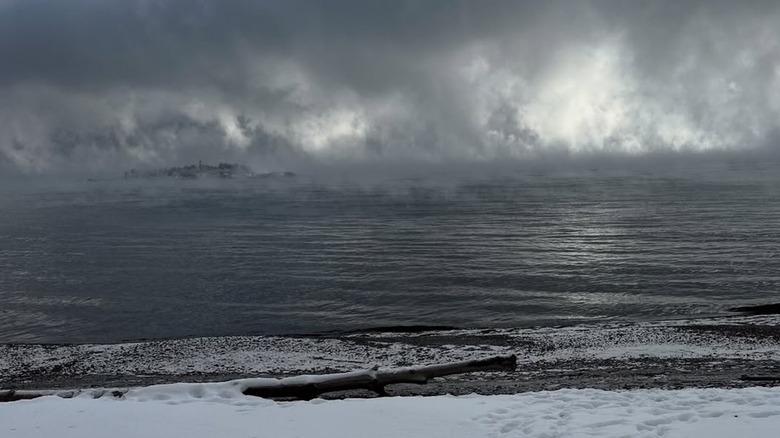
Deep in the dark, cold waves of Lake Superior, you might start to see large, looming shapes. Metal machinery, scattered iron rails, and a ladder descending down into the depths. This is the wreck of the Benjamin Noble, resting in a trench and half-buried in the mud. Some shipwrecks are unpredictable tragedies, but this isn't one of them. Many knew that the Benjamin Noble was in trouble. Even at the dock, it was clear that the ship had been dramatically overloaded with iron rails. The ship's young captain was determined to transport them and eager for the money they would bring in. No one knows exactly what brought down the ship or how the crew perished that day, as the Benjamin Noble was lost for decades. Finally, in 2004, Jerry Eliason and his crew of shipwreck hunters managed to find the lost ship. In an interview with PBS North, Eliason shared: "The Benjamin Noble was definitely one of the holy grails or Loch Ness monsters. That's what shipwreck enthusiasts say when it's a ship that has extra significance."
You won't have to search for almost a century if you want to see the lost ship today, but you will need to be an experienced technical diver who is able to handle depths of more than 360 feet. Reach out to charter boats that sail from the Knife River Marina to find out how to arrange a dive. You can more easily visit the closest land to the wreck, Knife Island, a tiny, rocky isle near where the Knife River flows into Lake Superior.
Bermuda
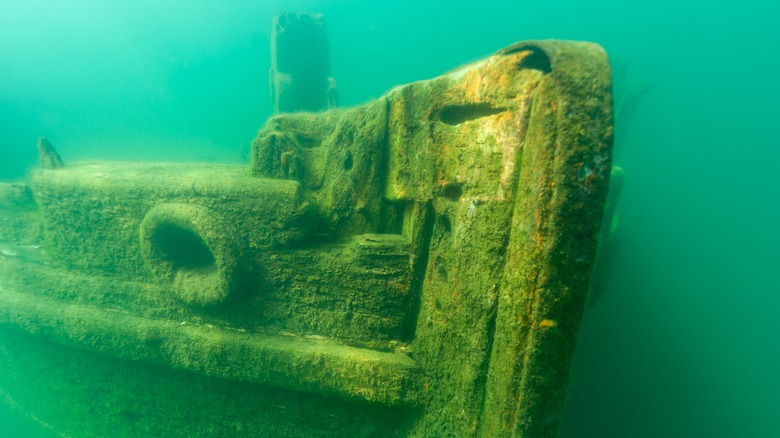
Although Lake Michigan is known for its unique "Shipwreck Alley", there are plenty of boats hidden in the depths of Lake Superior. One of the most gorgeous sunken ships didn't have far to sink. Bermuda's highest deck can be found just 12 feet under the lake's surface. When the water is clear and still, you can see the ghostly outline of the ship above the water. Bathed in sunlight streaming through the lake water, The Bermuda is a remarkable ship, so well preserved that it almost looks like someone could be striding across the wooden deck. While time and water have taken their toll on the vessel, there's something unsettling and strange about the sight of its pointed prow emerging from the water.
This schooner sank in 1870, taking three crew members with it. The Bermuda is believed to have been in the shallow water of Grand Island's Murray Bay because it had sprung leaks, and its captain intended to leave it there until repairs could be done. However, the ship, already heavy with water, broke free of its moorings and suddenly sank. The cabin deck broke with the force, allowing some members of the crew to swim to safety.
Because the ship sits in a shallow section of the lake, there are a few options for visitors to see the wreckage. Glass Bottom Shipwreck Tours offers trips to see it through their transparent boat. It's also accessible for snorkelers and is considered appropriate for certified beginner-level scuba divers, as long as they're prepared for cold water.
Methodology
Because it's estimated that there are more than 550 shipwrecks in Lake Superior, and each one has a strange, ethereal beauty, this list focuses on accessibility. We decided to limit our search to shipwrecks that can be visited by travelers legally. While spots like the famous wreck of the Edmund Fitzgerald might be beautiful, you can't actually visit them. Since most travelers aren't going to find themselves on research teams, we also excluded any spots that needed special permission to dive, unless it's simply a matter of submitting the necessary paperwork.
While we did include a few particularly beautiful dives that require extreme technical skill to reach, we also tried to prioritize some wrecks that are accessible to the general public. The remote nature of these dives makes them potentially dangerous for those without proper training, but we knew we wanted to feature some shipwrecks that can be visited by recreational divers. We curated a selection of particularly aesthetic shipwrecks, taking recommendations from respected sources like SSI into account. We also emphasized shipwrecks that have interesting stories, since a large part of the appeal is learning about their history. We did our best to prioritize various types of shipwrecks in hopes of providing options for people with different interests and skill levels, as well as varied experiences for those who might wish to visit more than one destination on our list.