
A Secret Suburban State Park Has Authentic Florida Keys Vibes Minutes From Downtown Miami
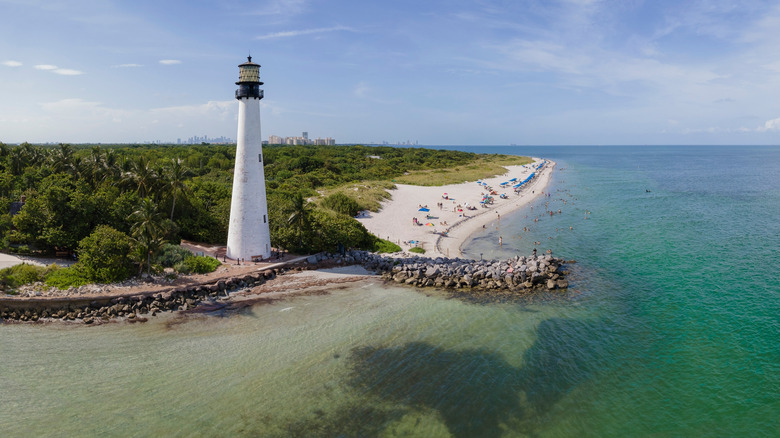
Tucked off the coast of Miami lies Key Biscayne, America's southernmost barrier island and a tropical haven that resembles the Florida Keys with Caribbean-like waters and white sandbars. Spanning the island's southern peninsula is Bill Baggs Cape Florida State Park, an expansive 442-acre preserve with centuries-old history and striking natural beauty. Despite its secluded, island-like atmosphere, the park sits less than a half-hour from downtown Miami.
The tip of the island was first recorded by Spanish explorer Juan Ponce de León in the early 16th century. He named it the Cape of Florida, then home to the Tequesta people. In the early 19th century, the cape was the point of departure for enslaved people who fled by boat to the Bahamas, and today it is part of the National Underground Railroad Network to Freedom. In 1825, the towering Cape Florida Light was built (more on this later). It remains the oldest standing structure in Miami-Dade County and is listed on the National Register for Historic Places. By the 1950s, Key Biscayne was on the cusp of major development, but Miami newspaper editor Bill Baggs led a campaign to protect the landscape. His efforts resulted in the opening of Bill Baggs Cape Florida State Park in 1967.
Today, visitors flock to the state park for adventures such as hiking and biking nature trails, bird-watching for a wide range of diverse species, relaxing on the white-sand beach that extends for over a mile, and climbing to the top of the historic lighthouse. The park is located about a 30-minute drive from Miami International Airport. It's open daily from 8 a.m. to dusk, and entry costs $8 per vehicle. The best time to visit is between November and April, when average temperatures range from 76 to 82 degrees Fahrenheit.
Visit the beach and lighthouse in Bill Baggs Cape Florida State Park

Like the Florida Keys, Key Biscayne is rich in history. An excellent first stop in the Bill Baggs park is the Cape Florida Lighthouse, Florida's legacy lighthouse that offers unmatched coastal views of the world-famous Miami Beach. Access is available only through ranger-led tours, held from 10 a.m. to noon, Thursday through Monday. During the tour, park rangers regale you with stories about the lighthouse's 200-year history, including the 1836 attack during the Second Seminole War that left the structure badly damaged. The tower was later rebuilt and extended to its current height of 95 feet.
Active visitors can climb the 109 steps to the lantern room, where keepers once tended the lighthouse's flame. The glass-enclosed space provides panoramic vistas of the state park and Miami's skyline. The tour also includes a stop at the Cape Florida Keeper's Cottage, restored to its original appearance, and the cookhouse, where you can watch an informative video on the lighthouse's history.
After you've explored the Cape Florida Lighthouse, enjoy a relaxing afternoon at the state park's beach, which resembles some of the best secret beaches in the Florida Keys. The powder-sand swath measuring about 1.25 miles is lapped by clear turquoise waters. Visitors can rent beach chairs and umbrellas on-site, and there are nearby facilities like bathrooms and showers. However, lifeguards are not on duty. For a more active visit, head up to the PADL kiosk to rent kayaks and paddleboards and venture out on the water. Once you've worked up an appetite, the Lighthouse Cafe sits just steps from the shoreline and serves casual seafood dishes with a view.
Outdoor adventures in Bill Baggs Cape State Park
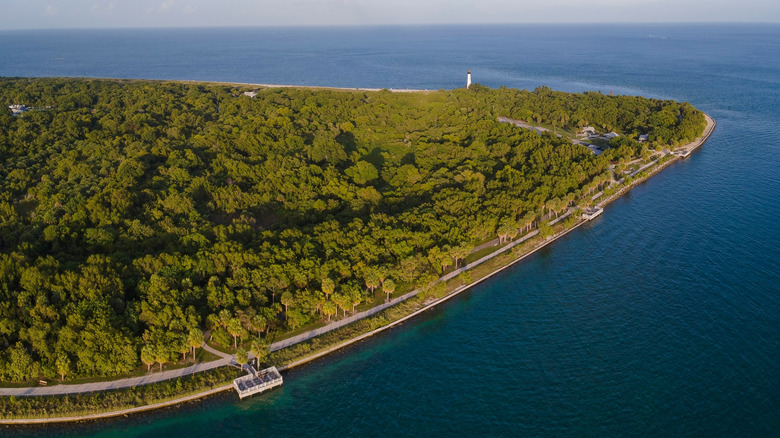
While Bill Baggs' coastline beckons, its inland landscapes are equally worth exploring. Nature trails wind through the park's interior, from the verdant center to the mangrove wetlands – ecosystems similar to those found along the Florida Keys' nearly 2,000 miles of shoreline. The 1.5-mile Mangrove Wetlands Trail is an especially scenic route for birdwatchers. The park's prime position at the southern tip of Key Biscayne makes it a sanctuary for a diverse range of migrating species. Active travelers who want to bike or rollerblade should stick to the paved path, which runs past lush vegetation and water views.
For a longer and comprehensive view of the park, follow Robin's Birding Trail and Lighthouse Loop, a 3-mile route that skirts the western shoreline and includes a visit to the Cape Florida Lighthouse. Along the way, you'll pass No Name Harbor, a picturesque inlet carved into the park's western edge. While boats dock here during the day so visitors can explore the park or enjoy a meal at Boater's Grill overlooking the water, boat camping is also permitted for overnight stays at $20 per vessel per night. And although the harbor is bordered by eight designated fishing areas, shoreline fishing is closed as of this writing.
End an adventurous day at Bill Baggs Cape Florida State Park at The Cleat, a low-key beach club on No Name Harbor, where you might be forgiven for thinking you're in Key West. Here, you can sip tropical cocktails and listen to live music as the sun sets over Biscayne Bay. "Go here for a taste of the Keys, spectacular views, and something just a little bit different from your 'normal' Miami attractions," one Tripadvisor reviewer wrote.