
This Growing Skiing Trend Could Be The Best Way To Bypass Long Lift Lines At Your Resort
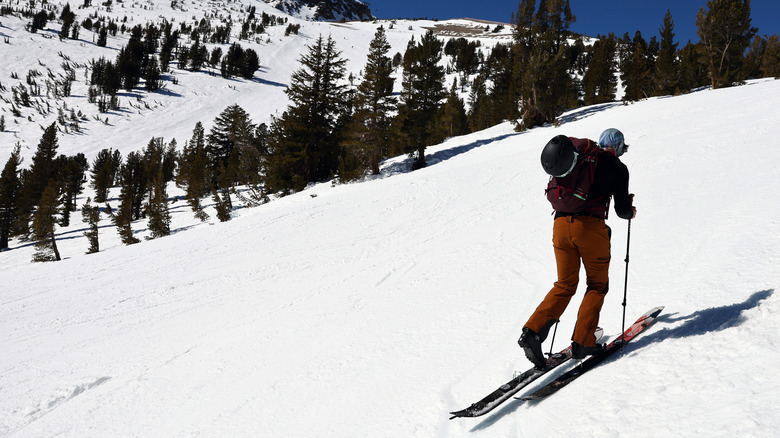
Whether you're shredding black on a bluebird day or catching air in pow conditions, it's easy to forget that long before the advent of chairlifts, skiing uphill was part of the deal. Anyone hoping to experience the wind-in-your-face thrill of navigating a downhill trail on a snow-covered mountain first had to climb it. Sure, there were hardy souls who reveled in the challenge, but decades before alpine skiing became a powerhouse winter sport it is today, the idea of gleefully climbing up a snow-covered mountain just to ski back down would have been considered absurd by anyone but the most ardent and hardiest thrill-seekers. Which leaves us wondering why an increasing number of 21st-century alpine skiers are foregoing the chairlift — and its lines — in favor of climbing the mountain.
There's even an official name for the burgeoning sport: skinning. Also known as uphill skiing, the practice traces its roots to Indigenous peoples and explorers who donned animal skins to gain traction on snowy terrain. Today's skiers use ski coverings, or "skins," made from nylon, mohair, or a combination of the two, which adhere to the ski base to prevent the skis from sliding backward while climbing.
Skinning also involves packing all of your downhill gear into a backpack, stretching skins over your skis, and climbing up a mountain. For fun. Of course, equipment has evolved over time to incorporate uphill-specific tweaks like adjustable boots and bindings that allow flexibility while climbing and lock into place for the downhill run. Even so, there's no getting around the fact that skinners are enthusiastically choosing a more physically demanding way to scale a mountain — just to ski back down.
The appeal of uphill skiing
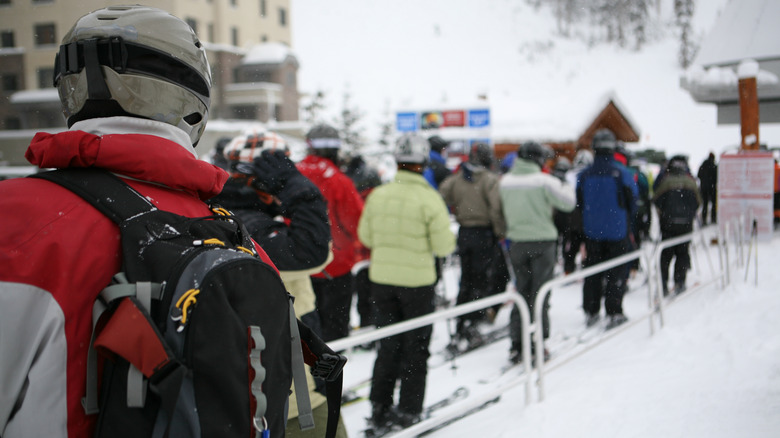
That still leaves the question of why. We get it. Extended between-run waits in line for the chairlift can put the damper on an otherwise stellar day on the slopes. But is that reason enough to climb all the way to the top of the run — toting who knows how many pounds of gear — as state-of-the-art chairlifts whisk alpine skiers overhead? For avid skinners, the answer is a resounding yes. But it's about more than skipping the lift line.
Enthusiasts cite the back-to-nature elements of the climb. There's something undeniably appealing about savoring the solitude of the climb through a snow-covered landscape, secure in the knowledge that you have earned your turns for the descent. Opting out of the chairlift queue in favor of a self-propelled ascent also bypasses the sometimes jarring transition between the serenity of the trails and the hubbub of the base area. Then there's the sense of community that develops among those who practice uphill skiing.
"In the winter, the majority of the way that I and many skiers catch up with our friends is on the skin track, as we call it, which is on the hike up," Brody Leven, a Salt Lake City, Utah-based professional adventure skier and ski mountaineer, told CNN in 2025. "You have so much quality time to talk with someone." It probably doesn't hurt that Leven is based near some of the nation's top ski destinations, including many — like Snowbasin Resort, located close to Utah's ski capital — that cater to the skinning crowd.
Some resorts go all in on alpine skiing
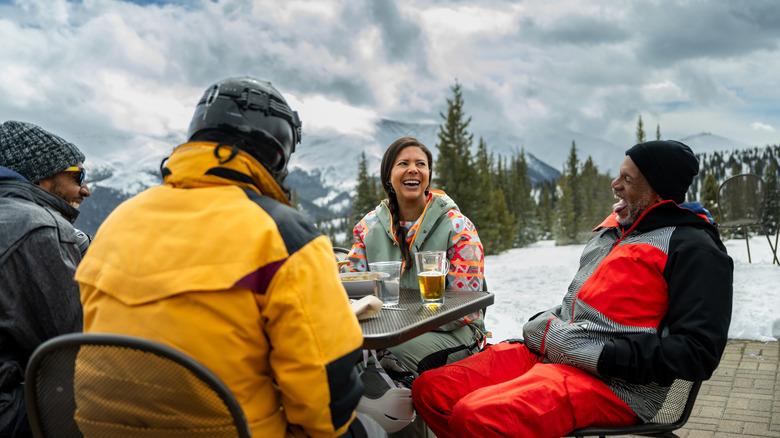
There's a catch, though. Despite the growing popularity of uphill skiing, not all ski resorts allow it. In fact, several major destinations, including Wyoming's Jackson Hole Mountain Resort and Utah's Deer Valley Ski Resort and Sundance Mountain Resort, prohibit the sport altogether. Resorts typically cite safety concerns, ranging from the risk that uphill skiers will interfere with snow-grooming activities to the possibility that they may stumble over unmarked obstacles.
To be clear, uphill skiing is a resort-based version of mountaineering, a more rustic take on the same activity that typically occurs in ungroomed wilderness and can include ice or rock climbing. Because policies vary widely, skiers interested in skinning should research each resort's rules before hitting the uphill trails. On the flip side, some destinations have embraced the trend. Aspen SnowMass, a wildly underrated Colorado town that's also a top fall destination, is particularly skinner-friendly, with more than a dozen marked trails — and ascents ranging from 1,027 to 3,635 feet — spread across its four mountains.
Still, skinning faces an uphill battle. (Pun intended.) Despite its growing following, the sport doesn't even come close to alpine skiing in terms of generating income. Uphill skiers aren't paying top dollar for pricey lift tickets, and they're less likely to have between-run breaks in the lodge for lunch, snacks, or quick beer by the fire. Case in point: Bluebird Backcountry, the world's first liftless ski area. Though it opened in Colorado to wide acclaim during the 2020 to 2021 season, the resort ultimately closed after just three seasons.
Tips to get to the top
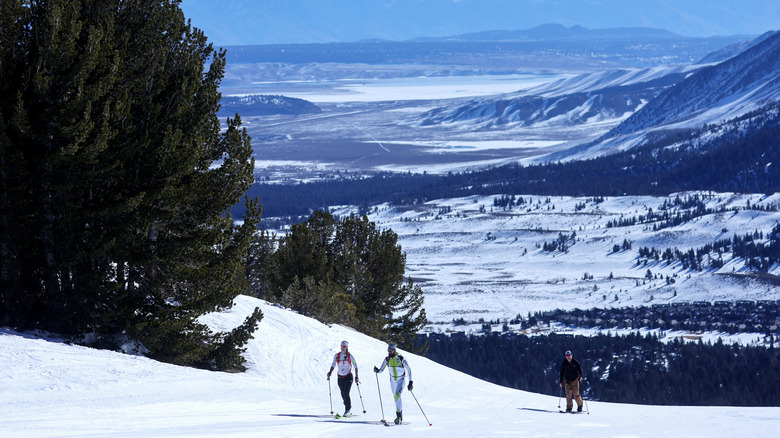
In New England, avid skinners have taken a more organized approach. Founded in 2023, the nonprofit organization Uphill New England works with ski resorts — including Waterville Valley, New Hampshire's family resort nestled in the mesmerizing White Mountains — to ensure they continue to welcome uphill skiers despite the lower-than-alpine profit margin. To that end, Uphill New England manages uphill skiing for a consortium of participating ski resorts, offering multi-mountain passes and handling logistics so skinning becomes an easy add-on instead of a labor-intensive program with limited financial return.
Ready to skin? If you've been cross-country skiing, you'll be familiar with the general skillset involved, but uphill skiing is a steady climb without any long, glorious glide breaks. Regardless of your alpine skiing prowess, it's a good idea to take a lesson before trekking uphill for the first time. There are distinct differences in style and uphill skiing is a far more demanding aerobic workout. Although you may be revving to go at the start of your ascent, best practices suggest maintaining a steady and deliberate pace to conserve energy.
Technique also matters. Resist the temptation to lift your skis in a climbing motion; stick with gliding. Be mindful of pulling — not pushing — your skis uphill. It's a subtle adjustment, but it makes a world of difference in terms of efficiency and energy conservation. Make an effort to press your heels into your skis to improve grip and traction. And dress in layers. Uphill skiing is a strenuous body-heat-inducing activity, so moisture-wicking, breathable fabrics are essential. Plan to adjust as you climb — and don't forget to account for the wind chill on the descent back to the base.