
Unspoken Rules For Attending A Soccer Match In The UK (And No. 1 Is Don't Call It Soccer)
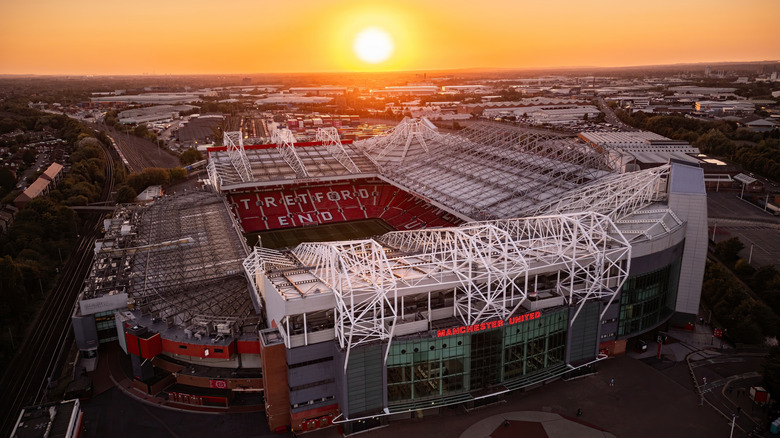
In the frenzied environment of a Premier League soccer stadium — grown men chanting like schoolchildren, tens of thousands of people lobbing abuse at the referee — it's easy to forget that all are observing the unspoken rules of match day. Soccer, from here on referred to as "football," is the UK's number one sport. For many football fans, supporting their local team is akin to religion: the stadium is their church, the club's history their bible, its iconic players their patron saints.
England is home to arguably the most competitive, entertaining football tournament in the world, the Premier League. It features 20 teams, all of which play each other twice across the season (home and away); the one with the most points in the league table at the end of the season is crowned champion. The league operates on a relegation-promotion format, meaning each year the bottom three teams are demoted to the Championship (the second-tier league), while three teams from the Championship are promoted in their place.
Some Premier League clubs are full-blown commercial machines. Despite a fall from grace over the past 12 years, Manchester United has a legion of followers worldwide, which the club claims exceeds 1 billion fans. Rivals Manchester City, led by (possibly) the greatest manager of all time, Pep Guardiola, have been the dominant force in recent years, winning six of the last eight league titles. Liverpool, the reigning champions, are England's most successful ever club, with a home stadium renowned for its electric atmosphere. While less-famous clubs, like Newcastle United, Leeds United, and Sunderland, have equally passionate and loyal fanbases. Whichever stadium you attend, it'll open your eyes to an enthralling, immutable aspect of British culture. But before you go, there is some etiquette you'll want to bear in mind.
Please, don't call it soccer
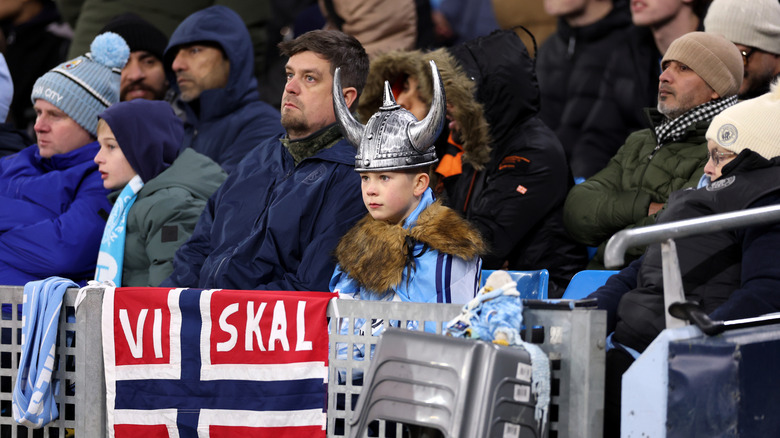
Don't call it soccer for the simple reason that nobody in the U.K. does. If you do, expect to be swiftly corrected, perhaps with a sardonic explanation that it's called "football" because players actually kick the ball with their feet. "The beautiful game" is a common appellation, but it has mostly been demoted to the realm of cliche (or football documentaries about luminaries like Pele, Maradona, and Messi). In any case, it's a clunky phrase to shoehorn into normal conversation.
Using the correct terminology is also a good way to ingratiate yourself with local fans. Premier League tickets can be hard to come by, with important fixtures and derby matches often selling out well in advance. Many ardent fans will be season ticket holders, but amid rising costs since the pandemic, even this money-saving option has become prohibitive for some. If you're able to get a ticket – club members are given priority, so hospitality packages might be your best bet — you don't want to give loyal supporters the impression you're just a blow-in, taking the seat of a fan who really cares.
Travel guru Rick Steves warns tourists to avoid one common American gesture while in Great Britain — it doesn't mean "peace" here, but something closer to "eff" off — and you can add the word "soccer" to that list of don'ts. Saying "football" instead could help more than you know.
The pre-match pub ritual
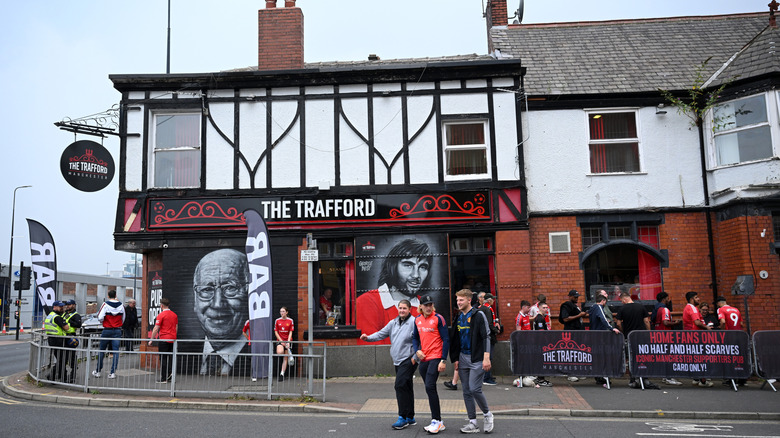
The inalienable right to visit the pub is one of the most important in British life — this is a place where people will hike 20 miles for a pint. Unsurprisingly, pubs are also central to Premier League fan culture, whether for drinking lager and watching the game on big-screen TVs or as meeting points en route to the stadium. No matter if your team is scheduled for the early Saturday afternoon kickoff (12:30 pm), you'll still be in the pub beforehand slurping a liquid breakfast.
Pubs near stadiums often become homes for the club's fanbase. Amid the memorabilia and pops of red in The Bishop Blaize and The Trafford — both close to Old Trafford, Manchester United's stadium — you'll find beer-swilling fans singing songs on match days. The Sandon and The Albert near Liverpool's Anfield stadium are just as raucous, as are The Strawberry and Shark Club next to St. James' Park in Newcastle. Fun as they are, avoid these establishments on match days if you're supporting the away team. Turn up to a Liverpool bar wearing the blue strip of Everton (another Liverpool-based club), and you'll likely get turned away. If somehow you get in, expect to be the butt of every joke and the target of every chant for the duration of your stay.
Unfortunately, there's no tailgating culture in Premier League football. This is because of U.K. restrictions on open fires, parking limitations, and prioritization of drinking over driving. The weather is a factor too: a warm, convivial pub is a nicer place to mingle than under a freezing November drizzle. That said, the walk to the stadium with pint-merry fans, the streets full of color and energy, and a sense of expectation in the air, is probably the greatest pre-match ritual of all.
Be mindful of where you sit, what you wear
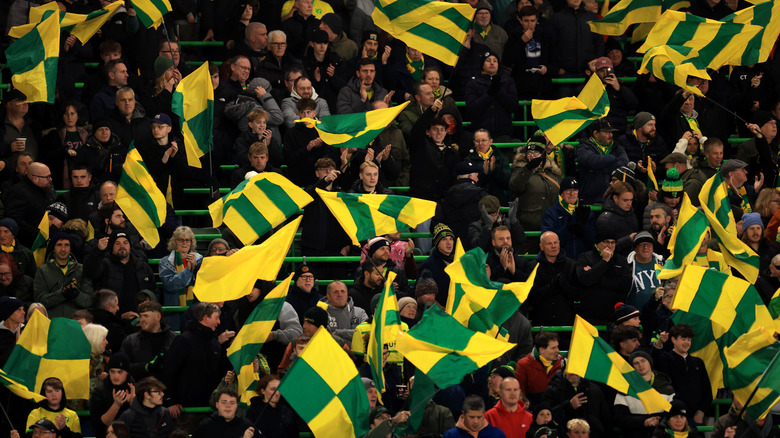
While some Premier League rivalries are actually quite civil, tempers can flare in the heat of the matchday arena, especially in derby games and crucial end-of-season encounters. If you were to snag tickets for the North London derby, say, between Tottenham Hotspur (Spurs) and Arsenal, you should sit among the fans whose team you are supporting. Wearing an Arsenal shirt in the thick of the Spurs fans at the Tottenham Hotspur Stadium would be risky, and ticketing stewards may even ask you to leave – primarily as a way of keeping the peace. When in doubt, wear neutral colors and don't draw undue attention to yourself.
Football, to reiterate, is religion here. So you should also be mindful about how you broach the topic with fans of the opposing team. It's not uncommon for a disgruntled supporter to come out of the stadium after a loss, frothing with anger, steam billowing from their ears. Under such circumstances, a wisecrack will probably go down like a lead balloon and sound more like a provocation. The guiding principle is to use your common sense.
Despite all that, and the sometimes bad reputation heaped on English football fans, matches are safer to attend than in other parts of Europe. In the likes of Belgrade, Athens, and Istanbul, stadium atmospheres are so febrile that fans are sometimes sequestered from each other by police cordons and reinforced barriers. Hooliganism, fights between ultras (organized supporter gangs) and the police, and the need for crowd control can essentially bring parts of these cities to a halt. English football fans calling each other (and the players) the c-word is comparatively genteel.
Respect other fans' experience

Some behavior at Premier League matches can seem uncouth, the language vulgar to sensitive ears, but it's not as simple as the law of the jungle: your own enjoyment should never impinge upon the enjoyment of others. Spending your afternoon chatting about everything other than the football is frowned upon. Armchair punditry — especially if you don't know what you're talking about — is discouraged. Singing, chanting, clapping, gesticulating, cheering, booing, and all the rest of it are part of the experience. Just make sure your joy or your ire is directed in the right places at the right times.
The Premier League has an official Supporter Code of Conduct, which outlines some expected behaviors, though it's fair to say not all are adhered to — like praising the players' efforts, "even if things aren't going well on the pitch." But there are a couple useful nuggets in there, covering ticketing procedures, filming restrictions, how to report concerns, and rules around smoking and vaping. Again, most of it comes down to common sense and is similar to what's expected from fans at sports stadiums in North America. The trick is maintaining common sense in moments of passion and inebriation.
Be aware of alcohol restrictions in stadiums

Despite Premier League football fans' penchant for enjoying a drink, there are restrictions on drinking alcohol in the stadiums. A law, enacted in 1985, prevents consumption of alcohol within view of the playing area, meaning anywhere in the stands, including the 15 minutes prior to and following the match. This even applies to hospitality boxes, causing companies to come up with nifty solutions, like films that allow for the windows to be switched from transparent to opaque. After all, as long as you can't see the pitch, drinking is fair game.
Earlier this year, Luke Charters, a Member of Parliament, called for revisions to the law, arguing that the hooliganism it was supposed to prevent is now mostly a thing of the past. Critics of the law have also pointed out, quite rightly, that fans can drink as much as they please before matches or at the bars in the stadiums at half time, presenting some gaping loopholes. The prevalence of wet pubs in British culture, meaning there's no food (and therefore only drinks) on the menu, and that you can freely drink in cricket and rugby stadiums, shows that society's messaging around sensible drinking is quite disjointed. Obviously, the 1985 law means you can't bring your own drinks into the venue either — alcohol is on the long list of prohibited items at Premier League stadiums. That, too, will have to be consumed before you enter.