
The 5 Best Destinations To Spot Wildlife In Great Smoky Mountains National Park
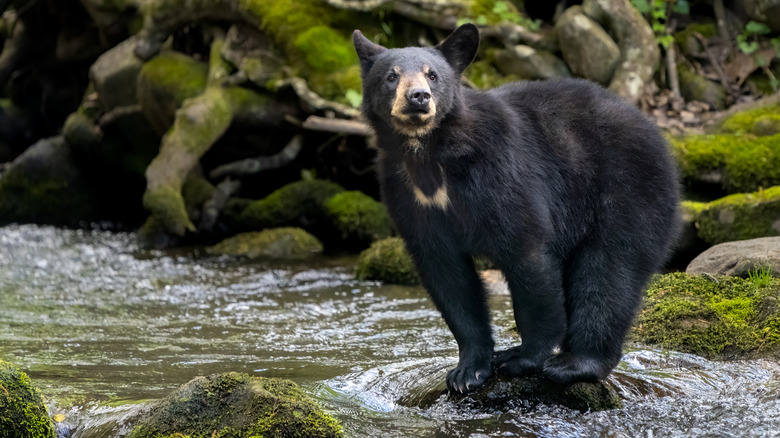
Spread across the border between North Carolina and Tennessee, Great Smoky Mountains National Park receives over 10 million visitors every year. And while they are drawn to this incredibly dreamy terrain for lots of reasons, including its charming waterfalls, misty landscapes, 6,000+-foot-high peaks, and Appalachian Trail section, the captivating tapestry of wildlife that calls this place home is undoubtedly a major factor in their thinking as well.
Home to 65 types of mammals, including bears, elk, and deer, the Great Smoky Mountains' dense forest — which boasts more tree species than the entirety of northern Europe — is absolutely teeming with life. Whether you're a full-on animal enthusiast, looking to immerse yourself in some wilderness for a couple of weeks, or just searching for a stop-off or two to break up an epic drive through the Smokies, you can't go wrong if you head to one of the following spots. Bring your camera, bring your binoculars, and bring your spirit of adventure.
This list is compiled with the help of knowledgeable sources, including the National Park Service, the Smoky Mountain National Park website, and various bloggers familiar with the area. It's a best-of drawn from experts who know the region well.
Cades Cove
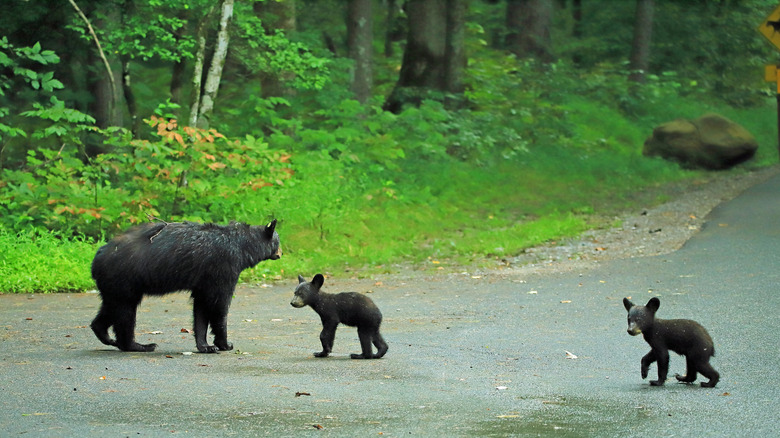
No discussion centered around watching wildlife in the Great Smoky Mountains National Park would be complete without shining a big spotlight on Cades Cove, and the region's most iconic inhabitant — the American black bear. Situated over on the expansive area's western side, Cades Cove is one of the two best places here to observe these magnificent four-legged creatures wandering about. At their most active between May and August, the Smokies' bear population is most commonly sighted first thing in the morning and later in the day at dusk.
With the park home to just under 2,000 bears in total, there's a good chance you'll bump into them elsewhere as well. And while they are technically the smallest among the three North American bear species, that doesn't mean they should be taken lightly. As a good rule of thumb, bear encounters should be treated with extreme caution. If you see one in the wild, remain watchful and do not approach it. Storing food neatly in the trunk of your vehicle, and ensuring that all of the garbage you're responsible for is properly disposed of in bear-resistant dumpsters, is federal law in these parts. Consider yourself warned.
Other animals that you have a very good chance of seeing in Cades Cove include white-tailed deer — the smallest deer in North America — and wild turkeys. With the Smokies also known as the "Salamander Capital of the World," you'll want to keep an eye out for them, too. Remarkably, there are over 30 different species of salamander to be spotted here. You're most likely to observe them on the ground in the woods and crawling about in wet creekbeds, especially if it's just rained. Go for a drive on the Cades Cove Loop Road to see all of the above and more, including Bill Murray's worst enemy — the groundhog.
Cataloochee
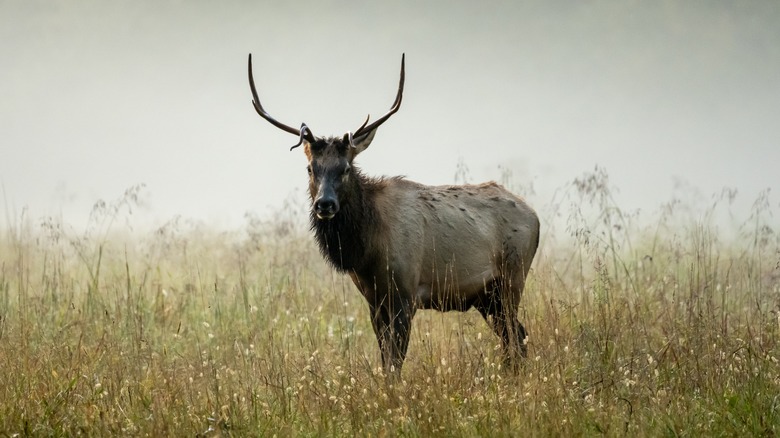
To see an impressive elk herd living their life and doing their thing in the wild, get yourself over to Cataloochee. This is a corner of the Smokies where a prevailing sense of cultural history collides with the heartwarming scenery of a verdant valley. Thanks to the presence of the Balsam Mountain area nearby, as well, you've got a chance here to reach some beautiful elevated positions via the various hiking trails and scenic drives that thread their way across the terrain. Even if there were no animals to be seen here, the panoramic views on offer in this southeastern section of the park would still be enough to justify a visit.
Elk, reintroduced to the Smokies in 2001, some 200 years since they'd last roamed in North Carolina and roughly 150 years on from when they'd last been sighted in Tennessee, can weigh up to 700 pounds. Keeping your distance from these potentially dangerous creatures while you observe them, then, is a smart move. When escorting their young, female elk can act aggressively if they feel threatened. With that in mind, visitors are told to remain at least 50 yards away. The elk are at their busiest on cloudy days, early in the morning, and later in the evening. Keep your eyes peeled.
Proudly wearing their antlers like fashionistas, these mighty specimens with their bugle-like call aren't alone in the Cataloochee area. They share this picturesque patch of the Great Smoky Mountains National Park with black bears and white-tailed deer.
Elkmont
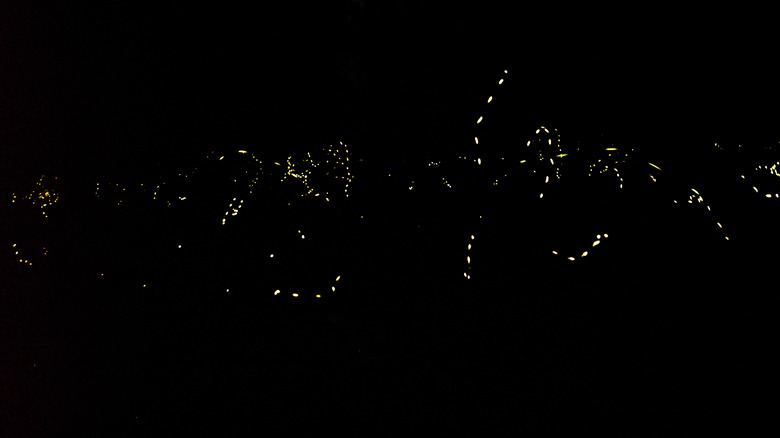
For something a little different, make sure the Elkmont area is on your radar. It's where you'll find a large population of synchronous fireflies. Also known as lightning bugs, these surreal creatures are capable of lighting up their abdomens and putting on spectacular shows after dark. The eye-catching flashing, of course, isn't for the benefit of visitors. It's to attract a mate. Each species of firefly (there are 19 unique ones in the Smokies) serves up its own unmistakable — if you're a firefly, at least — flash pattern. And it's these patterns that help male and female fireflies to find each other in nature's nightclub.
Of course, such an impressive natural phenomenon raises justified concerns about conservation and the impact of surging visitor numbers. It's precisely why the National Park Service has set up a lottery system for anyone hoping to see the fireflies in action. Such an approach ensures the long-term protection of these astonishing insects, and significantly enhances the experience for those lucky enough to make the cut. Just be sure to stick to designated trails and adhere to firefly viewing etiquette. Once you've ticked off the fireflies in Tennessee, go for a wander amongst the abandoned cabins and serene trails of Elkmont.
Kuwohi (Clingmans Dome)
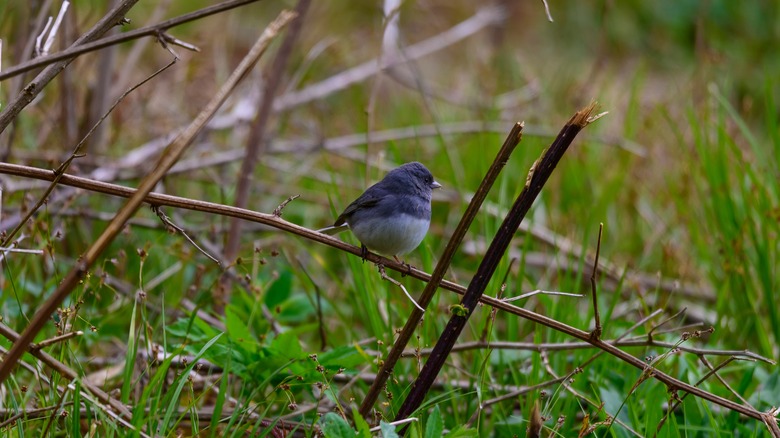
Finding yourself in the Great Smoky Mountains National Park and not making time for its highest peak would be an error to end all errors. Serving up unforgettable views in every direction from the UFO-shaped observation point at its summit, Clingmans Dome (also known as Kuwohi) is the ideal spot from which to soak up the full majesty of the region's environment. It's also, you'll be glad to hear, a top place to observe all manner of wildlife.
As you explore Clingmans Dome and its surrounding trails, there's a decent chance you'll spot black bears wandering about. The damp habitats in this neck of the woods, especially after rain in spring and early summer, are also good places to catch a salamander sighting or two. Hidden amongst the trees on and around this mountain, you may even see an elusive northern flying squirrel gliding here and there. Your best bet when it comes to observing these unusual creatures for yourself is to take a nighttime jaunt in summer.
Being the most elevated point in Tennessee, Clingmans Dome is also a brilliant place for birdwatching. Bring your binoculars and scan the skies for common ravens, black-capped chickadees, Canada warblers, brown creepers, dark-eyed juncos, golden-crowned kinglets, northern saw-whet owls, red-breasted nuthatches, winter wrens, and more.
Roaring Fork Motor Nature Trail
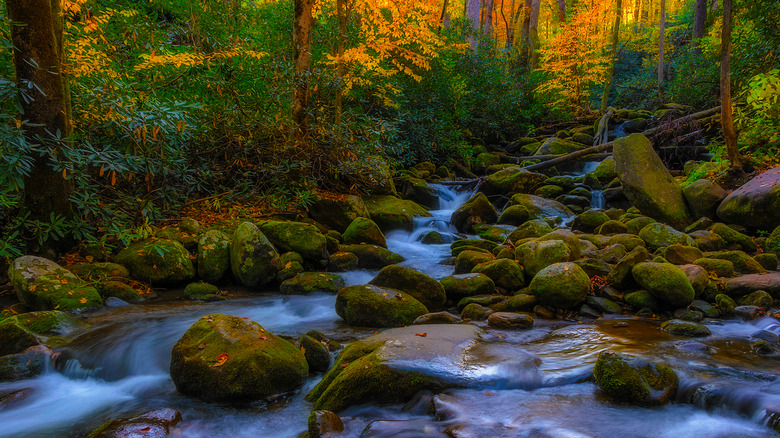
When it comes to visiting Tennessee, and the Smokies in particular, the affordable vacation destination of Gatlinburg is well worth a look. Set just over an hour away from Knoxville's McGhee Tyson Airport, the walkable mountain city combines the conveniences of a built-up urban environment with the magic of the outdoors. Not far from Gatlinburg, a mere four miles away if you're counting, you'll come across Roaring Fork Motor Nature Trail — another big reason why wildlife lovers should get themselves to this corner of the U.S.
Close to the Rainbow Falls trailhead is where you'll discover this 5.5-mile-long one-way road, and the sweet joy that comes from driving through a biodiverse forest rich in history and teeming with life. Named after the fast-flowing Roaring Fork stream, which surges with a powerful energy after heavy rain, it's a route where drivers and passengers have the chance to glimpse old log cabins and gristmills sat amongst old-growth trees. During the course of the drive here, you'll have chances to pull over, get out of your vehicle, and breathe in some of that clean Appalachian air. In a list already boasting plenty of them, it represents another golden opportunity to see bears and deer wandering freely in their natural habitat.