
Brazil's Most Unexpected Remote Work Hot Spot Is An Island Paradise

The Brazilian dream for remote workers is no longer confined to the cosmopolitan chaos of Rio de Janeiro or São Paulo. Instead, a quiet migration has turned a laid-back island paradise into the next big destination for digital nomads. Welcome to Florianópolis, a southern state capital where your workday competes with 42 beaches and a California-like coastal vibe.
Florianópolis, simply called Floripa by locals, is an unexpected hot spot for remote work because the island is historically associated with tourism, not business. The New York Times even called it the "Party Destination of the Year" in 2009. While people do still enjoy club and cachaça nights, the vibe has changed in recent years thanks to a thriving tech scene that turned the Magic Island (its traditional nickname) into Brazil's Silicon Island with more tech businesses per capita than anywhere else in the country. These include major companies like RD Station, Softplan, Intelbras, and Cianet, as well as high-growth startups and scale-ups that led to its official 2024 designation as the Startup Capital of Brazil.
Against this backdrop of innovation and infrastructure, Floripa has seen a 224% increase in digital nomads since 2018, including 5,600 new arrivals in 2025 alone. This sky-high data led DashCity to rank Floripa as the second fastest-growing remote work destination in the world. Co-working hubs like Founder Haus support tech entrepreneurs with networking events like Breakfast Club and Founder Fridays, and a café culture has emerged that caters to remote work with serene settings and strong Wi-Fi.
Island life on Florianópolis
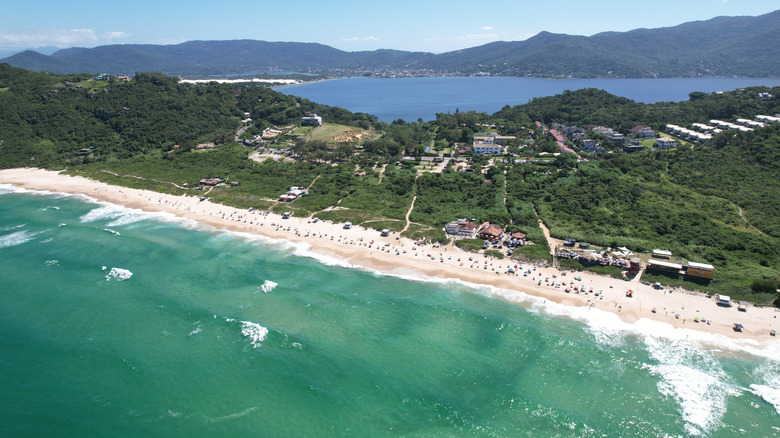
Though typically referred to as an island, Floripa is actually a city that encompasses Santa Catarina Island and the smaller islands that surround it. The city also includes part of the mainland, namely the peninsula with neighborhoods like Capoeiras and Estreito. The historic Hercílio Luz Bridge is the iconic landmark that connects the peninsula with the main islands, but two parallel bridges, Colombo Salles and Pedro Ivo Campos, also connect the two sides. The far side of the peninsula features the Serra Geral mountain range in the backdrop.
Entrepreneurial culture aside, Floripa is a prized location associated with a slower pace, less crime, and a better work-life balance. A large part of that has to do with the abundance of nature and diverse landscapes, which include mangroves, lagoons, and beaches with year-round surf spots like Praia Mole and Joaquina. The latter also offers large sand dunes that attract sandboarders. As if being surrounded by water isn't enough, the island features a giant lagoon, Lagoa da Conceição, in the center that's popular with kitesurfers. Rolling green mountains provide plenty of hiking trails, though the most iconic trek, Lagoinha do Leste, takes you to a secluded crescent-shaped beach that cannot be reached by car. More adventurous hikers might try the rugged Trilha de Naufragados trail through rainforest, canyons, military ruins, a lighthouse, and undeveloped beaches.
Staying in Florianópolis
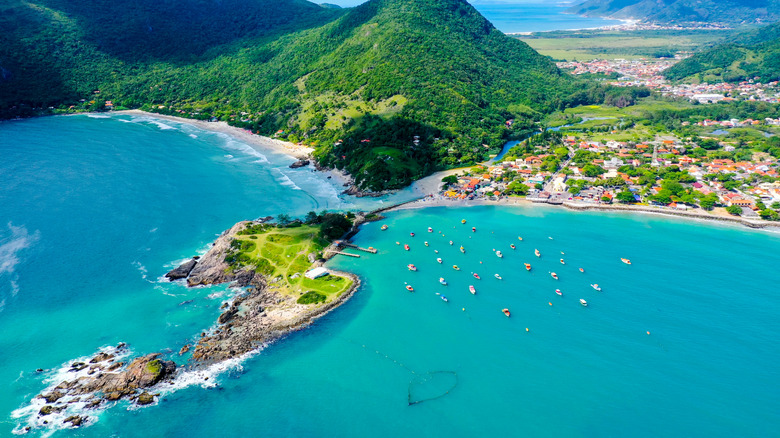
Florianópolis–Hercílio Luz International Airport in the heart of the island hosts arrivals from Brazilian cities like São Paulo, Rio de Janeiro, and Belo Horizonte and international capitals like Santiago (Chile), Buenos Aires (Argentina), and Lisbon (Portugal). The airport is about 10 miles from the downtown city center, which is home to Terminal Rodoviário de Florianópolis, a major bus station with several long-distance arrivals and departures. The island has mild winters (June to September) and hot summers (December to March) but no dry season, as it can rain throughout the year.
Short-term stays are available through platforms like Airbnb and ZAP. According to Expatis, the median one-bedroom apartment costs $510 per month, but prices can soar to $1,000 in the city center. Estimates vary by location and lifestyle, but some expat sites suggest a digital nomad can live on as little as R$8,000 per month, or about $1,500 USD. This is expensive by Brazilian standards but maybe less so for expats coming from big U.S. cities. Floripa is more expensive than most of Brazil, even if the country is among the budget vacation destinations where the U.S. dollar goes furthest. Cheaper coastal spots include Guarujá, a stunning shorefront city just outside of São Paulo, and Paraty, a warm year-round paradise famed for its scenic beaches.
Brazil offers a digital nomad visa for applicants with a minimum monthly income of around $1,500 USD per month or with savings of at least $18,000 USD, along with other forms of documentation. The visa allows digital nomads to live and work in the country for one year, with annual renewals. The process is relatively straightforward, with a lower income requirement than many other countries offering a similar visa, especially compared to Europe.