
The 5 Best Abandoned Ghost Towns Worth Exploring In Michigan
Michigan is no stranger to abandoned places. As reported in the Justice Policy Journal, Detroit alone was home to over 100,000 abandoned structures in 2020, ranging from industrial sites like the Fisher Body Plant 21 to entertainment venues like the Grande Ballroom. Bygone structures can be found in plenty of smaller Michigan communities, too. In total, there are 128 ghost towns across the state according to Love Exploring, and while many of these have completely vanished (save for a few foundations), others are still home to abandoned buildings and other remnants.
Many of Michigan's ghost towns share a similar history. Towns often formed during the 19th century to support a booming industry — typically lumber, especially in Western Michigan, though iron and copper mining were also prevalent in the Upper Peninsula. Once that natural resource was depleted, workers left to earn their living elsewhere. The village's reason for existing vanished, and in many cases, so did the town.
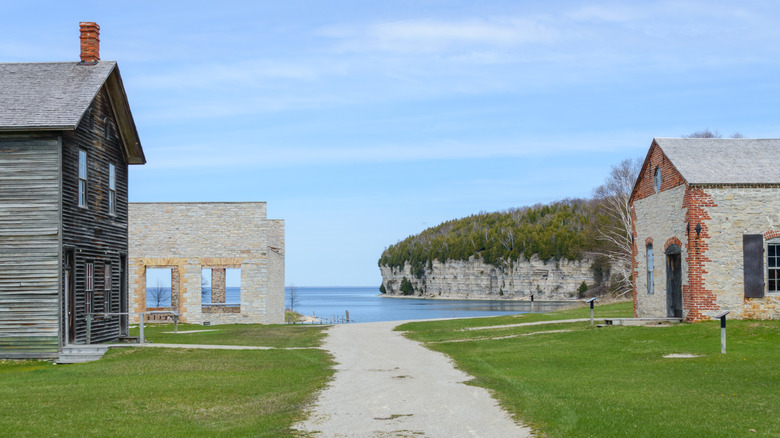
This phenomenon left the landscape dotted with what are functionally open-air museums. Some, like Fayette or the copper mines of Keweenaw County, have been restored or preserved. Others, however, have been reclaimed by nature. For travelers who want to check out Michigan's ghost towns, here are five that are worth traveling to visit.
Port Oneida Village
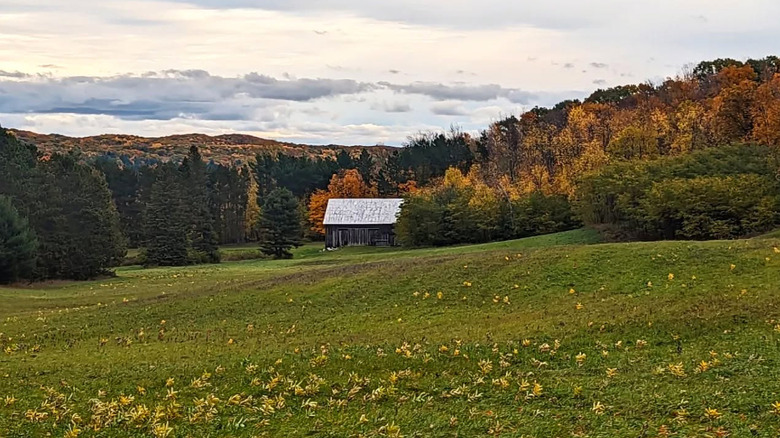
Sleeping Bear Dunes Lakeshore along Michigan's northwestern coast is an underrated Midwest beach with crystal-clear waters. But outdoor adventure is far from this area's only offering. Within this wild landscape are several abandoned ghost towns dating back to the area's 19th-century lumber boom. The best-preserved of these is Port Oneida, which, per the National Park Service, covers almost 2,000 acres as America's largest National Rural Historic District.
Port Oneida's first settler arrived in 1852. By 1860, there were 87 residents, mostly German immigrants from Prussia and Hanover. The hamlet grew over the next 30 years, adding a dock, general store, and blacksmith shop. By the 1890s, however, the region's forests were mostly gone, and the area's industrial focus transitioned from lumber to agriculture. By 1908, only a single original residence remained occupied.
Many of Port Oneida's buildings were torn down in the mid 19th century, though 121 still stand across the historic district (via NPS). Up North Michigan reports that withstanding structures include the old schoolhouse and several historic barns. Other remnants include the original dock's pilings and the Kelderhouse family cemetery. Sightseers can pick up a map from the Port Oneida Heritage Center by the entrance before starting their adventure. Travelers may find other local ghost towns nearby, but many have been reduced to dock pilings. North Manitou Island's ghost towns host a 1927-era sawmill and several cottages from the island's time as a hunting resort. The docks closed for renovation in 2025, but when they're open, you can reach them by ferry from the Fishtown Dock in Leland, a picturesque Michigan fishing village.
Fayette Historic Townsite
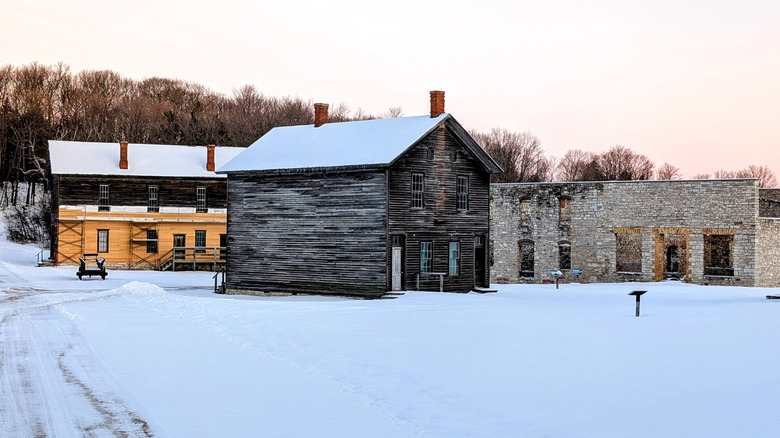
Located along the southern shore of Michigan's Upper Peninsula and just south of Hiawatha National Forest, Fayette was built by Jackson Iron Company manager Fayette Brown in the late 1860s as an iron smelting town. The Michigan History Center reports that from 1867 to 1891, Fayette produced almost 230,000 tons of iron. At its height, the town was home to about 500 people, along with buildings like a town hall, doctor's office, meat market, hotel, and even its own baseball team and horse-racing track (via Visit Escanaba). That all changed in 1891, when Jackson Iron Company closed Fayette's smelting operation. Though some residents remained, most of the company's former employees left to find work elsewhere, and photos from around 1900 (available on the Small Model Railroads blog) show the town abandoned and falling into disrepair.
Michigan Enjoyer reports that in 1959, the state bought the town's remains and converted them into Fayette Historic State Park. The salvageable buildings were converted into an outdoor museum that combines history with picturesque views of Lake Michigan. The site features over 20 preserved buildings (via The Upper Peninsula), 11 of which have been converted into museum exhibits with 19th-century furniture and artifacts. The public may visit the machine shop, town hall, hotel, and several homes.
The best time to visit is from mid-May to mid-October, when the buildings of the townsite are open for both solo exploration and guided tours. Visit in early August for the annual Heritage Day, which features activities like live archaeological excavations and 19th-century music, crafts, and games, including the opportunity to see a game of baseball that follows the rules of the era.
Freda
Many ghost towns in the American West are remnants of the Gold Rush. The same basic story played out in Michigan, just with a different mineral. The discovery of copper in 1840 brought miners from around the world to the Keweenaw Peninsula, which juts into Lake Superior from the Upper Peninsula's northern shore. Boom towns popped up across the area, some of which were home to over 1,000 people until the mines began closing in the late 19th and early 20th centuries (via Visit Keweenaw).
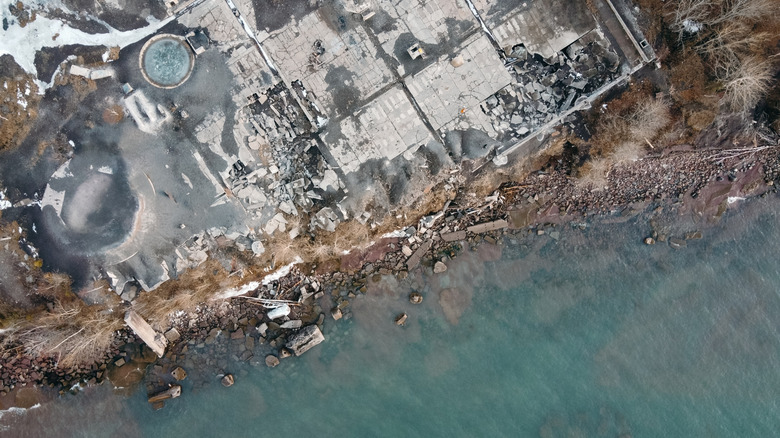
This was the story of Freda. Located on the Keweenaw Peninsula's western shore, about 14 miles west of Houghton, Freda started when the Champion Mining Company opened Champion Mill in 1899. By 1910, the town had a railroad station, a post office, and a population of about 500 people, as reported by 99.1 WFMK. The community thrived until the mill's 1967 closure. Locals held on for a few years as Freda transformed into a summer resort destination, but in 1971, the railroad tracks were demolished. Today, Freda is a shadow of its former glory, with just a handful of residents populating the mostly abandoned streets.
The best way to reach Freda is to take Covered Drive, a scenic dirt road that you can access by taking Coles Creek Road just past the Michigan Smelter, about 3 miles west of Houghton (note that this is a different scenic route than the stretch of U.S. 41 from Delaware to Copper Harbor that's also known as Covered Road). This will also take you past the ghost town of Redridge if you're looking for more abandoned places. Once you reach Freda, you can park near the old mill's smokestack and explore the Champion Mill ruins.
Delaware
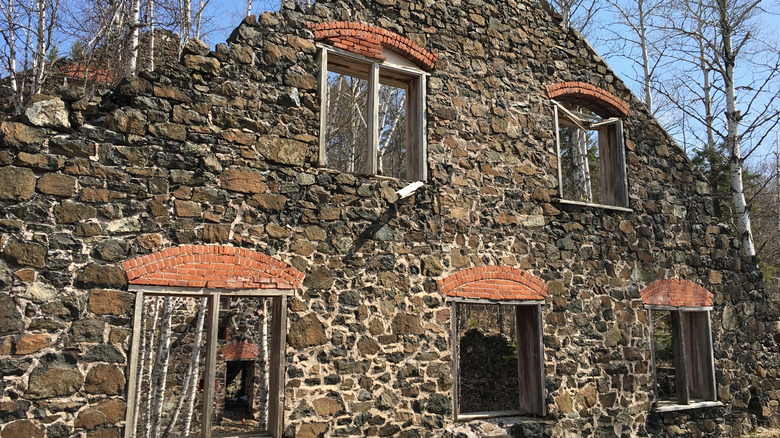
Continue another 50 miles up the Keweenaw Peninsula from Freda and you'll reach Delaware, another Copper Country ghost town. Delaware grew around a copper mine that operated from 1847 to 1887, one of the first mines to open during the copper boom. 99.1 WFMK reports that at its peak, the town had a population of 1,200 people, along with a court system and daily rail service to Calumet, according to Visit Keweenaw. Once the mine closed, the town shrank rapidly. By 1905, there were only about 30 residents, and postal service ceased in 1915.
Not much is left of Delaware; only two abandoned homes still stand along Highway 41. The Delaware Mine, however, located on Delaware Road just to the north, is what makes it worth a visit. Two original mine buildings still stand on the surface, along with equipment and antique trains (via NPS). You can also descend into the mine shaft if you take the $14 full tour. The mine is open daily from May through October and closed in the winter, largely due to the region's frosty weather.
There are plenty of other Keweenaw ghost towns for folks who want to take a more extensive tour. You can stay about a half hour south of Delaware in the historic, once-thriving copper town of Calumet and visit its Coppertown Mining Museum. Alternatively, if you want to immerse yourself in history, you can stay in a restored miner's home in Central, another ghost town with preserved buildings and a free museum in the visitor's center. Other ghost towns, like Mandan and Phoenix, are within 10 miles of Delaware and can make great additions to a trip itinerary.
Kilmanagh
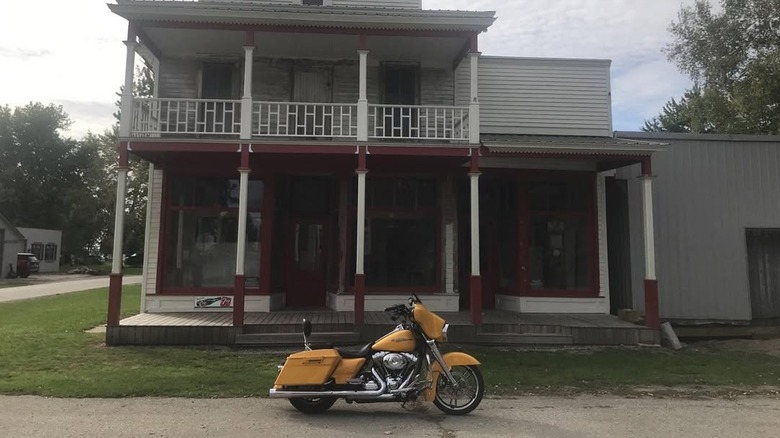
Kilmanagh is in Eastern Michigan, along Saginaw Bay in a part of the state referred to as the Thumb. According to Thumbwind, the town started when homesteader Francis Thompson carved a farm out of the dense forest around a county crossroads in 1861. The town that grew around it became a popular stopping point on the road from Harbor Beach to Sebewaing, and the addition of a general store in 1873 made the small but thriving village a gathering place for farmers.
At its height, Kilmanagh was a commercial hub with a blacksmith shop, grist mill, church, and a few saloons and stores. What it didn't have was rail service, which limited the town's growth. It persisted as a farming hub through the early 20th century and even got a gas station in the 1940s, but in 1963, the general store closed. By the late 1970s, the Pigeon Historical Society reports, the town was reduced to a church, school, and a single bar, Kelly's Liquor, which hung on through the 1990s before shuttering.
Kilmanagh today is best described as a near ghost town. There are still a few occupied homes around the intersection of Bay Port Road and Kilmanagh Road where the town once stood, and St. John Lutheran Church still holds regular services, though its address is now listed as Sebewaing on the Michigan District website. A few of the now-closed businesses are still standing, though, including the Kilmanagh General Store, which the current owners have been gradually restoring since 2017. Thumbwind reports that the vintage 1940s gas pump is still out front and is a popular photo op for travelers.
Methodology
Ghost Town USA, an outlet that has been "researching and exploring ghost towns throughout the United States & Canada since 1968," outlines five main ghost town categories. Based on how much of the town remains, these categories are broken down like so:
- Class A: Barren site (only foundations or footings of buildings remain, if anything)
- Class B: Rubble and/or roofless ruins
- Class C: Classic ghost town, where buildings are still standing but are no longer occupied
- Class D: Semi/near ghost towns, which still have a small population of residents though most buildings are abandoned
- Class E: Historic communities, which are still living towns though much smaller than at their peak, and where many historic structures can be seen
Our list of Michigan ghost towns focuses on locations in Classes C and D. All five destinations featured above are either completely uninhabited or very sparsely inhabited and no longer have basic infrastructure like an operational post office or grocery store. An additional factor used to pick the locations in this roundup was whether or not a site had remaining structures or landmarks that are of interest to visitors and can be legally explored without trespassing on private property. We also considered each town's past, focusing on places that once hosted vibrant communities and played a significant role in the development or history of its surrounding region.