
California Winter Road Tripping Is A Dangerous Game Thanks To This Freak Weather Phenomenon
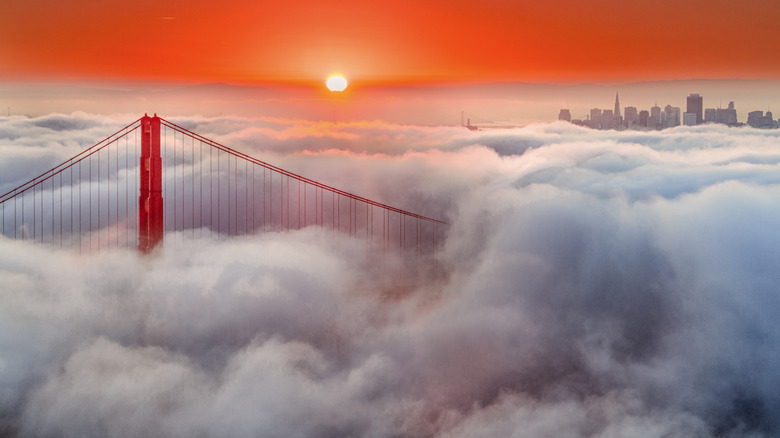
Northern California is known for its foggy weather, which is why there are tourist promotions for escaping the Bay Area fog. However, from late fall to early spring, Californians experience a denser type of fog from the ground up, known as tule fog, that makes driving a gamble — even for the most experienced of drivers. In November and December 2025, locals and visitors through California's Central Valley dealt with one of the most persistent tule fog events in recent memory, lasting weeks and extending 400 miles across the Sacramento Valley, the San Joaquin Valley, parts of the Bay Area, and even as far south as Los Angeles.
This type of fog — technically a form of radiation fog — develops when the air closest to the ground cools at night and becomes trapped, turning it into a fog. In California's bowl-shaped Central Valley, that moisture gets locked in, enabling fog to form each evening after sunset. Tule fog also has a chilling effect on temperatures, contributing to below-average temperatures across the Bay Area and Central Valley, often sending cities like San Francisco, Sacramento, and South Lake Tahoe into temps several degrees cooler than normal. While California's tule fog can offer agricultural benefits, such as helping orchards meet critical chill requirements for crops like nuts and fruit and keeping them hydrated, the dense gray blanket is extremely hazardous for central California drivers, reducing visibility to near zero at times.
Take caution when driving in California's tule fog
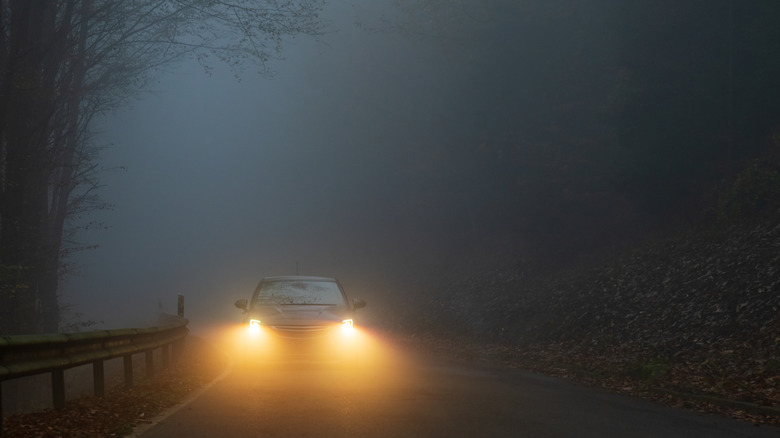
While tule fog is not uncommon in California, a 2014 study published in Geophysical Research Letters shows that this type of fog has become less frequent in recent decades. However, the persistent 2025 tule fog is proof that this freak weather phenomenon can still be a problem. Mother Nature takes no prisoners, and road trippers should exercise extreme caution when encountering sudden fog.
For drivers planning a winter road trip through a fog-prone zone, the biggest hazard is the sudden drop in visibility. Fog can reduce visibility to mere feet, making familiar stretches of road feel foreign and dangerous. The intensity of tule fog challenges motorists navigating everything from dark, rural roads to lit-up highways, and prompts repeated advisories from officials to slow down well below the posted speed and rely on low-beam headlights to stay oriented in foggy conditions.
Even if fog lifts during the day when temperatures get warmer, it often re-forms after sunset, so travelers are advised to plan around the worst hours. Consider delaying early-morning departures and avoiding post-sunset drives, and stay updated with real-time National Weather Service fog advisories before hitting the road. Whether you're driving home for the holidays, taking a winter road trip to California's secret Mercey Hot Springs Resort, or planning on driving one of Samantha Brown's top California coastal road trips with unmatched scenery, stay safe on those treacherous, foggy roads.