
The Midwest's 5 Best 'Little Italy' Neighborhoods Worth Visiting

For roughly four decades, Italian immigrants poured into the United States in search of better fortunes, with more than 4 million arrivals by 1920. While most of their descendants have since been woven into the broader tapestry of American life, those early settlers left a lasting imprint on U.S. cities. Little Italy neighborhoods sprang up from coast to coast, drawing visitors with their history, long-running businesses, and — of course — standout food. These urban blocks helped shape Italian-American culture, where residents continued to speak the languages of their homeland and maintained traditions like Catholic celebrations and time-honored recipes.
When people think of Little Italy, they often picture well-known Northeastern districts like New York's Little Italy, one of America's best that's brimming with romance. But branches of those early families also settled in the Midwest, building communities that many Americans have likely never heard of. These neighborhoods share much in common with established enclaves like Boston's North End or Providence's Federal Hill, from old brick main streets to cornerstone churches and social clubs.
What sets them apart is their setting in the nation's heartland, which adds a regional character to these Little Italys. If you find yourself road-tripping through the Midwest and in desperate need of authentic cannoli or handmade pasta, these are the five Little Italy neighborhoods worth a stop.
Little Italy, Cleveland
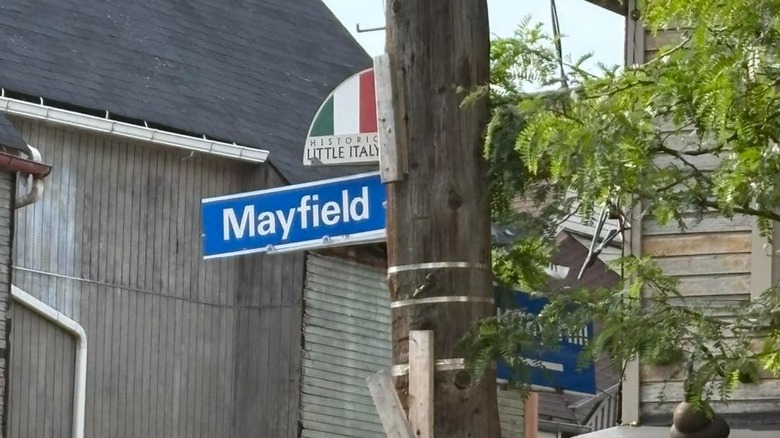
Long after its low point in the 1970s, Cleveland has been bouncing back, gaining attention as the most budget-friendly big city in America that's beating out coastal giants and drawing road-trippers. Many are discovering its Little Italy for the first time. The neighborhood occupies a little wedge of land east of University Circle and just south of Lake View Cemetery. Thanks to its active gallery scene, this Little Italy hosts regular art walks in the summer and around the holidays.
The neighborhood isn't large, but a few blocks along Mayfield Road are packed with Italian eateries, from sit-down restaurants and bakeries to gelato spots. If you're just passing through, consider grabbing a sandwich or salad at Murray Hill Market, a corner grocer and pillar of the community since 2010. You may struggle to pick a place to dine, but if it helps, Guarino's Restaurant has been serving Italian dishes since 1918, making it Cleveland's oldest restaurant. Meanwhile, cocktail bar Cent'Anni is one of the city's most fashionable lounges. If you're visiting in August, try catching the Feast of the Assumption, a longtime neighborhood celebration and point of local pride, when Mayfield fills with food vendors, music, and carnival games.
The Hill, St. Louis, Missouri
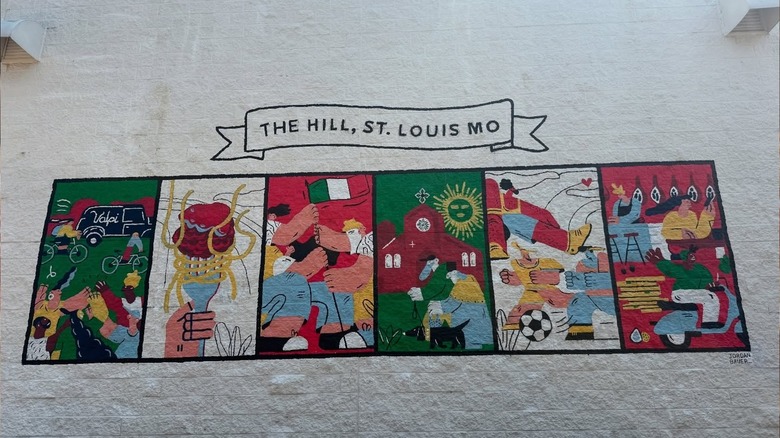
The cultural heart of The Hill is St. Ambrose Catholic Church, a voluminous brick basilica that held its first service in the 1920s and stands in the middle of St. Louis' Italian enclave. This neighborhood is so large and distinctive that it is often described as a "city within a city." Long known as St. Louis' version of Little Italy, The Hill remains one of the city's most intact historic neighborhoods.
The Hill is home to many traditional stores, including the century-old Urzi's Italian Market, as well as boutiques and pop-up shops for local crafters. A popular destination for shoppers is The Hill Antique Market, a converted warehouse with over 75 vendors, including Tattoo'd Home, which sells vintage and handmade home goods, and Raada Vintage, which sells curated vintage clothing and jewelry. Collectors can rejoice, and browsing these stalls is a tactile way to connect with the neighborhood's past.
Unsurprisingly, food is the main draw, and hungry visitors can pick from a wide range of local restaurants, such as Milo's Bocce Garden, a pizza-and-wings joint with bocce courts, and Carnivore, a flame-grilled steakhouse. One of the most unique local offerings is St. Louis-style pizza, which has a thin, cracker-like crust and is often sliced into a grid. This kind of pizza is rarely found outside of Missouri's largest city, and it joins toasted ravioli as a hometown favorite. For more options, learn about the quaint shops and authentic cuisine of this vibrant St. Louis neighborhood.
Bloomfield, Pittsburgh
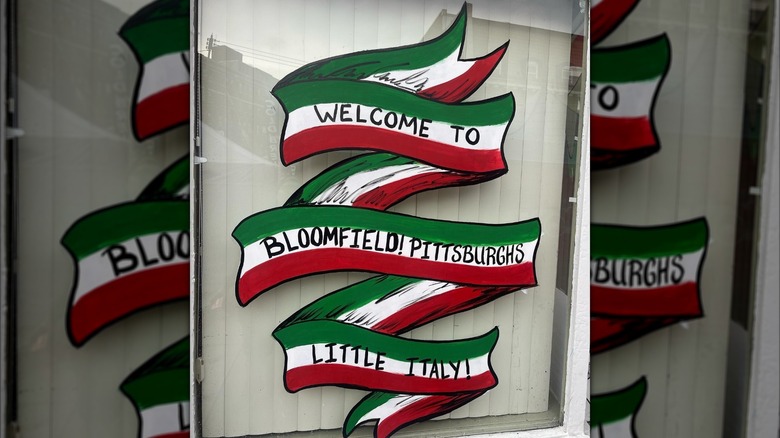
The name "Bloomfield" doesn't exactly scream "Italian heritage," and it is easy to walk down these dozen blocks of Liberty Avenue without realizing that this neighborhood is known as Pittsburgh's Italian district. You'll find a number of Italian restaurants, like the beloved Angelo's Pizzeria and Tessaro's American Bar & Hardwood Grill, but they stand alongside a good number of Latin and Pan-Asian places. Bloomfield is walkable and pleasant, with lots of bars, eateries, and specialty shops. If it wasn't for the beautifully painted sign at a busy intersection declaring "Pittsburgh's Little Italy," you could easily overlook its historic reputation.
That all changes each August, when Liberty Avenue is closed to traffic for Little Italy Days, and thousands of people head into Bloomfield for Italian food, live music, and a massive bocce tournament. While the neighborhood is now youthful and diverse, Bloomfield became a popular landing spot for new immigrants — many from Sicily — in the late 19th century. One longtime neighborhood institution is Pleasure Bar, which has served fine Italian dishes like pasta putanesca, manicotti, and parmigiana since 1941.
Little Italy, Chicago
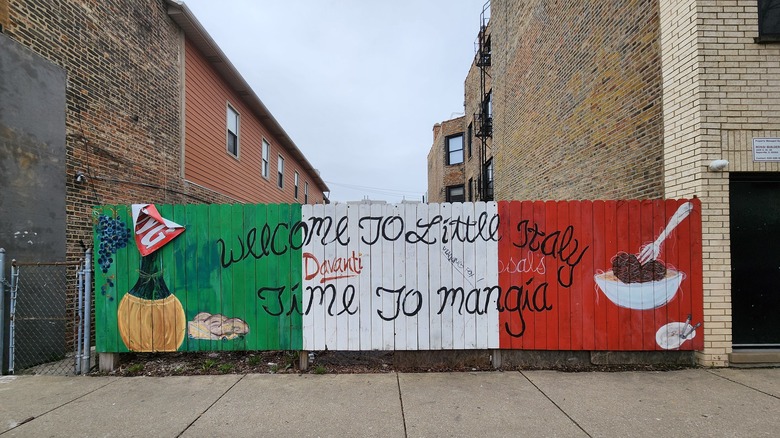
Chicago is a famously diverse city, including a robust Italian-American community. Celebrities like Gary Sinise and Joe Mantegna grew up in the Windy City, and Little Italy occupies a massive square of land next to Downtown Chicago, home to about 25,000 residents. This area is also known as the setting for the University of Illinois at Chicago, so there's a lot of overlap between Little Italy and University Village — and the district draws students and migrants from around the world. Still, many stores and restaurants pay homage to the city's Italian heritage, especially on Taylor Street, one of the best-known corridors in the diaspora.
Each August, thousands of people converge here for the Taylor Street Little Italy Festival, one of the most popular summer events in Chicago (which is really saying something, in this busy city). Just a stroll through this brick-walled commercial strip can feel like stepping through time, and many organized walking tours — including food tours — will help travelers appreciate Little Italy's layered past.
Little Italy, Omaha
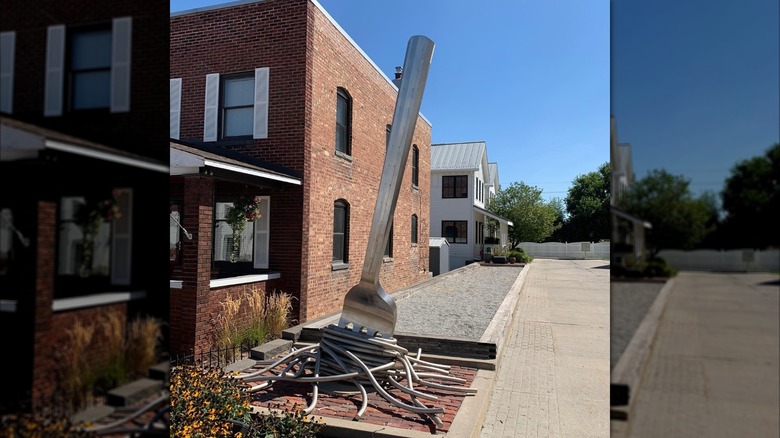
Omaha may have one of the least-known Little Italys in the Midwest, but it is surprisingly large, covering about a square mile of Nebraska's largest city. Like Bloomfield, this Little Italy is pretty understated, and you could drive through without realizing its historical significance. But there's one thing this neighborhood has that no one else does: a massive sculpture of a fork wrapped in pasta. Artist Jake Balcom crafted this 13-foot monument out of metal and called it "Stile di Famiglia," Italian for "Family Style." Not only does this public artwork cheekily pinpoint where you are, but it also holds the world record for the "largest fork with pasta sculpture."
Perhaps the most famous monument here is the St. Frances Cabrini Church, known for its classic Mediterranean architecture and single-domed bell tower. For a quick bite, stop into Orsi's Bakery & Pizzeria, a family-owned business that's been baking treats since 1919 — even after a 1997 fire and subsequent rebuild. For dinner, dig into a beef cutlet or plate of mostaccioli at Cascio's Steakhouse, a keystone of local dining since the 1940s.
Methodology
In truth, just about any Little Italy in the world is "worth visiting," no matter how big or small. Some folks may also disagree about which cities and states qualify as part of the Midwest, which can affect lists like this one. With that in mind, Chicago's Little Italy is enormous and well known, and it's obviously a Midwestern bastion. The Hill in St. Louis has a widespread reputation, while Cleveland is a large city with a well-established — and notably active — Little Italy. Many online rankings and travel guides support the inclusion of all three.
This list is also shaped by firsthand experience. The author has spent time in several of these neighborhoods — and practically lived in Bloomfield — and can confirm that each offers plenty to see, do, and devour. Pittsburgh stands in an odd location and is widely considered part of "Appalachia," but it gets the Midwestern treatment from time to time and seems to qualify here. The dark horse was Omaha's Little Italy: The city is verifiably in the Midwest, and this neighborhood is both sizable — in fact, larger than Cleveland's — and historic.