
What Climbing America's Tallest Mountain Is Really Like
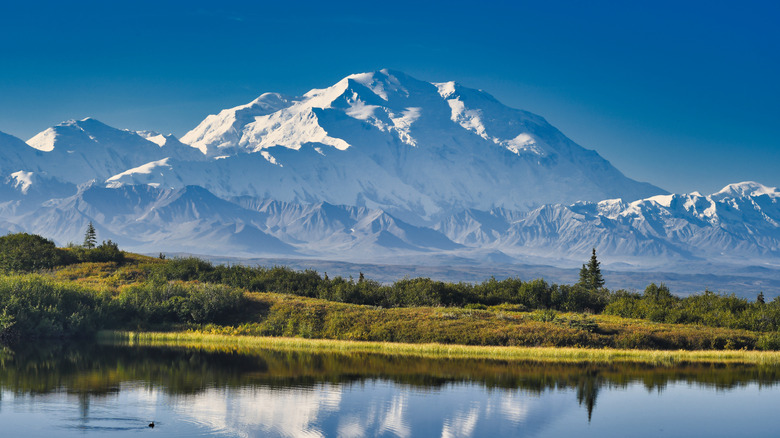
For most outdoor enthusiasts, there's a clear distinction between the stuff they like doing in their spare time and the stuff they've dreamed of doing but never had the courage to pursue further. Take climbing Mount McKinley (also known as Denali). With its summit some 20,310 feet above sea level, an ascent of the tallest mountain in North America is — for many — the realm of fantasy. Standing on the figurative medal podiums as the second-most-difficult and third-highest of the Seven Summits (a list of the tallest peak on each of the world's seven continents), its upper areas are pretty inaccessible to all but the most experienced of climbers. This state of affairs doesn't mean, however, that you're not allowed to satisfy your curiosity and read about what going all the way up is really like.
Located about 130 miles north-northwest of Anchorage (as the crow flies), this Alaskan giant sits at the heart of Denali National Park and Preserve. Formed roughly 60 million years ago by tectonic uplift, and the headline act in an incredibly epic area spanning 6 million acres, it's thought of as an extremely difficult climb. Due to a blend of factors, including the severity of the weather and the steepness of its vertical sections, it's not one to be underestimated. It was first climbed by Hudson Stuck, Harry Karstens, and a team of climbers in 1913, after an allegedly successful 1906 ascent by a man named Frederick Cook turned out to be false. Nowadays, hundreds attempt to climb the mountain every year.
What it's like to climb America's highest peak
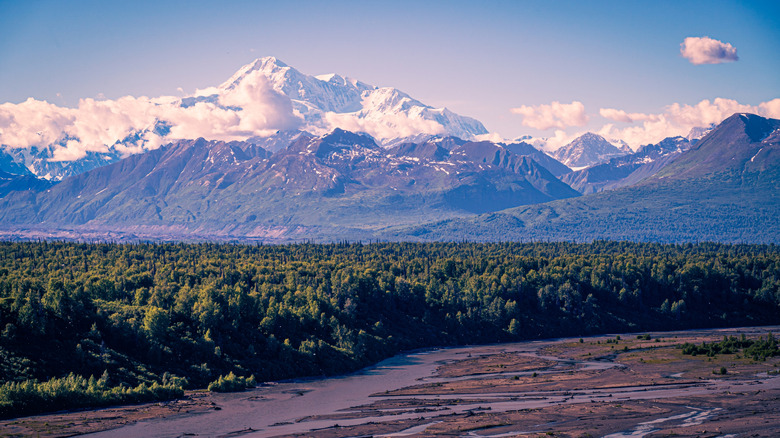
From frostbite and altitude sickness to vertigo-inducing sections where one wrong move could be potentially lethal and unpredictable storms that roll in out of nowhere, climbing the highest mountain in America isn't without its difficulties. One minute you might be getting battered sideways by winds hitting speeds of 100 miles per hour, the next you're trying to stay warm in temperatures of minus 40 degrees Fahrenheit. It's fair to say it's not a climb for the faint-hearted.
Over the course of 17 to 21 days (the average time required for a round trip to the summit), mountaineers are challenged not only physically, but mentally. Running from the end of April through to the middle of July, the climbing season sees expedition groups do their best to reach the top within the 21 to 28 days they typically give themselves for an attempt. It's busiest from the middle of May through the middle of June, when climbers are sharing the mountain with hundreds of other people who share the same goal.
The West Buttress route, the most successfully climbed route to Mount McKinley's summit by some distance, was pioneered by a man named Dr. Bradford Washburn. It's a central part of a journey to the top that, for most, starts at Denali Base Camp situated at 7,200 feet on the Kahiltna Glacier. It's home to a landing strip that climbers fly in and out of, and takes in five further camps before a final push to the summit. On their journey to the summit, the extreme, otherworldly environment the climbers find themselves in serves up frightening crevasses and exposed ridges covered in ice.
What to keep in mind about climbing Mount McKinley
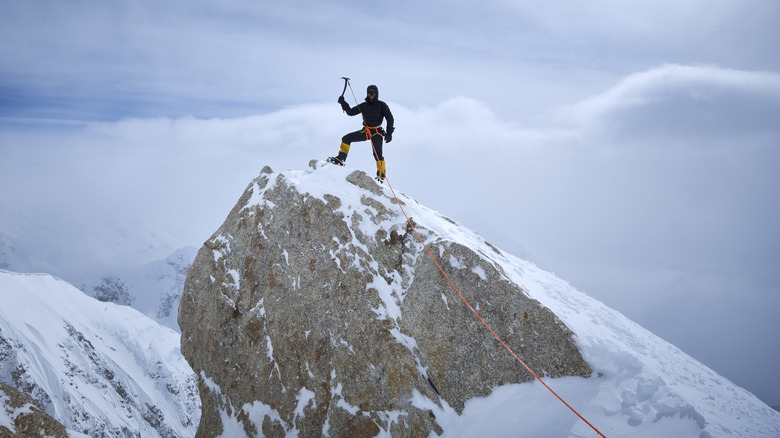
Climbing America's tallest mountain is obviously a huge challenge. But, if you have the financial means to make it happen (guided expeditions set you back more than $11,000) and combine it with the right approach in training and preparation, there's no reason you can't make your big dream a reality. However, alongside Mount Vinson in Antarctica, Mount McKinley is the least supported of the Seven Summits. This means the extremely remote and inhospitable mountain chews up anyone who isn't a self-sufficient, knowledgeable, and hardworking mountaineer.
Being able to move proficiently across snow and on steep terrain in crampons is a must. If you don't know what French stepping is (keeping your crampons flat by engaging all of the sharp points underneath as opposed to kicking into the ice at an angle) and you can't do this consistently, you're not ready. You also need to be fit enough to ascend steep terrain at altitude while wearing a heavy pack and pulling a sled in horrible weather. By getting yourself light and lean in the months beforehand, you give yourself a far better chance of getting to the summit. You also need a strong core, lower back, shoulders, and legs before making your attempt.
Other aspects to consider include the need to acclimatize properly (to reduce the risk of altitude sickness derailing your efforts) and the importance of earning your stripes on smaller mountains, such as Mont Blanc or Kilimanjaro. Go with an experienced, well-reviewed guiding service rather than cutting corners with a cheaper, less reputable one. Alpine Ascents and RMI Expeditions both come highly recommended. Of course, if actually going up Mount McKinley sounds too much like hard work, there are plenty of other ways to enjoy this beautiful region. Checking out the epic views from charming Talkeetna at the base of North America's tallest mountain, for example, or going for a scenic Denali National Park train ride don't disappoint.