
This One-Of-A-Kind National Park Hidden In Cambodia Offers Ancient Temples And A Famous Movie Waterfall
We may receive a commission on purchases made from links.
Sandwiched between Thailand and Vietnam, fellow Southeast Asia nation Cambodia might seem petite. The compact country is home to just under 18 million people, but the phenomenal density of ancient temples across this country beggars belief. There are over 4,000 known temples and possibly thousands more yet to be uncovered, but just one corner of Cambodia gets all the lime light: the northwestern city of Siem Reap, home to the temples of Angkor. Packed full of tourists (particularly from December through March when the season is cooler and dryer), Angkor Wat should be considered one of the wonders of the world.
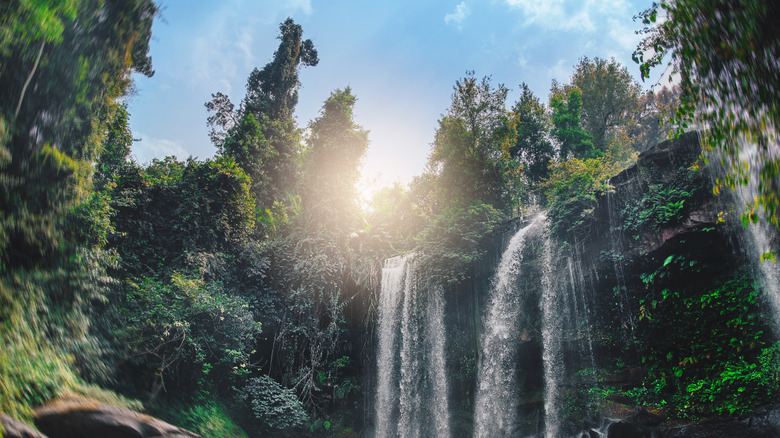
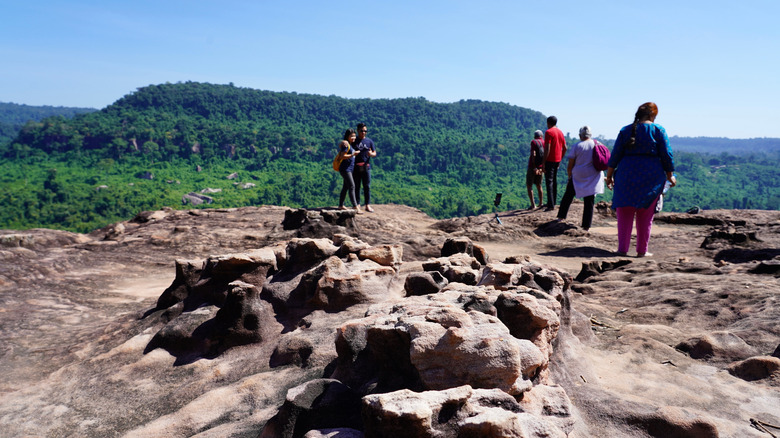
Yet, just 30 miles from Angkor and Siem Reap, another magnificent site — Phnom Kulen National Park — is full of hidden ancient temples and stunning waterfalls. Many sites here remain unexcavated, hidden under moss, shrubs, and trees beneath a mountain plateau that's virtually unscalable without a local guide. That said, Phnom Kulen is truly a one-of-a-kind national park. It's particularly revered by Cambodians since it's said that King Jayavarman II announced he was devaraja (god-king), the human embodiment of Shiva, one of the trinity of great Hindu deities, here on the mountain peak. King Jayavarman II also founded the Khmer empire on this very spot in A.D. 802. Today, pilgrims come to the sacred sites within the park from all over Cambodia to express their religious devotion.
Siem Reap is the closest international airport to Phnom Kulen at just over an hour's drive away. It has regular air links to larger intercontinental hub airports, including Bangkok in Thailand (a one hour flight); Ho Chin Minh City in Vietnam (a 50-minute flight away); Kuala Lumpur in Malaysia (a transfer flight of about two and a half hours); and Singapore's fantastic Changi Airport (two or so hours away).
Phnom Kulen National Park's temples and waterfalls
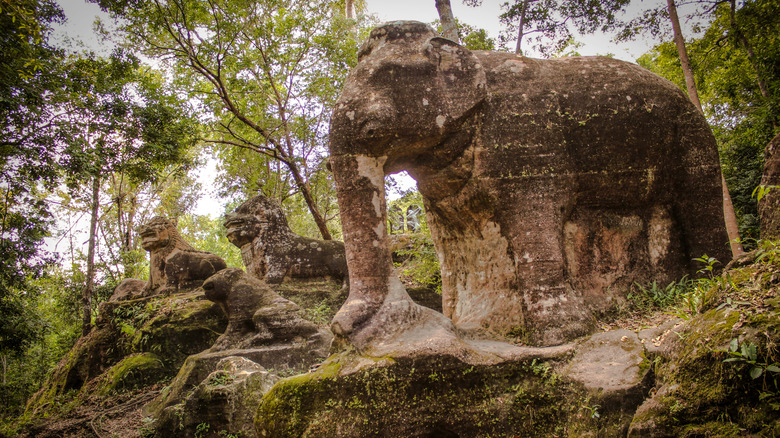
The site known as Srah Damrei (Elephant Pond) is an adventurer's dream. Reachable only by moto or a 3-mile hiking trail, this ancient statue-lined watering hole was only discovered in the 1920s and remains shrouded by jungle. Mysterious large animals were carved out of the sandstone, resulting in one of the most picturesque spots in the whole park. The same trail leads on to Damrei Krap, a group of three red brick tower temples that, like Srah Damrei, are believed to date back to the eighth or ninth century. Further north into the park, the Reclining Buddha at Preah Ang Thom is carved into the mountainside and is supposedly the largest reclining Buddha statue in Cambodia. However, the most magical Angkorian relic in the park is the River of the One Thousand Lingas (also known as Kbal Spean), a riverbed area where hundreds of ancient lingas ("rock carvings") meet a cascading mini-waterfall.
If the small cascade that flows through Kbal Spean has inspired you to go chasing the park's other more famous waterfall, the only way to go is up. It's an hour-long hike up to the top where a larger, 16-foot-high waterfall — the one featured in the movie "Lara Croft: Tomb Raider" — is accessible. However, there are a few aspects to consider before you set your heart on the ascent. First, the slim moto-only road up to the top of the plateau is only accessible to drive or trek until 11 a.m. After that, it becomes a one-way trail of traffic flowing down in the opposite direction. If you're hoping to get to the top of this pilgrimage site to see where the Khmer empire was founded, and maybe even dip in the falls, it's an early morning affair. The heat that rises in Cambodia becoming stifling by midday, so you wouldn't want to try it after 11 a.m. anyway.
What to know about visiting Phnom Kulen
If you decide to stay in Siem Reap, you can find varied and diverse accommodations. There are backpacker hostels, such as the famously fun branch of Mad Monkey (less than $10 per night for a dorm bed), and luxurious stays, such as at the eco-minded but sumptuous Anantara Angkor Resort (from $200 per night). But, if you're keen to stay as close to Phnom Kulen as possible to start exploring as soon as the sun's up, there is a cluster of homestays and farmstays around the edges of the national park.
Whatever you opt for in terms of accommodations, expect to engage a moto (tuk-tuk) driver to take you in and around the park; their rates for two hours start at just $10. This hidden national park is very much a local favorite, but it's off the Western tourism trail, so we don't recommend exploring it solo. You can employ a brilliant guide from Siem Reap, including Akim of Adventure Tours Cambodia, who can take you in her jeep for around $200 per day upon request.
The brilliant Archeology and Development Foundation for Phnom Kulen runs the Anlong Thom Community Based Tourism Centre Phnom Kulen, and can be reached via social media. Besides making your trip easier and safer, embracing local expertise is a great way to turn a visit to a tourist hotspot into an authentic experience, and you can also participate in sustainable tourism (particularly if you're thinking of coupling Phnom Kulen with Angkor Wat). If you do decide to dip in the waterfall, or any pools in Cambodia, do so in shorts and t-shirts. While visiting the ancient sites, it's important to follow the etiquette for visiting a Buddhist temple: Wear modest clothing that covers your shoulders and knees, and wear sturdy footwear; the ground here is often slippery and covered with moss.