
4 Of The World's Best Wineries Come From This Country In Europe (And It's Not Italy Or Spain)
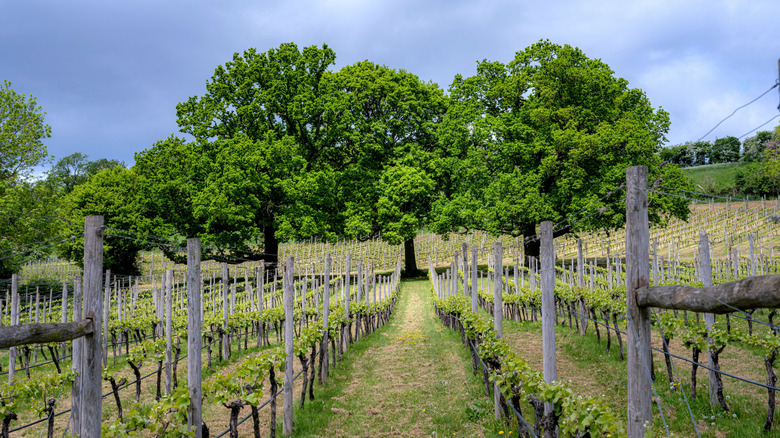
When we think of the world's great wine regions, it's often the sun-drenched hills of France's Loire Valley, the lavish sips and grand resorts of California's wine country, or Sicily's terraced, volcanic-soil vineyards that spring to mind. Few people would immediately picture the drizzly English countryside. But according to a recent analysis by Virgin Wines, later reported in Forbes, four of the world's best wineries are located in that unassuming corner of Western Europe.
Terroir — the fusion of soil, climate, and geography that influences a wine's flavor, texture, and drinkability — differs vastly from region to region. Grapes also thrive in the fertile, damp, and increasingly warm counties of England's south. Finally, the prevalence of chalk soils, similar to the geological profile of northern France, has played a role in the country's recent wine boom.
Virgin Wines' analysis included applications submitted by global wineries through relevant tourism boards. The company's experts then evaluated each winery based on its history, longevity, ability to foster future winemaking talent, innovation in viticulture (the cultivation of grapevines), and sustainability and ESG criteria. Wineries in Argentina, Australia, Chile, Portugal, and France all featured — but there were relatively few from traditional wine powerhouses, like Italy and Spain. The four English wineries in Virgin's top 50 include gold-standard sparkling wine producers, venerable vineyards with decades of experience, and wineries praised for the sustainable principles on which their production methods are built.
Gusbourne, Kent
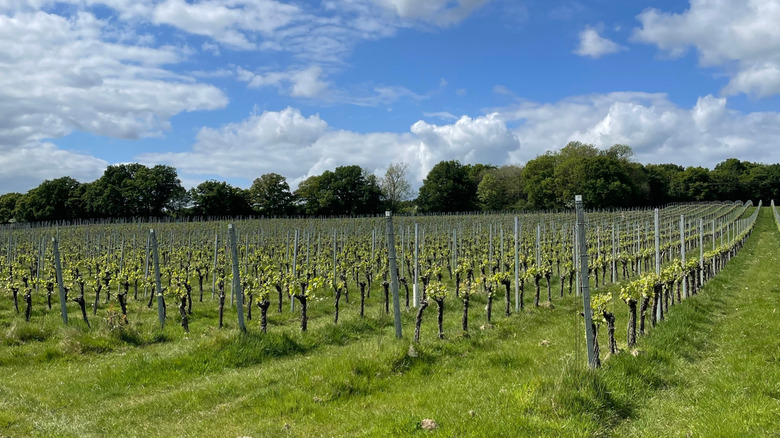
Two-thirds of British-made wines are sparkling, according to the Wine & Spirit Education Trust, with most using the traditional Champagne method, which involves a second fermentation to create the bubbles. Gusbourne, a winery in the atmospheric Romney Marsh area of Kent, is one of the top sparkling wine producers in England, known for its Chardonnay, Pinot Noir, and Pinot Meunier grapes. The first vines were planted on the 148-acre estate in 2004. Since then, Gusbourne's wines have won numerous awards, including a prestigious Chairman's Trophy — which recognizes quality across a winery's entire portfolio — at the 2025 Champagne & Sparkling Wine World Championships. Its wines have also received similar acclaim from international sommeliers and critics, and were served at the London 2012 Olympics.
In 2017, Gusbourne opened The Nest, a cellar door and tasting rooms that wine aficionados traveling in Kent should pencil into their itineraries. Through the winery's website, you can book various tasting experiences and tours of the estate. Some of the more premium events include food cooked by Michelin-starred chefs or wine tastings with Gusbourne's master sommeliers.
On tours, you can also learn about Gusbourne's approach to sustainable winemaking. The winery is a member of Sustainable Wines of Great Britain (SWGB), an independently-audited certification awarded to wineries working to reduce their carbon output and boost soil quality and biodiversity. Based on a recent (2024) sustainability report, Gusbourne uses approximately 99% renewable energy, maintains more than 22 acres of ancient woodland, uses biodegradable corks that sequester carbon dioxide, and plants new crops to encourage vineyard biodiversity.
Nyetimber, West Sussex
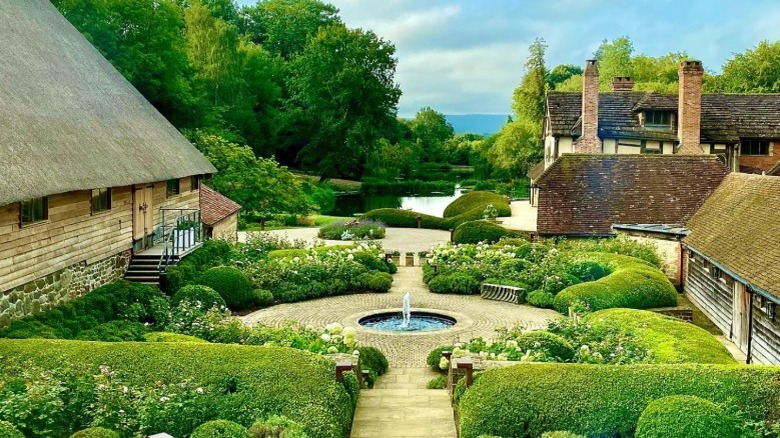
Another major British producer of sparkling wines, Nyetimber has specialized in traditional-method sparkling wine since it established operations in the late 1980s. The terroir in this part of West Sussex is defined by chalky soils and valleys that experience cool winters and increasingly warm, dry summers, meaning it is often compared to France's Champagne region. This means the grapes ripen slowly, allowing Nyetimber's winemakers to achieve that perfect combination of acidity, complexity, flavor, and finesse.
The estate can trace its history back to 1086, when it was mentioned in the "Domesday Book" and the surrounding valley was still known as Nitimbreha. Though it may have taken 900 years before anyone started planting vineyards here, the winemakers have made up for lost time. Nyetimber soared to new heights after a change of ownership in 2006 and the recruitment of two winemakers, married couple Brad Greatrix and Cherie Spriggs, who have helped the winery realize its full potential. From handpicking the grapes to vinification, every aspect of the vine-to-bottle process is carried out on the estate. This confers obvious sustainable benefits and allows Nyetimber to let the environment shape the profile of the wine, from the grape skin compost used as fertilizer to the grazing sheep that substitute industrial mowers.
Nyetimber has won plenty of awards, including Best Drinks Producer at the 2025 BBC Food & Farming Awards — and if you visit the West Sussex estate to sip its wines, you'll understand why. Events include tasting experiences where Nyetimber's signature wines, like the 1086, are paired with a seasonal course menu, and the Nyetimber Bus, a roving pop-up bar in the style of an old 1968 Routemaster that travels to festivals across England. Nyetimber also offers 2.5-hour open-day tours of its estate.
Three Choirs Vineyards, Gloucestershire
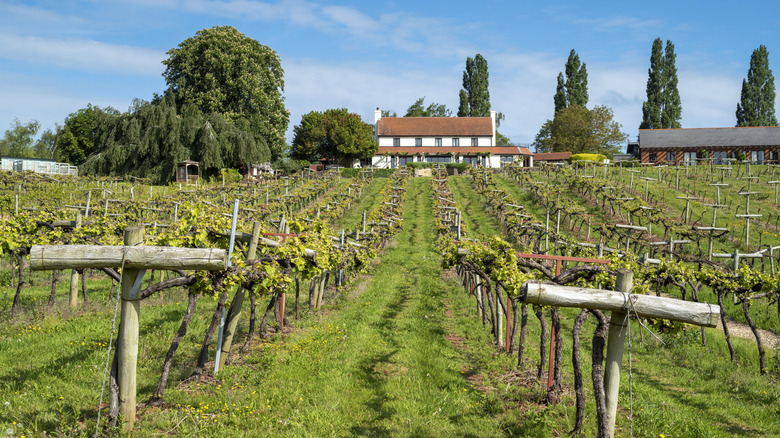
Although there's evidence that winemakers were present in England during the Middle Ages, the first commercial winery in the country was officially established in 1952. That makes Three Choirs Vineyards, which opened in the sleepy West Country in 1973, one of the elder statesmen in the national wine scene. Across its 75 acres of south-facing vineyards you'll find groves of Pinot Noir, Bacchus, Siegerrebe, Seyval Blanc, and Phoenix grapes, resulting in a diverse (not to mention delicious) portfolio of wines. Three Choirs' bright and zesty classic cuvée has been showered with accolades, including at the 2024 Sommelier Wine Awards, while its 2023 Pinot Noir picked up a gold medal at the 2025 London Tasting Awards.
Over the past half-century, the estate has grown markedly and now includes state-of-the-art wine-production facilities, a visitor center, guest lodges, and a sumptuous brasserie. You can visit the Three Choirs estate during any season, whether it's to see new shoots budding in spring or when the grapes ripen and the autumn harvest begins. The British winter is notoriously gloomy, but the estate looks pretty as a picture on frosty mornings, while early or late summer is typically the best time to visit England for optimal weather.
Sample Three Choirs wines during a self-guided wine lunch, which includes a flight of five wines paired with tapas, or alongside a full-course dinner at the brasserie. If you plan on overnighting here, book a room with views of the rolling vineyards or a cozy lodge hidden among ponds in the valley — the latter feels more boutique and adds an extra touch of privacy. After exploring the vineyards, consider visiting Bristol, an hour's drive south. A vibrant, artsy city, it was named one of the best places in the world to travel in 2026.
Wiston Estate, West Sussex
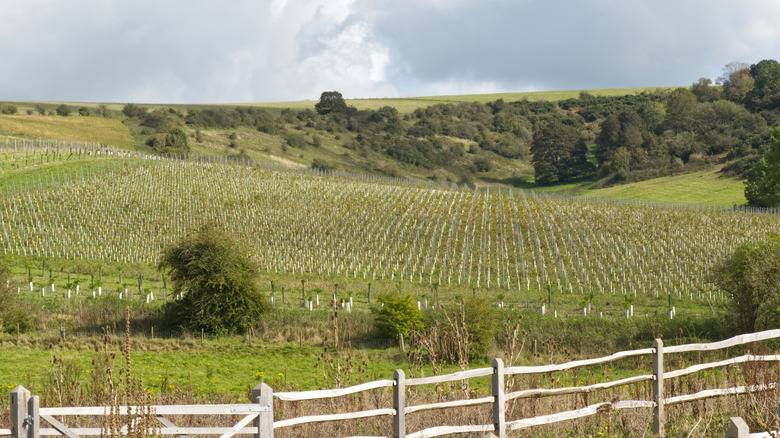
In the South Downs of West Sussex, about 8 miles south of Nyetimber, is Wiston Estate, which produces wines that benefit from the chalky soils and sunny summers of southern England. The estate has been under the stewardship of the Gorings since 1743, but it was Pip Goring — who grew up in South Africa — who planted the first vines in 2006. Growing Chardonnay, Pinot Noir, and Pinot Meunier to make sparkling wine, Wiston Estate is known for its characterful, barrel-aged cuvées and a sustainable production process that underscores everything the winemakers do.
A member of SWGB, Wiston Estate uses minimal pesticides and synthetic fertilizers, and has introduced grazing sheep to facilitate a natural nutrient cycle, as well as beehives to encourage pollination of wildflowers. It also manages wastewater and plastic usage, and has solar panels on the roof of the winery to mitigate greenhouse gas emissions. It's unsurprising, then, that Wiston Estate won the 2025 Schöffel Farm-Environment Partnership Award, which recognizes farms that work with the local community to improve their environment. If you visit the estate, you can get a tour of the vineyards and winery, where you'll learn more about its sustainable methods and sample a selection of wines.
Wiston Estate's food is also first-class. In Chalk, the winery's appropriately-named fine-dining restaurant, guests can enjoy a six-course meal, celebrating the seasonal flavors of West Sussex — some of the produce is grown right there on the estate. Rather than schlepping back to a hotel or Airbnb after the meal, some choose to spend the evening in the Pump House, a lovely stone cottage in the heart of the Downs.
Methodology
To identify the top four wineries in England, we used those included in Virgin Wines' top 50 list, which was published on Forbes in November. Virgin Wines' Buying Director, Sophie Lord, told Forbes: "The final line-up showcases those that achieved the highest scores across a range of benchmarks, including historical significance, innovation, consumer engagement, sustainability, and social responsibility." These criteria largely guided the information included above.
To learn more about each estate, we visited the featured wineries' websites and found details on their origin story, production processes, tours and hospitality services, sustainable practices, and wine roster. We were also able to cross-reference each winery's award-winning wines with the relevant awarding bodies.