
Pittsburgh's Vibrant Neighborhood Is Full Of Ethnic Eats, Converted Warehouses, And Unique Markets
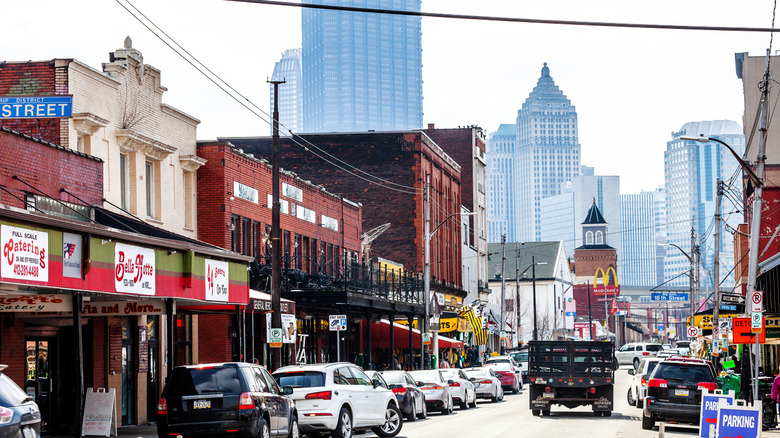
Most Pittsburgh visitors start their journey downtown in the North Side area just across the distinctive yellow Three Sisters Bridges. This does make a certain kind of sense, as this area is where the Steelers, Penguins, and Pirates play. It's also where you'll find attractions like the Andy Warhol Museum, the Kamin Science Center, the theaters of the Cultural District, and views of the Steel City's iconic skyline from the West End Overlook. But the truth is, if that's all that you know of Pittsburgh, you're not getting the full story. Beyond downtown, Pittsburgh is a city of 90 distinct neighborhoods, each with its own personality, energy, and attractions for visitors.
The Strip District is the most convenient neighborhood to explore for visitors who are staying downtown. It runs along the Allegheny River from 11th Street to 33rd Street. If you're headed there from downtown, you'll know you've reached the Strip District when you see the light-up ketchup bottle atop the Heinz History Center — a museum that's definitely worth a visit while you're in the area, considering it was named America's best history museum by USA Today. There's plenty more history to be found on a wander through the Strip District, whose 20-odd blocks are full of independent shops and restaurants where you can get an authentic taste of Pittsburgh.
How Pittsburgh's warehouse district became a cultural hub
The Strip District's location between the railroad and the river made it prime territory for industrial development in the early 19th century. According to Strip District Neighbors, by the mid 1800s, the blocks from 15th to 33rd Streets had sprouted mills, foundries, and factories, including the Union Mills where Andrew Carnegie got his start in the steel industry. Steel City History points out that the construction of the Pennsylvania Railroad Yard in the late 19th century cemented the Strip District as a key link in Pittsburgh's supply chain.
In 1906, the railroad tracks were removed from downtown, prompting the produce merchants along Liberty Avenue to shift into the warehouses on Smallman Street. By the early 1950s, the Strip District had 71 wholesale produce dealers, along with smaller shops and restaurants like Primanti Bros. that catered to the workers. Unfortunately, the collapse of the Pittsburgh steel industry in the 1970s hit the Strip District hard. By the late 1980s, many of the Strip's once-bustling warehouses and factories sat empty.
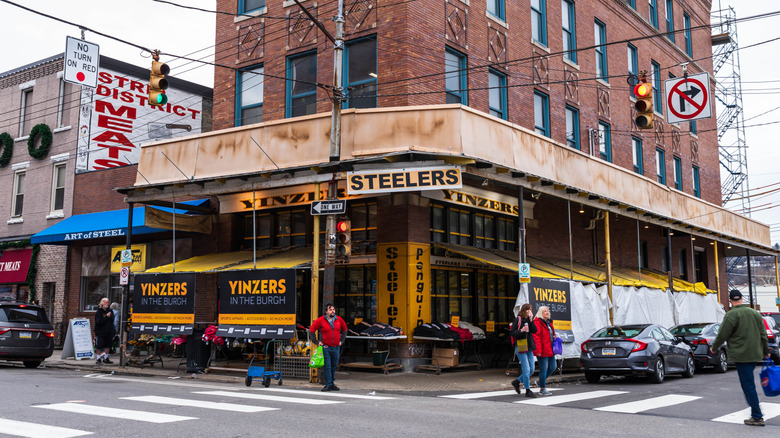
But they wouldn't stay that way for long. Starting in the 1990s, small business owners repurposed these abandoned buildings into everything from coffee roasters to nightclubs, restoring the neighborhood's reputation as a cultural destination in the process. Today, Pittsburghers still go to the Strip to buy groceries, though not from wholesalers — instead, they visit international food markets like S&D Polish Deli, Stamoolis Brothers for Greek and Italian foods, Reyna Foods for Latin flavors, or Sambok and Lotus Food for Asian ingredients. It's also a top spot for visitors to get Steelers gear and other souvenirs from shops like Yinzers in the Burgh, Art of Steel Ltd., and Love, Pittsburgh. On weekends and game days, these shops extend their businesses onto the sidewalks, giving the Strip a bustling, festival feel.
The best spots to eat in the Strip District
Pittsburgh has gained a reputation as a food city thanks to restaurants like Gaucho Parrilla Argentina, a slice of Buenos Aires serving wood-fired steaks in the heart of downtown. The Strip District's enticing blend of international eateries and stalwart classics might make it Pittsburgh's best neighborhood for foodies. Best of all, there's nary a chain restaurant along its main Penn Avenue corridor — a few exist, but they're tucked out of sight in The Terminal, a shopping mall that also offers entertainment like Puttshack minigolf, Sandbox VR, and OnPar Now's indoor golf simulator.
The Strip District has been a cultural melting pot since the 19th century, and that's reflected in its modern food scene. You can get authentic homemade Italian pasta at DiAnoia's Eatery or Irish pub fare at Mullaney's Harp & Fiddle (which also has live folk music and dancing many evenings). Kaya serves Caribbean fare like jerk chicken along with Latin dishes like chiles rellenos. At Novo Asian Food Hall, you can sample a range of Japanese, Vietnamese, and Korean flavors, while Salem's Grill is a favorite for Middle Eastern dishes and Halal meats.
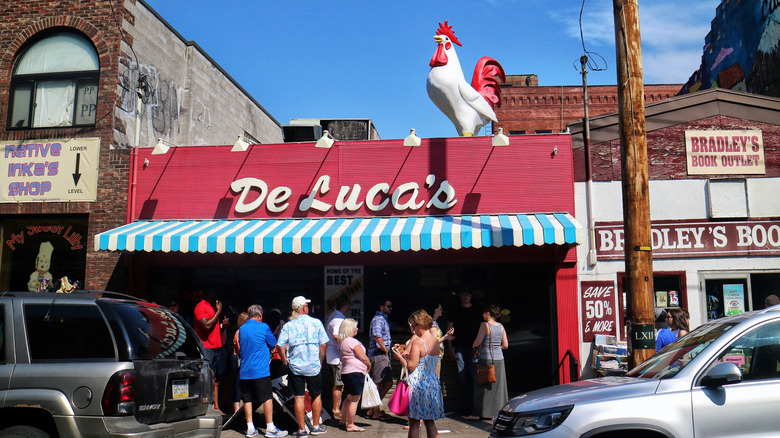
Some of the Strip's restaurants transport you into Pittsburgh's past. The original Primanti Bros. is still serving sandwiches loaded with coleslaw and fries like it has since the 1930s. For an old-school diner experience, hit up either DeLuca's or Pamela's, which have been competing for the title of best breakfast in Pittsburgh since Pamela's opened in 1979 (DeLuca's, meanwhile, hasn't changed much since it opened in 1950). Whatever kind of food you're hungry for, odds are high you'll find it somewhere along the Strip.