
5 Little-Known 'Mind Tricks' Cruise Ships Play On You To Keep You Satisfied At Sea
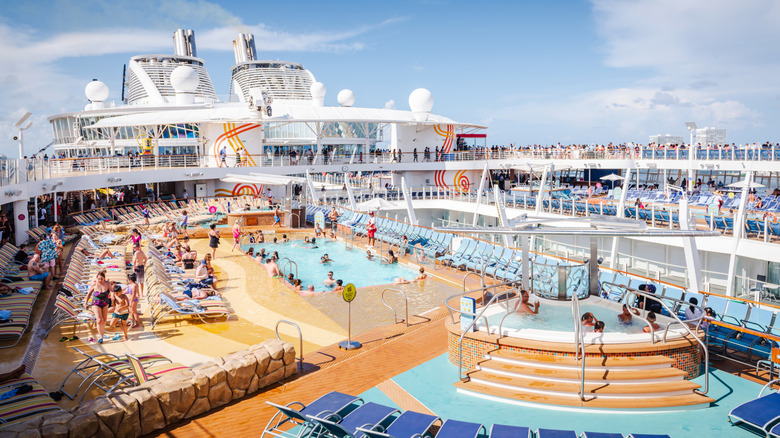
As many travelers know, there's something special about taking a cruise. Whether you're experiencing one of the best themed cruises to travel the world or something more intimate, there's a reason this activity is a favorite among tourists around the globe. In fact, the Cruise Lines International Association's recent annual report shows that the entire industry is growing. They found that as many as 82% of cruise guests plan to take another one in the future, proving how much they enjoyed their time on board. In some cases, travelers are living on cruise ships full-time and bucking a "normal" life altogether.
But what is it about cruising that makes it so satisfying and keeps people coming back for more? Well, it turns out the cruise lines have tapped into several key factors that turn a simple voyage into an unforgettable vacation. Basically, these companies have discovered several "mind tricks" that help guests feel great from start to finish. Fortunately, though, these tricks aren't necessarily sneaky or dishonest. In fact, in some cases, they demonstrate why a cruise can be a better vacation option than booking a hotel or Airbnb. For travelers considering a cruise in the near future, it's interesting to take a peek behind the curtain to understand how these ships trick your brain into having the best vacation ever.
Tapping into the 'blue mind' effect
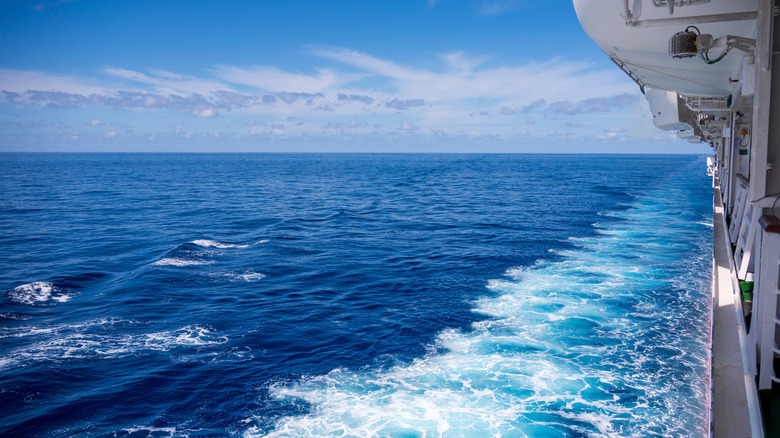
If someone is feeling sad or morose, they may describe themselves as feeling "blue." However, on a cruise ship, the "blue" effect triggers the opposite reaction, generating positive feelings of calmness and tranquility. In psychology, the color blue is said to make people feel comfortable and safe, which is why it's used strategically in interior and graphic design. In fact, blue is so calming that it has had real-world impacts, from boosting the likability of stores to saving lives in Japan.
The ocean creates a similar effect on the brain, which marine biologist Dr. Wallace J. Nichols called "blue mind" in his TED Talk. Various elements, such as gases emitted by ocean life, the sounds of waves, and even negative ions created by those waves, can have restorative, calming effects on individuals. So, it makes sense that a cruise can easily tap into these elements.
But how do cruises maximize the blue effect on guests? First, it's common for ships to have floor-to-ceiling windows in common areas, so guests can see as much of the ocean and the sky as possible. Cruise ships also often have large, open-air decks where you can spend time outside, breathing in the salty air and fully getting the "blue mind" effect. Overall, as long as you're near the outer edge of the ship, you should be able to get as much blue into your eyeline as possible, which helps you feel better about everything happening around you.
Separating guests from their digital devices

These days, it's virtually impossible to be without a smartphone or mobile device. These gadgets have permeated almost every facet of modern life, from communicating with friends, family, and coworkers to keeping up with the latest news and entertainment. However, as much as smartphones may connect us, they can also damage our psyches and mental health, triggering addiction and anxiety. In a nutshell, the more time you spend on a phone or tablet, the more likely you'll develop negative symptoms.
Thankfully, cruises can put a stop to all of that almost immediately, thanks to the lack of reliable Wi-Fi and cell service. Although the answer to the question, "Do cruise ships have Wi-Fi?" is starting to become a resounding yes (for an additional fee), many still offer slow and spotty connections, meaning it's not necessarily worth paying for the upgrade. Instead, you're more likely to consider leaving the phone in your room and enjoy the activities and scenery of the ship.
It shouldn't surprise anyone that detaching (or detoxing, depending on how you look at it) from digital devices can lead to less stress and more positive emotions. Rather than feeding the obsession by checking messages or social media, you're allowed to be in the moment, free from worry or FOMO (fear of missing out). Plus, with all of the fun and games available on the ship, you'll likely be too busy to want to check your phone, anyway.
Leaning into superstitions
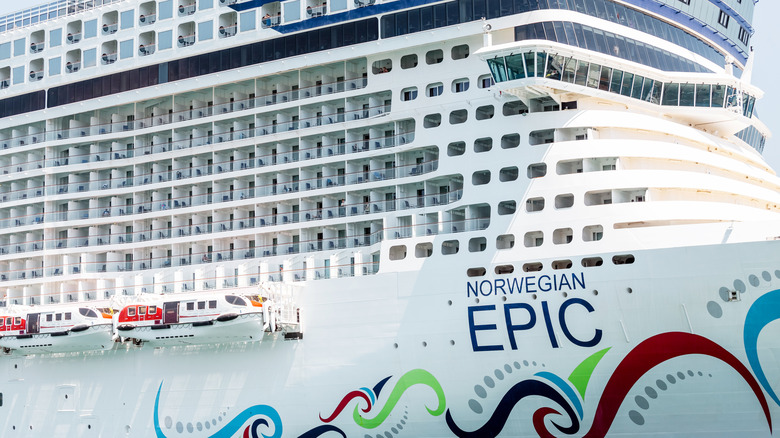
When it comes to superstitions, you may be aware of things like broken mirrors or black cats. On the high seas, many ships partake in traditional superstitions of their own. Back in the old days, these customs and practices were designed to help ensure a safe voyage. While modern ships have many more safety features to help them weather storms and rough seas, the traditions remain. If you or someone in your travel party is superstitious by nature, this can create a vibe that affects multiple aspects of your trip. If not, it might just be some quirky fun. Either way, here are a few of the superstitious practices cruise lines engage in.
The first and most obvious is that most cruise ships don't have a 13th floor. Yes, technically, there is a 13th floor, but it's referred to as the 14th, since 13 is an unlucky number. Alternatively, if you find yourself on an MSC Cruise, there is no deck 17, as that number is unlucky in Italian culture, and MSC is an Italian-based company. Next, if you're ever traveling on a cruise ship that crosses the equator, you may be able to participate in a line crossing ceremony. In this case, if you've never crossed the equator before, you're a "pollywog," and once you have, you become a "shellback." The ceremony makes the transition official, under the watchful eye of King Neptune, god of the sea.
Other superstitious practices include the customary blessing of a new ship by breaking a champagne bottle on its bow, as well as having a cruise ship godmother bring luck and good fortune to the vessel. Fun fact: Italian native Sophia Loren has been a godmother to at least 18 MSC cruise ships.
Keeping you full and satiated
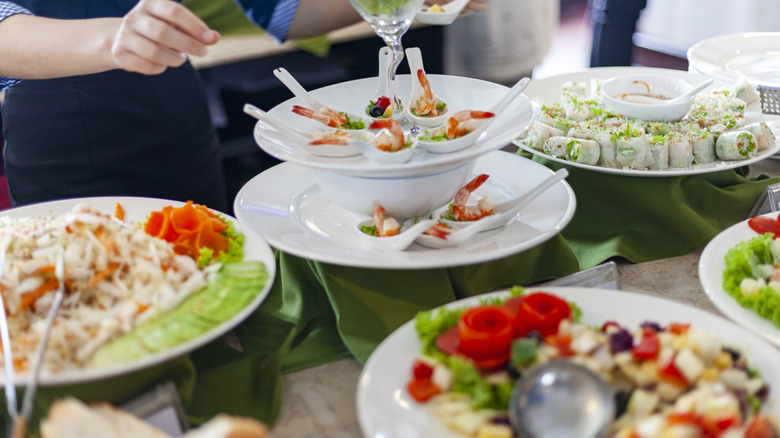
One of the best perks about being on a cruise is the endless supply of food. It's totally normal to never really feel "hungry" on a cruise, just different levels of full. In fact, one of the ways you might pick a trip is to look for the cruise lines with the best food, as you'll be eating that cuisine for a considerable amount of time.
As you might expect, providing endless buffets and gourmet dining experiences with your trip ticket is a fabulous way to increase customer satisfaction. As the price of eating out continues to increase on land, getting as much as you want to eat while on the ship feels like an incredible deal, meaning you're more likely to keep coming back for more. Plus, according to psychology, having such a memorable and enjoyable dining experience boosts guest satisfaction and makes the cruise feel even better, which can lead to return bookings.
Finally, cruises go the extra mile to ensure meals are fresh and varied. Most ships customize their menu based on the port of entry they're visiting, both for guest satisfaction and practical reasons. Since the ship has to restock with new food at each port, it makes sense to use local ingredients that are already available. Overall, providing a seamless and abundant dining experience can make any cruise feel like a luxurious experience.
Creating a (literal) timeless experience

In everyday life, time is always critical. Whether you're making an appointment, clocking in for work, or waiting for a train, you often must be mindful of the time. However, on a cruise ship, time seems to have no meaning, and that's somewhat by design. For practical purposes, having clocks around can become something of a logistical nightmare, especially as ships pass through different time zones. As far as mind tricks go, helping guests lose track of time can make the whole experience feel more immersive and engaging. Also, on the last day of your voyage, you may not want to be reminded of how much time you have until the ship reaches port. Instead, you can just enjoy yourself right up until the moment it's time to leave.
Overall, the concept of "ship time" is an integral part of cruising. For example, in the Bahamas, local time zones can shift from one island to the next, so cruises often tell passengers to stay on ship time instead of trying to keep track. However, in other parts of the world, the ship may sync itself with the time zone of its next port of call. Either way, ships will notify guests of any time changes so they're not late for shore excursions. In fact, while you're on the ship, time can feel like it stands still, but once you're on land, you have to pay close attention to the time to avoid getting left behind.