
5 Once-Thriving Las Vegas Casinos That No Longer Exist
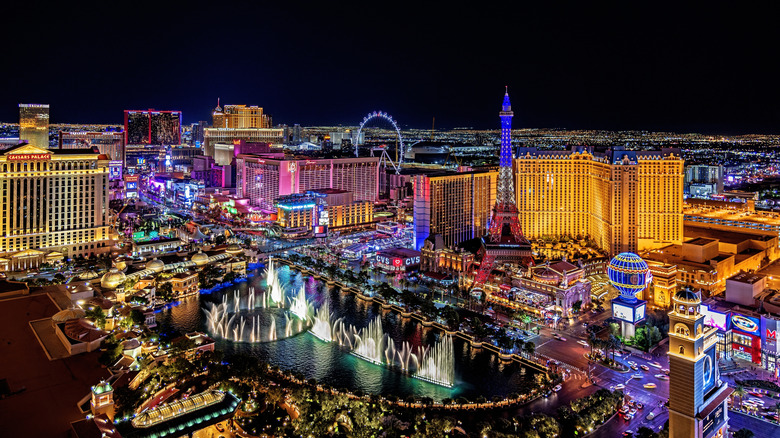
Going on vacation to see the flashing lights and themed resorts of Las Vegas is almost a rite of passage for tourists. Whether it's a weekend girl's trip or a rowdy bachelor's party, Las Vegas, crowned the most fun city in America, is a global icon for its desert strip lined with neon billboards and sprawling casino hotels. Among the most famous are Caesar's Palace, the Luxor Las Vegas with its 30-story pyramid, and the Bellagio, popular with tourists for the fountain displays. These opulent establishments offer guests all manner of entertainment, from slot machines and blackjack tables to theatrical performances and upscale dining. It's no surprise that Las Vegas is consistently ranked as America's top summer destination.
The Las Vegas Strip is an ever-changing landscape, and not all of the casino hotels have stood the test of time. While some properties, like the Flamingo, which was financed by the famous mobster Bugsy Siegel, have been in operation since the Vegas Strip's formation in the 1940s, other casinos have grown from humble lodges to sprawling resorts, only to face demolition within a few short decades, with brand new resorts rising from the rubble. While many of these ill-fated casinos thrived during their heyday in the mid-century, a handful were eventually imploded throughout the 1990s and early 2000s, and no longer exist.
Some casinos were doomed from the start, like the Landmark Hotel, designed as a cylindrical tower topped by an observation deck, which suffered funding shortages during its construction in the late 1960s, and struggled to make a profit before being torn down in 1995. Other casinos simply couldn't compete with newcomers, ceasing operations as swankier resorts drew their customers away. From iconic to obscure, keep reading to learn about Vegas casinos that have been lost to the changing times.
The Hacienda
Imagine it's New Year's Eve, and you're among the throngs of revelers packed tight along the Las Vegas Strip in anticipation of the celebratory fireworks. As the clock counts down and the sky erupts in a dazzling display of popping sparks, something else catches your eye — a towering resort complex implodes in a controlled demolition, crumbling to the ground in perfect sync with the colorful pyrotechnics. This spectacular double feature is what Las Vegas crowds would have witnessed on New Year's Eve in 1996, when the Hacienda Hotel and Casino was brought down after a 40-year tenure.
Though eventually ballooning into a sprawling resort offering more than 1,000 guest rooms across seven different buildings and expansion towers, the Hacienda had modest beginnings. First constructed during the 1950s, it was originally intended to be called the Lady Luck Las Vegas, before opening as the Hacienda and offering casino games and lodgings to passing motorists. Overnight guests were given $10 to spend at the casino, worth about $115 in today's money. The casino was topped with a flashy neon sign of a man in a mariachi costume atop a rearing horse, and the property's address on the edge of town earned it the nickname "the gatekeeper into Vegas."
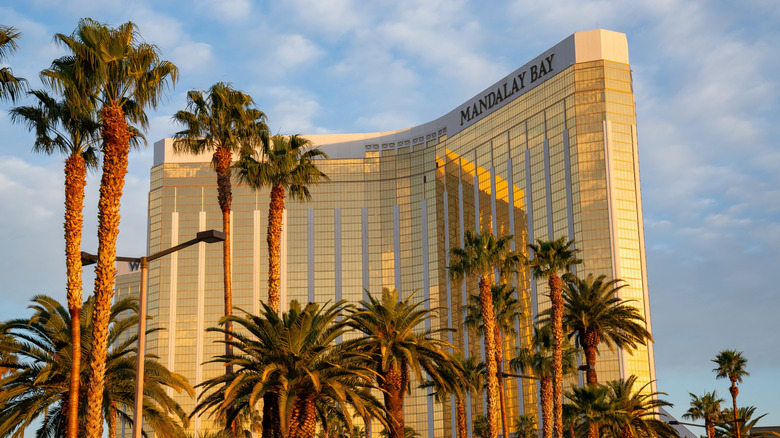
As the decades passed, a go-kart track and miniature golf course were added, drawing families in for gambling holidays. The property grew in size, new rooms were added, and a chapel even offered wedding services. But despite claiming bragging rights as one of the Strip's biggest hotels, the Hacienda seemingly was no match for some of the newer resorts being developed, and the property was eventually sold. After the Hacienda's demolition, the Mandalay Bay Resort and Casino took its place, dominating the skyline with its façade of luminous gold.
The Sands
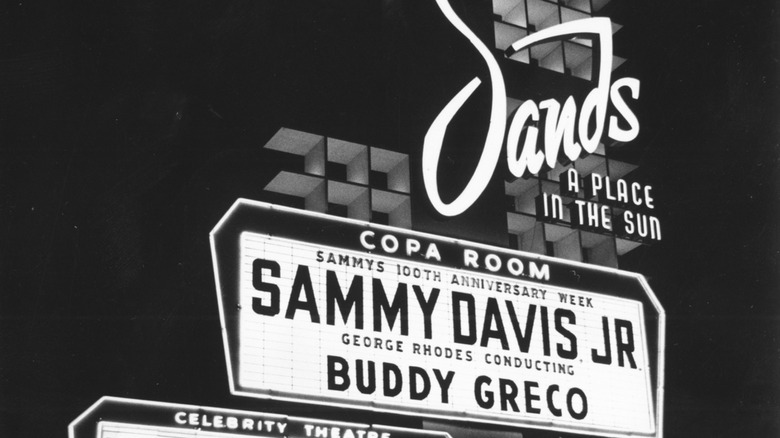
Opened in the 1950s, just a few years before the Hacienda, and also imploded in 1996, just one month earlier, the Sands Hotel and Casino had long been an icon of the Las Vegas Strip. The casino was billed as "a place in the sun," a tagline proudly flashing on the entry marquee towering over the highway. The casino's nightclub, called the Copa Room, kept a star-studded roster of performance acts, including singers like Nat King Cole and the comedian Jerry Lewis, drawing in gamblers and tourists far and wide. Much like the Hacienda, however, the Sands couldn't keep pace with its flashier competitors, and the Venetian Resort, with its mock canals and gondolas, replaced the Sands after its demolition.
At the pinnacle of its fame, the Sands really was the place to be. Celebrities were often spotted at the Copa Room, while the famous Copa Girls danced on stage in glittering gowns. Guests could cool off in the pool, or dine with fabulous views in the Garden Room, while stylish suites offered peaceful slumber after an evening of glitz and gambling.
Perhaps the most famous headliners at the casino's nightclub comprised Frank Sinatra, Dean Martin, and Sammy Davis Jr., (later known as the Rat Pack), which put the Sands into the nation's spotlight. The casino was forever cemented in Las Vegas legend when the Rat Pack filmed the original "Ocean's 11" movie on location, featuring the Sands as one of the five casinos robbed by Danny Ocean's gang. The film's closing shot shows the Rat Pack members marching up the street with the Sands marquee towering behind them, a lingering echo of a landmark that no longer exists. But even though nothing remains of the Sands casino today, its memory still lives on in Las Vegas history.
The Desert Inn
Much like the Sands, the lavish Desert Inn was a shining beacon along the Las Vegas Strip, boasting one of Nevada's biggest casinos. It was unveiled with grandeur in the 1950s, with tourists flocking to enjoy all the Desert Inn's delights. Water fountains at the hotel entrance pulsed in time to music and bright lights, while the Lady Luck bar overlooked gamblers at the casino tables. Just a year after opening, Frank Sinatra headlined a show at the casino's Painted Desert Room, while luminaries like Winston Churchill, the Duke and Duchess of Windsor, and former president Harry Truman were among some of the hotel's notable guests.
Aside from gambling, guests could hit the links at the swanky golf course before retreating to the Country Club Patio, an elegant outdoor brunch restaurant offering poolside dining. For more than a decade, the Desert Inn's golf course was the backdrop for men's professional champion tournaments, drawing top golfers to compete. Guests could watch the dancing fountains from the Sky Room cocktail lounge, and parents on holiday could leave their children at the hotel's playroom before heading off to enjoy themselves.
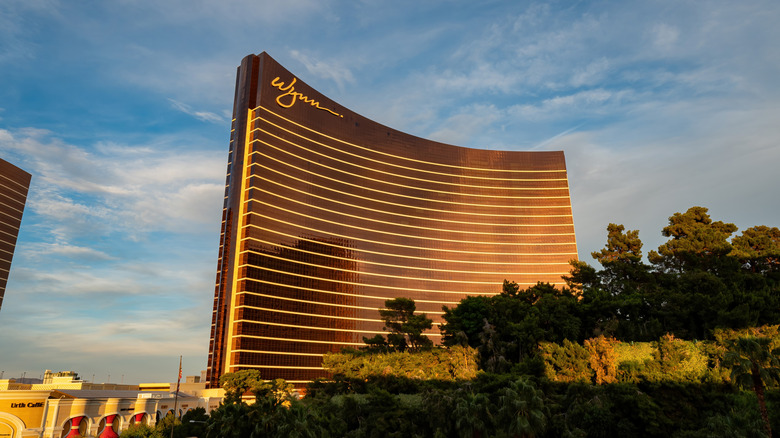
After making a silver screen debut in the Rat Pack's "Ocean's 11" during the 1960s, plus a small screen appearance in "Vega$," a 1970s crime drama, the Desert Inn had become an enduring icon, particularly with locals, who called it "the D.I." But despite its decades of glamor, the Desert Inn had begun to lose its shine and never quite recovered, as big spenders preferred the new mega-resorts emerging in its wake. As with many others, the Desert Inn was sold and eventually demolished in 2001. Only the golf course remained and was integrated into the new Wynn Las Vegas resort, which opened where the Desert Inn once stood.
The Tropicana
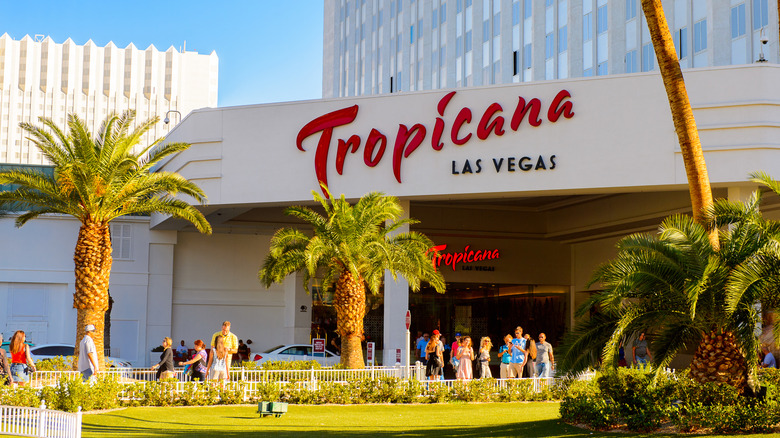
Open until as recently as the spring of 2024, visitors to Las Vegas could have pulled up to the Tropicana's double towers, if not to gamble, then to at least walk the same hallways where Hollywood royalty like Elizabeth Taylor and the Rat Pack once gathered. Opening in 1957 with reportedly more than 12,000 attendees, the demolition of the Tropicana almost 70 years later marked an end to the opulent casino resorts of a bygone age. And since everything in Sin City must end with a bang, the casino's implosion in the wee hours of October 2024 was celebrated not just with a mere fireworks display, but a colorful drone show synchronized to music. The Mandalay Bay hotel (which replaced the Hacienda) even arranged a rooftop viewing party.
The Tropicana's early decades were filled with high-rolling sophistication, and it was one of the first resorts to introduce what is now an icon of Vegas history — the showgirl. Topless ladies clad in jewels and feathers sang and danced alongside magicians and acrobats as part of the Tropicana's Folies Bergere spectacle, which dazzled guests for almost 50 years and was inspired by the infamous Belle Epoque-era Parisian cabaret show of the same name.
Despite the shadow of controversial mob connections in the first decade after its opening, the Tropicana's veneer of elegance gave it the nickname "the Tiffany of the Strip". The casino reached its zenith during the 1970s when it appeared in the gangster epic, "The Godfather," and even in the James Bond film "Diamonds Are Forever." Yet for all its opulence, the Tropicana always marketed itself as an affordable accommodation. Though the Tropicana is no more, visitors planning a budget-friendly trip to Vegas should instead consider the South Point Hotel, an underrated casino resort with tasty cuisine.
The Riviera
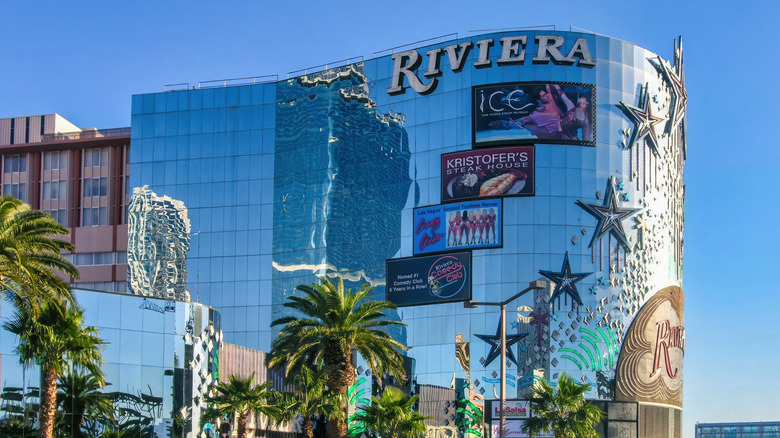
Another emblem of the Rat Pack era, the Riviera Hotel and Casino was the tallest skyscraper in Las Vegas at the time of its opening in 1955. The casino's façade proclaimed the name "Riviera" in tall neon lettering, flashing brightly alongside giant pointed stars and twinkling lights. The casino's theater room booked musical performances by everyone from Louis Armstrong and the flamboyant showman, Liberace, who had been the star attraction at the Riviera's opening ceremony, to rising stars like Barbra Streisand. Frank Sinatra gave performances in the 1990s, and Michael Bolton serenaded the casino for its 50th birthday celebrations. Glamor was what the Riviera did best.
Guests at the Riviera could take their pick of global cuisines, from traditional grub at the Queen Victoria Pub to spicy dishes at the Banana Leaf Asian Restaurant, while the hotel's vast expanse of casino space lured gamblers in for table games. Locals gave it the affectionate nickname, "the Riv." In the 1980s, the Riviera debuted "An Evening at La Cage," a campy tribute act that featured men impersonating women, along with the "Crazy Girls," a troop of scantily-clad dancing women, which eventually became the casino's most notable spectacle. The Riviera even appeared in several scenes of Martin Scorsese's iconic mobster film, "Casino."
Eventually, the Riviera's glitter faded. Fewer guests were spending the night, and fewer seats were being filled in the showrooms, and the casino was constantly plagued by bankruptcy issues. After 60 years, the Riviera finally shuttered its doors in 2015 and was imploded a year later. In the few days before closing, the Riviera welcomed one final surge of curious tourists clamoring for a peek at an enduring legend of the Las Vegas Strip, which had once headlined icons like Elvis Presley, Harry Belafonte, and Tony Bennett.