
One Of Europe's Most Affordable Destinations Has A Trail Called The World's 'Most Beautiful'
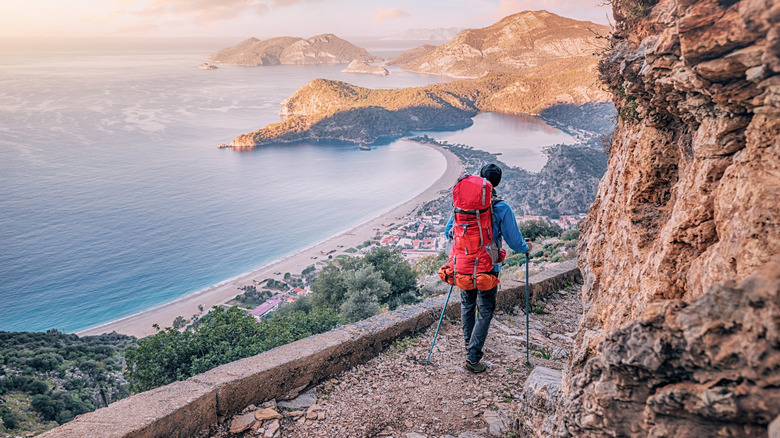
The azure coast of southern Turkey and its mountainous landscapes have echoed with the whispers of ancient ghosts for many millennia. People have inhabited these lands long enough for the Egyptians to record their existence, living off the Aegean maritime trade and the thick pine forests of the Taurus Mountains surrounding them. Today, to walk the Lycian Way in the region of Anatolia is not only an affordable hiking odyssey, but a true journey through time, hiking pack in tow.
Named by the reputable Time Out magazine as the "most beautiful" hiking trail in the world, the Lycian Way has no shortage of reasons to claim the lofty title. Lovingly charted by historian and avid hiker Kate Clow, the Lycian Way was sewn together out of uncovered trade routes, ancient Roman roads, and Lycian cities, so named after the primeval culture that thrived in the region. After a decade of diligent effort, Kate and her team of fellow hiking enthusiasts and historians were able to announce the trail as officially open in 1999, making it Turkey's first long-distance footpath.
With a favorable exchange rate for the U.S. dollar to the Turkish lira, Turkey is a great European destination for travelers on a budget. Reputable hostels cost about $19 per person per night in the hub of Antalya, with equally affordable eats — prices drop more as you head inland toward the Lycian Way. With Fethiye in the west of the Anatolian peninsula as the starting point, it takes you through 335 miles of stunning nature to the outskirts of Antalya, a tourist-friendly city with sunny beaches called by the founder of modern Turkey as the "most beautiful place in the world."
Stepping through time on the Lycian Way
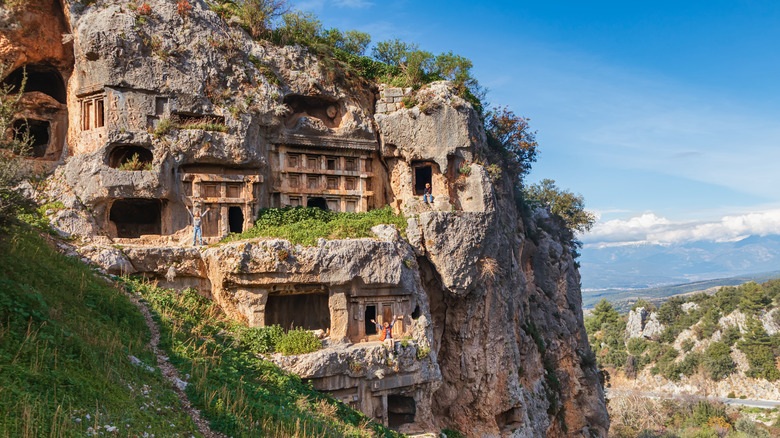
The name itself, Lycia, has a mystical and ancient ring to it, and with good reason. How did it come about, one may wonder? The land was so named after its inhabitants, the Lycians, an ancient civilization with mysterious origins long lost to history. Egyptian sources first mention them as early as the 14th century B.C. as a people known for their maritime strength and military acumen. They were organized into a federation of city-states such as Xanthos and Patara, whose ruins are now waiting to be admired by the avid hikers along the Lycian Way.
As the peninsula's remote position isolated the Lycians, bordered by the Taurus Mountains to the north , and well hidden harbors with emerald bays, they used the landscape to their advantage by building their cities on rocky hillsides and in steep valleys. Their most lasting visual legacy to this day remains their tombs and temples, chiseled into the cliffs just below the horizon, imposing in their nature as monuments for the dead. The ancient Lycian capital of Xanthos is a striking example of how the Lycian civilization endured and embraced Hellenic and Roman architectural styles.
Hiking the Lycian Way is a perfect blend of both the natural highlights of the Turquoise Coast of Anatolia, as well as a month-long tour through what can easily pass off as an outdoor museum of local antiquity. Such is the appeal for a wide demographic of hikers seeking a balanced experience whilst partaking in heartwarming Turkish hospitality. Depending on your timeline, you can tailor your experience in either direction. The most scenic and historically concentrated segment can be done in the span of six days, from Fethiye to the ancient port of Aperlae.
Nature's delights and highlights of the Lycian Way
The most ideal seasons to block off for your Lycian Way are in early spring or fall, as the scorching summer temperatures of southwestern Turkey beg a beachside retreat, not mountainous hikes with gear. In early April, you can encounter 70-degree weather, with it steadily rising to the low 90s by early June. As the terrain is one of constantly shifting elevations and rocky trails, the Lycian Way could be rated as moderate-to-hard, depending on your experience and fitness level.
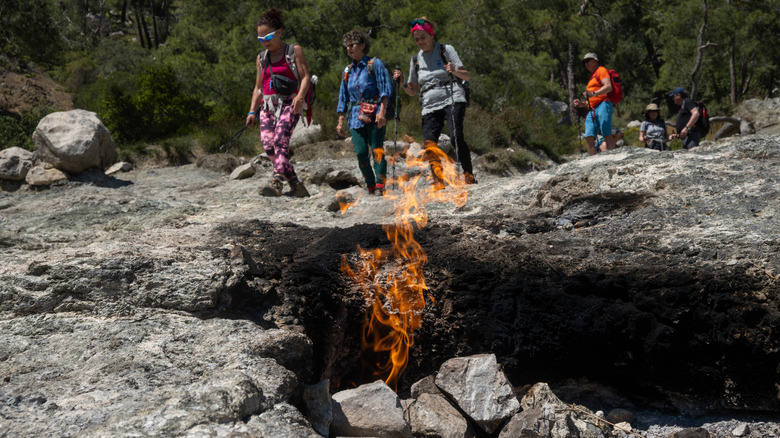
Every mountain, valley, or cliffside turn hides a delight to be discovered along the trail, ranging from Turkey's famous beach in the horseshoe bay of Ölüdeniz to stunning vistas overlooking the canyons of Butterfly Valley. South of Antalya, you can hike Mount Tahtali, a mountain peak piercing the sky at 7,750 feet. Along the Lycian Way, you can witness the marriage of myth and nature brought to life at Yanartas, also known as Mount Chimaera. For the past 2,500 years, mysterious flames have been burning through fissures in the earth, and it is no surprise why the Greeks built a temple dedicated to Hephaestus, the god of fire, nearby.
The closest international airport to reach the Lycian Way is the Antalya Airport, and you can arrive at your starting point of Fethiye in under three hours by car. For best navigation practice, besides following the clear trail markers, you can download the Footpath app, which has mapped the trail concisely. Having completed your hiking odyssey, a ferry across the strait to one of Greece's best island destinations to cool your feet in the sea may be too good an opportunity to pass up, being in the neighborhood and all.