
5 Underrated Destinations In South America To Escape The Winter Weather

Winter in North America can be rough. This is especially true in the northern regions, where snow, ice, sleet, and dark, gloomy weather are a given for several months of the year. While many flee to warmer climes within the U.S., such as these affordable destinations on the West Coast, others set their sights outside of the country.
According to Tripadvisor's Winter Travel Index (via Newsweek), Mexico is the most popular international winter destination for American travelers, but our neighbor to the south isn't the only game in town. South America is also full of appealing, warm-weather spots that are perfect refuges from the frigid north. This is true nearly anywhere you go on the continent from December through March, as many of these places are located near the equator or are experiencing summer in the southern hemisphere.
Home to 12 independent countries (plus three overseas territories), South America is an immense continent with a seemingly infinite number of options when it comes to travel. And while many may head straight to marquee destinations such as Rio de Janeiro, Machu Picchu, or the Galápagos Islands, South America is also home to plenty of under-the-radar spots, where you'll find plenty of warm weather, intriguing culture, and great food. Here are five to consider.
Medellín, Colombia
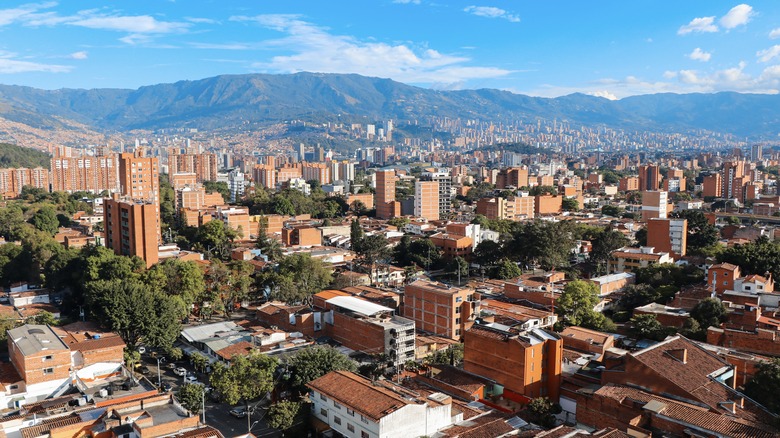
Once the stronghold of narcotics king Pablo Escobar, Medellín was long considered one of the most dangerous cities in the world. Thankfully, the days of narco terror are a thing of the past, and Medellín has seen a spectacular transformation in recent years. Today, Colombia's second-largest metropolis is a dynamic place full of art, history, good food, and so many trees that it was crowned the world's best city for green spaces in 2025. While up-and-coming, it also sees fewer than 1 million international tourists visit each year. One thing that draws people to Medellín is its pleasant climate, earning it the moniker the "City of Eternal Spring," as daytime temperatures here hover around 77 degrees Fahrenheit throughout the year.
When visiting Medellín, make sure to take in the striking murals in Comuna 13, formerly one of the city's most dangerous neighborhoods but now a place of vivid expression; learn about the region's artistic heritage at Museo de Antioquia, or check out Plaza Botero, which features 23 voluptuous sculptures by Colombian artist Fernando Botero. Get down with the city's signature dish, bandeja paisa — a plate containing ground beef, chicharrón (crispy pork belly), rice, beans, avocado, egg, and plantains — or take a ride on the Metrocable. This cable car system features six separate lines serving neighborhoods at higher elevations and boasts plenty of jaw-dropping urban vistas.
The Atacama Desert, Chile
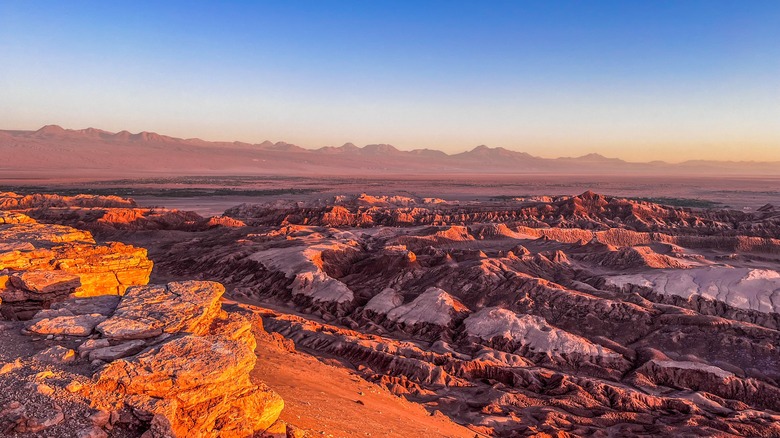
Imagine a place of deep colors, lunar landscapes, sand, otherworldly rock formations, and empty space as far as the eye can see. This is the Atacama, a desert stretching for almost 1,000 miles in northern Chile. One of the driest spots on earth, there are places in this desert that have never recorded rain, and anyone looking to escape the frigid crush of winter in the northern hemisphere is guaranteed plenty of warmth and sun. Summer temperatures hit about 80 degrees Fahrenheit in the day, but don't forget to pack a sweater, as it can get chilly once the sun goes down.
While you could spend your time in the Atacama soaking up the sun's rays, most visitors head there for outdoor pursuits and the opportunity to experience nature in its purest form. Lace up your boots and take a hike through the Valley of the Moon, a surreal landscape straight out of a science fiction movie. "The place is incredible," writes Larissa N. on Tripadvisor. "It feels like you're on Mars! Wear comfortable shoes and, if possible, trekking shoes." Another must-see is the Rainbow Valley — which features brightly-colored rocks and nearby petroglyphs — as well as El Tatio. At 14,170 feet above sea level, this field of more than 80 steaming geysers is the highest in the world. Just make sure to arrive early, as the thermal vents are most active around 6 a.m. each day.
You could argue that the Atacama is firmly on the radar of many travelers in South America, but its remoteness means that a lot of people don't make the trip. Reports suggest that the local travel hub — San Pedro de Atacama — receives somewhere over 300,000 visitors each year, putting it firmly in the "underrated" category as far as we're concerned.
Bonito, Brazil
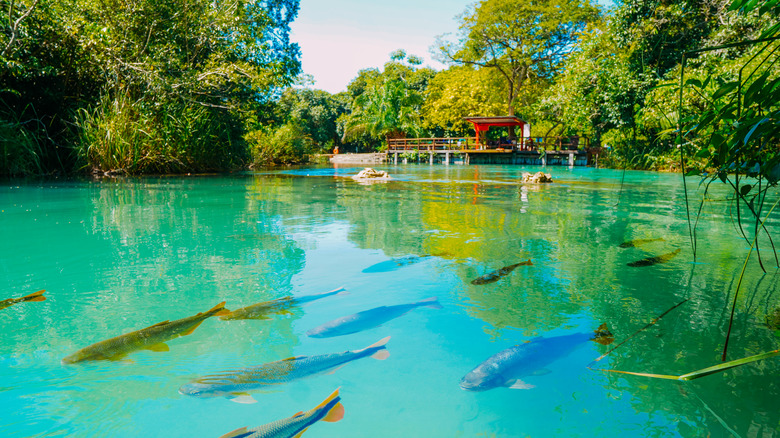
When you think of Brazil, beaches, soccer, samba, and the Amazon might spring to mind. While these things help make South America's largest country such a thrilling destination, there's also Bonito, an up-and-coming hub for ecotourism. Nestled deep in the state of Mato Grosso do Sul, this aptly named town (Bonito means "beautiful" in Portuguese) acts as a launchpad for exploring the unspoiled nature surrounding it, which includes crystal clear flowing rivers, wildlife, sinkholes, and caves.
When visiting Bonito, be sure to pack some snorkeling gear and float the Prata or Sucuri rivers, where clear waters reveal a multichromatic world of fish and plant life. Trek along hiking paths and plunge into refreshing pools at Boca da Onça waterfall — the tallest in Mato Grosso do Sul — or dive into the Lagoa Misteriosa (Mysterious Lagoon), a 720-foot-deep flooded cave that's home to subterranean fish as well as surreal rock formations. "It's an indescribable experience," writes Alessandra M. on Tripadvisor, "It was marvelous."
The area around Bonito is also rich in wildlife, especially birds. At Buraco das Araras, a massive sinkhole on Rio de Prata, you can see dozens of pairs of nesting red-and-green macaws, along with toco toucans, blue-crowned motmots, and blue-headed trogons. The lagoon at the base of the sinkhole is also home to caimans, howler monkeys, and anacondas, as well as small mammals such as armadillos and anteaters. As for temperatures in Bonito, expect highs of close to 90 degrees Fahrenheit during their summer, which should melt any residual ice in your bones. Even better, the region welcomed just 313,316 tourists in 2023, making it a true undiscovered gem.
San Andrés Island, Colombia
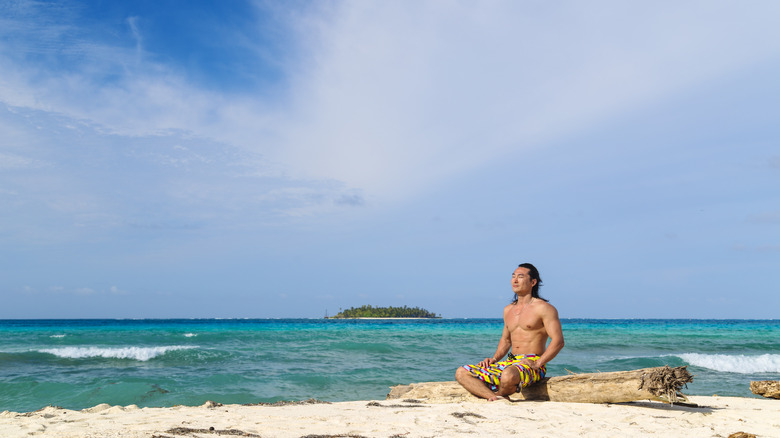
Situated 200 miles off the coast of Nicaragua, Colombia's largest island is perhaps more Caribbean than South American, though it may also be either region's best-kept secret. Most of the visitors here arrive from mainland Colombia, meaning foreign tourists — especially North Americans — aren't overcrowding the place. San Andrés and the surrounding islands occupy just 17 square miles and are known for their blend of Colombian and Caribbean cultures, with most locals speaking Spanish, English, and Creole. This is also a place where the sun is usually shining, with winter temperatures hovering in the low 80 degrees Fahrenheit.
Most people come to San Andrés for the sand and sea. Playa de Spratt Bight is the island's largest beach and is situated in the center of the action, with plenty of bars, eateries, shops, and other conveniences. Meanwhile, nearby Johnny Cay (also called Cayo Sucre) offers unspoiled beach action. This tiny island is just a short boat ride from San Andrés and boasts picture-perfect palm trees, white sand, azure waters, and a large population of iguanas.
You can get around San Andrés on foot, or by renting a scooter, motorcycle, or even a golf cart. The island also features some excellent snorkeling, as confirmed by this user on Reddit: "Had a chance to visit San Andrés Island, a Colombian island off the coast of Nicaragua. Great place to snorkel and do any other water activities. Spotted sharks, stingrays, and some other fish that belong to a sci-fi film, as well as the seven color sea."
Arequipa, Peru
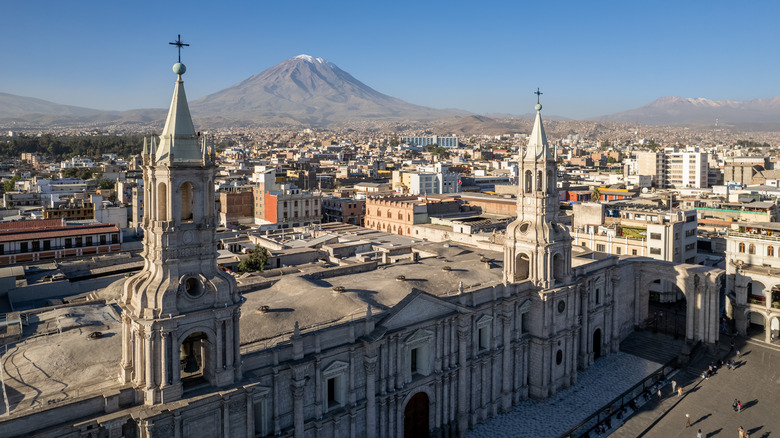
While most visitors to Peru head straight to Cuzco and Machu Picchu, there are plenty of other places worth exploring. The capital, Lima, radiates history and Pacific coastal charms and is also home to an incredibly exciting food scene, boasting two restaurants in the world's top 10 for 2025. There's also Arequipa, Peru's "White City," with a UNESCO-listed historic center, a striking cathedral, excellent local cuisine, and Misti, the volcano that watches over the city like a sentinel. Arequipa also enjoys a pleasant climate with 300 days of sunshine annually, along with highs in the low 70 degrees Fahrenheit year-round. And while the city does see some tourism, only about half a million visitors come each year. Given the city's myriad charms, this could change soon.
There's plenty to see in Arequipa, including Plaza de Armas, a massive public square adjacent to the city's 500-year-old Basilica Cathedral. Many of the city's buildings are constructed from white volcanic rock, and to roam the narrow streets of Arequipa's historic center is an awe-inspiring endeavor. According to travel site SteppesTravel, "Wandering around the gorgeous cobbled streets, surrounded by pretty and varied architecture, overshadowed by breathtaking snow-capped volcanoes is an absolute delight." Arequipa is the perfect place to chill out for a few days as part of a greater trip throughout Peru.
Methodology
To make the list of our underrated destinations in South America to escape the winter weather, we looked at a number of factors. The first was the temperature during winter in the Northern Hemisphere. The destination had to be warm, with minimum daily highs of 70 degrees Fahrenheit. These locales also needed to qualify as "underrated," an admittedly subjective standard. To make it quantifiable, we listed only destinations that receive fewer than 1 million foreign visitors a year, which immediately disqualified all of South America's more prominent travel spots.
We also pored over reviews on sites such as Tripadvisor, Reddit, and Google, along with write-ups in the media and on travel blogs. All of this went into creating a list that we hope is both fair and shines a light on some of the best places South America has to offer that fly under the radar.