
The 'Iceberg Capital Of The World' Is An Arctic City With Glacier-Filled Fjords And Crystal-Clear Waters
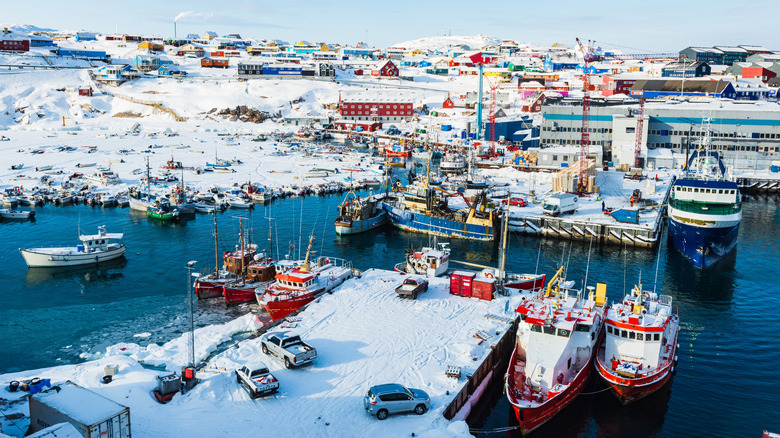
You might think the movie "Greenland 2: Migration" is a promotional tourism film about the gorgeous, North Atlantic island becoming a tourism hotspot (it's actually a sci-fi thriller). But this icy frontier is having a travel moment, and the icy glaciers covering its surface have never been hotter. Located between Iceland and the eastern part of Canada, the country has gained increasing international attention thanks to media coverage spurred on by U.S. President Donald Trump's geopolitical fascination with the world's largest island.
Tour operators specializing in expeditions to the country know that one bucket-list topper is the city of Ilulissat, considered the "iceberg capital of the world," due in no small part to the staggering 40-mile-long Sermeq Kujalleq (Jakobshavn Glacier). Intrepid tourists willing to brave frigid climes have a myriad of ways to experience this UNESCO World Heritage wonder, such as kayaking along its crystal-clear waters, or going dog-sledding, snowshoeing, or whale watching.
How to get to this frosty wonderland? Ilulissat sits on Greenland's western edge, about 150 miles north of the Arctic Circle. Since an international airport opened in 2024 in the capital of Nuuk, getting here no longer feels like you're going to the ends of the earth. Direct flights from the U.S. to Nuuk began in June of 2025 — though the Nuuk airport initially faced some troubling hiccups — from New Jersey's Newark Liberty International Airport, and at the time of writing, a round-trip will cost you around $1,300. Getting from Nuuk to Ilulissat means another flight and several hundred dollars more in fees. But if you're willing to put up the cash and the journey it takes to get out there, Greenland's Ilulissat rewards visits like few other places on the planet.
Ilulissat's symphony of sounds
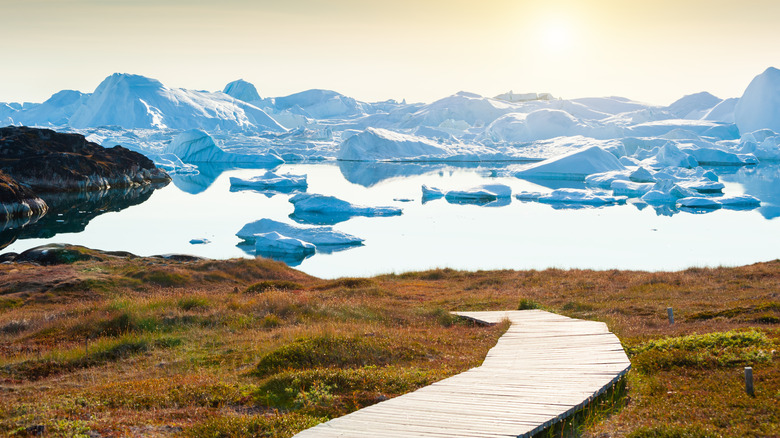
The coastal town of Ilulissat is Greenland's third biggest city and its most popular destination. Everyone wants to see its famous Icefjord, featuring sunken cathedrals of shimmering ice — some sticking more than 300 feet above the water — shed by the fast-moving Sermeq Kujalleq glacier that feeds into Disko Bay.
This outlet for Greenland's Ice Sheet — the second-largest in the world — can become a symphony of sounds from calving and overturning icebergs. Amateur glaciologists will appreciate that the ice here dates back some 250,000 years. Get up close by taking a boat tour, which offers the chance to touch the ice and break off a piece for a cocktail. Popular tour operators in Ilulissat include Albatross Arctic Circle and Disko Line Explorer. If it's not too windy, adventure-seekers may try standup or sit-down paddle-boarding or kayaking around the icebergs. Tour operators will provide waterproof suits, but try not to fall in or hit an iceberg.
You can also soak in the area's beauty with a hike. First, book a ticket to the Ilulissat Icefjord Centre, an architectural wonder itself, where you will need to leave your shoes outside and pick up slippers to wear inside. Here, visitors can bone up on glacier knowledge from art installations, an ice laboratory, and interactive exhibits. You can even warm up with coffee from the cafe. From here, venture to the roof for a spectacular view of the surroundings. The center's boardwalk will lead you to the 4.3-mile blue trail meandering through vistas of Ilulissat's colorfully painted homes — a relic of its colonial past delineating building functions — and offering summit views of Icefjord atop Sermermiut, a former native Inuit settlement.
Whale-watching and auroras in Ilulissat
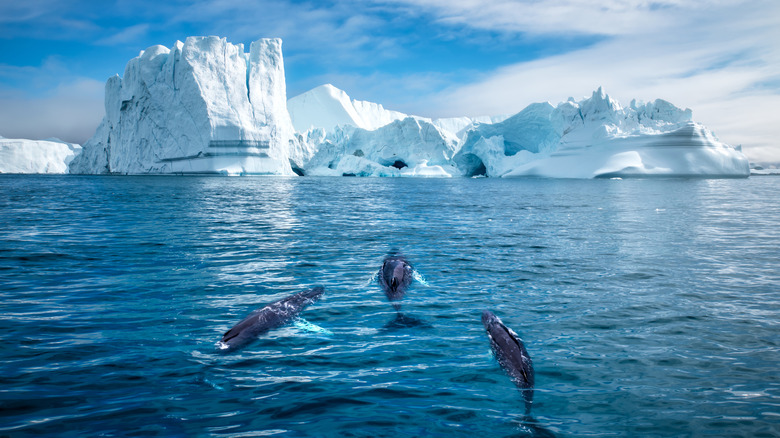
For another once-in-a-lifetime excursion, dog-sledding can provide a thrilling joyride to see Icefjord and its backcountry, along with a chance to hug some furry huskies. Mushers guide you at a relaxed pace across the snowscapes, educating visitors about life in the tundra and the invaluable role these canines play for the residents of Ilulissat. More animals await if you want to venture into the pristine bay for a whale-watching cruise (humpbacks are the most common species here), or even a fishing expedition for redfish and Arctic char.
No trip to the Arctic is complete without a polar night experience, and Greenland is a top destination to see the Northern Lights, which are best enjoyed from late August to April. Scientifically, this phenomenon of magical colors animating the sky results from gas particles in Earth's atmosphere being bombarded by the Sun's electromagnetic solar wind. Culturally, Inuit legend has it that they represent the spirits of the deceased playing a celestial ball game. You can look up to see the light show on tours via snowmobiling across the landscape or even snowshoeing around the banks of Icefjord.
The people of Greenland speak Greenlandic, but English is commonly spoken as well. Average temperatures in the depths of winter hover around 8 degrees Fahrenheit and 43 degrees Fahrenheit in summer. You'll need to pack appropriately: Bring insulating jackets, fleece-lined trousers, and thick gloves in winter, and waterproof jackets, jeans, and hiking boots for the summer. And, in case you hadn't heard, the midnight Sun is real here, meaning it won't set from late May to late July, so bring a sleep mask for better shut-eye. Visitors can also expect increased travel access with the new Ilulissat and Qaqortoq Airports scheduled for opening in 2026.