
Why You Shouldn't Put Your Head In Your Sleeping Bag To Stay Warm While Winter Camping
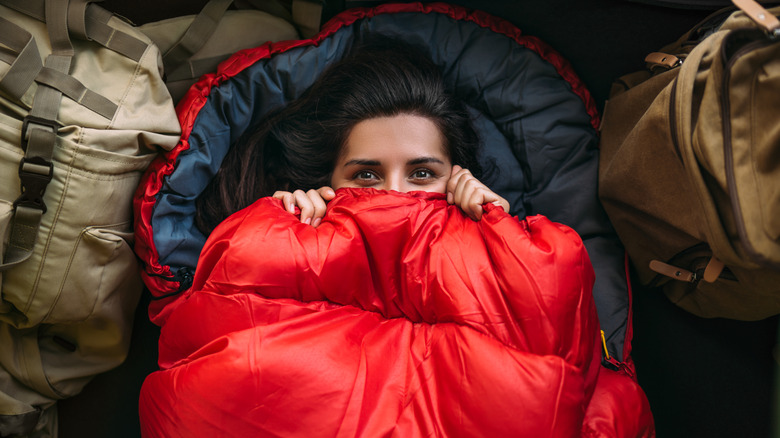
On a chilly winter night, it's tempting to make like a tiny forest creature and snuggle deep in your sleeping bag. And, while you may instinctively try to get as much of your body as possible in the bag, you should never cover your entire head. Backpacking experts warn that covering your mouth and nose will actually make you colder and could potentially damage your expensive sleeping bag.
When you exhale, your warm breath meets cooler ambient air, causing water vapor to condense into liquid. With each breath, more and more moisture accumulates in your sleeping bag until the area near your face and upper body feels damp and drippy. While no one likes the feel of wet polyester or nylon, the real problem occurs when a bag's filling — particularly down (the sleeping bag material that keeps you warmest) — takes in moisture. The filling itself doesn't provide insulation—it's the trapped air pockets between the fluff that keep you warm. When the filling gets wet, it becomes less effective at retaining warmth, and you, in turn, become colder.
And the trouble doesn't stop there. "In really cold weather, this condensation will freeze," according to the award-winning outdoor gear label Sea to Summit. "Once this happens, it is very difficult to get the moisture out of the sleeping bag without introducing it to a warm environment." So even if you manage to get some sleep the first night, you'll likely have to deal with a dangerously damp sleeping bag for the rest of your trip.
How to keep your head warm while winter camping
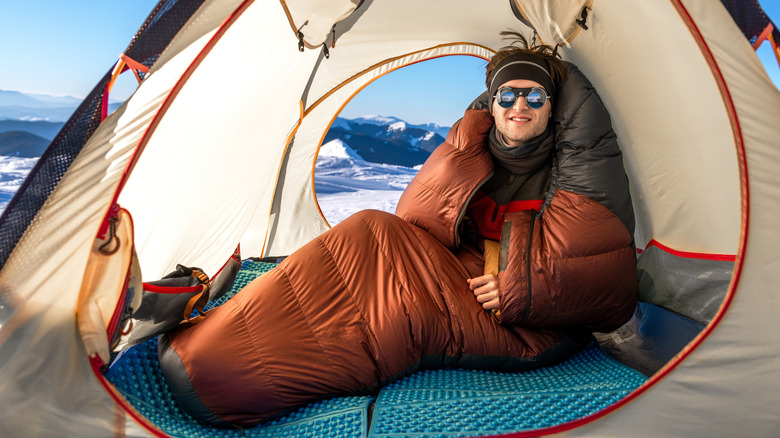
Keeping your head warm (especially around your nose) is a hot topic among cold-weather backpackers and campers, with numerous threads on Reddit and outdoor forums dedicated to tips and hacks. For those of us who can't grow a beard, wearing a balaclava topped off with a beanie is the best way to stay warm in truly cold conditions. Other campers on the r/camping subreddit recommend wrapping a warm scarf around a worn-in balaclava, preferably one made of Merino wool. However, in mildly chilly conditions, a Merino wool gaiter-beanie combo can replace a thick balaclava.
Regardless of the headgear you choose, opt for a material that retains heat even when wet. This is where Merino wool shines. The tiny fibers are so good at absorbing moisture that Merino wool can suck up 35% of its own weight in water without feeling wet or losing its ability to keep you warm, according to the popular outdoor apparel retailer Decathlon. Even if your breath causes a bit of condensation to form while using this kind of wool, it won't give you a chill or make the rest of your sleeping bag damp.
On the other hand, you should never wear cotton on a multi-day hike or winter camping trip. In fact, Yellowstone National Park recently advised visitors not to wear cotton due to its poor heat retention when wet and the park's freezing winter temperatures.