
Skip Peru's Crowded Inca Trail To Machu Picchu For This Wildly Under-The-Radar Ancient Route
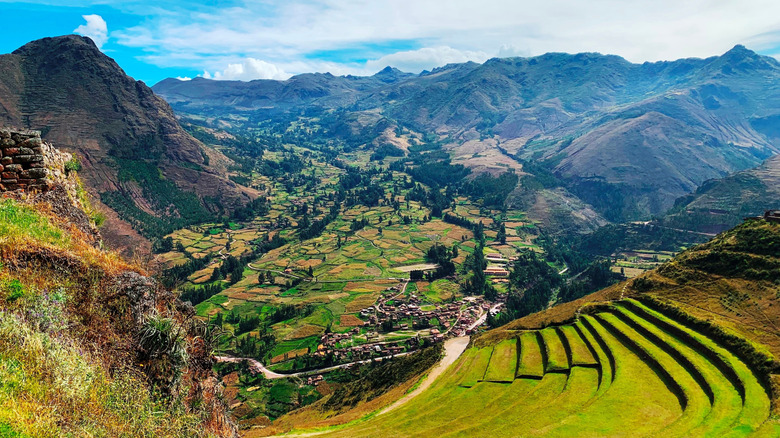
Machu Picchu isn't just Peru's most famous tourist attraction; the 15th-century Incan citadel is a wonder of the world, etched onto the face of a vertiginous Andean mountain and looking across the jungly Amazon basin. It's singular and irreplicable, but therein lie its issues. Overtourism, ineffectual management, and tensions between community organizers, officialdom, and the tourism industry have plagued Machu Picchu in recent years. So if solitude is something you're after, consider an alternative route through this vast South American mountain chain, like Qhapaq Ñan, the Andean Road System.
Meaning the "Road of the Lord" or the "Royal Road" in the native Quechua tongue, Qhapaq Ñan evidences how industrious Incan society was. Short-lived compared to civilizations like the Roman Empire or the Ancient Egyptians, the Incas flourished along the western portion of the South American continent for around 300 years, from the 13th to 16th century, though some historians reckon it was only a functioning empire for 100 years at most. Nevertheless, they used pre-existing infrastructure, engineering, and sheer human effort to build one of the most complex road systems in the pre-industrial world.
Stretching from modern-day Colombia all the way to Chile in the south, and connecting 20,000-foot-tall mountains with barren deserts and lush rainforests, Qhapaq Ñan covered more than 18,000 miles of trail at its height. Though nominally the Lord's Road, it was also used by traders, emissaries, vagrants, pilgrims and priests, and entire population groups moving in search of greater prosperity. Much of the road network has succumbed to overgrowth and decline in the centuries since the fall of the Incan Empire, but some local communities are considered guardians of the road and strive to protect the traditions of the Incan past, including more than 270 component sites along Qhapaq Ñan that travelers can visit today.
What to see along Qhapaq Ñan
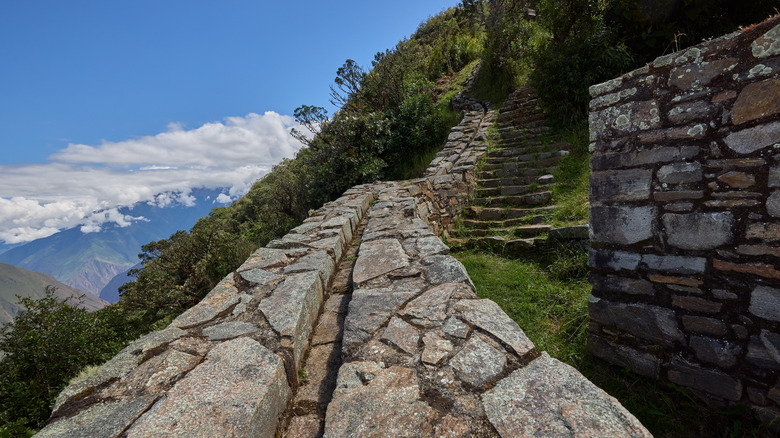
Added to the World Heritage List in 2014, Qhapaq Ñan and its historical sites dot the Andes. Scattered across six countries — Colombia, Ecuador, Peru, Bolivia, Argentina, Chile — the scenery embodies the beauty of rural South America: alpacas grazing on Andean plateaus, crumbling structures of andesite rock, horizons of snow-tipped summits, and vast skies glittering with stars at night. The best place to start your journey is in Cuzco (also "Cusco"), a Peruvian city with ancient ruins and breathtaking hikes, that was once the seat of the Incan Empire.
Considered to be the archaeological capital of the Americas, Cuzco hosts the Qorikancha, an Incan temple once covered in gold (only the stone skeleton remains), as well as artifact-filled museums dedicated to Machu Picchu and the History of the Inca. About 100 miles to the south in Quehue is the Q'eswachaka Bridge, a centuries-old, 90-foot rope bridge straddling the Apurímac River. Much as their Incan forebears once did, locals gather every June to reconstruct the bridge using traditional techniques — the ceremonial event involves prayers to the mountain gods and lasts four days.
To the north, connecting Cusco with Ecuador, lies a section of Qhapaq Ñan that is in relatively good condition. Around 125 miles' worth of cobbled steps and grassy mountain tracks are still used by hikers. You'll get access to archaeological sites here, too, like Chavín de Huántar and Huánuco Pampa. Another option is the multiday trek to Choquequirao, the "Cradle of Gold" and sister to Machu Picchu, a fellow Incan refuge built onto the face of the Andes. The Salkantay Trail, though not entirely incorporated into Qhapaq Ñan, also follows old Andean road networks and is another gorgeous, uncrowded alternative to Machu Picchu's Inca Trail.
Accommodation and travel along Qhapaq Ñan
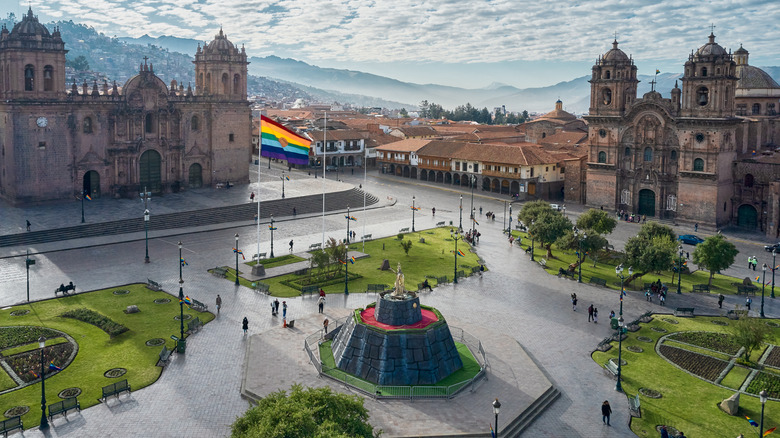
If you're going to explore Qhapaq Ñan starting in Cuzco, you'll probably enter through Cuzco Airport, the second highest in the world at 10,900 feet, which receives flights from elsewhere in Peru, as well as La Paz (Bolivia), Santiago (Chile), and Bogota (Colombia). Cuzco has boutique hotels, restored Spanish colonial-era villas, and backpacker hostels offering accommodation. You'll want to rest up well in one of these as accommodation along the trails is threadbare and often al fresco.
If you're hiking to Choquequirao — the trailhead is a 5-hour bus journey from Cuzco — there are only a smattering of basic lodges in the area, so you're better off bringing camping equipment and a sleeping bag. Also, be prepared for temperatures to plunge towards freezing at night, especially at higher elevations. If you're hiking the more remote northern section of Qhapaq Ñan, you can fly to Huaraz, which only fields flights from Lima. Here, you can also expect to sleep under the stars, camped in valleys of the most arresting beauty or amid the remains of a forgotten Incan ruin.
Luxuries are few and far between on Qhapaq Ñan, but this is part of the charm. Until this vast and storied road network registers on the wider tourism radar, most South America vacation bucket lists will include Machu Picchu as the primary reason to visit Peru. But visiting such popular sites has its drawbacks. If you want real quietude and a lens into the Andean world before modern civilization took hold, Qhapaq Ñan is hard to beat.