
The Reason Your Eyes Are Always Dry After A Flight
Evolution never planned for us to be hurtled through the sky in a tin can at 30,000 feet. It should be no surprise, then, that time spent in an airplane cabin can cause all kinds of side effects, including deep-vein thrombosis (caused by a lack of movement), swollen ankles (and here's why), and time zone changes that shock your circadian rhythm. One of the most common, not to mention irritating, side effects of air travel is dryness of the eyes.
Dry air is circulated in airplane cabins, meaning you typically experience low levels of humidity throughout a flight — in some cases, it can plunge to as low as 5%, drier than what you'd experience in some of the world's deserts. Airplanes bleed air from outside, by way of their jet engines, then filter any air that isn't used for combustion into the cabin. At that altitude, the air is much drier, so the air passengers are bathed in is equally dry, causing an increase in aqueous tear evaporation, or in layman's terms, dry eye symptoms: itchiness, redness, soreness, sensitivity to light, and blurry vision. Such dehydration also hoarsens your throat, causes headaches, even suppresses your immune system, and affects your taste and smell, though given some of the slop airlines serve under the guise of "food," that's perhaps for the best.
Interestingly, most humidity in a cabin comes from passengers exhaling. So while travelers crammed cheek-by-jowl into economy class might not have the comfiest flight, they're likely to experience humidity levels double that of their first-class counterparts. Granted, being covered in other people's water droplets might not be the most charming image, but at least your eyes will be a little bit more moist.
Can you prevent dry eyes on a flight?
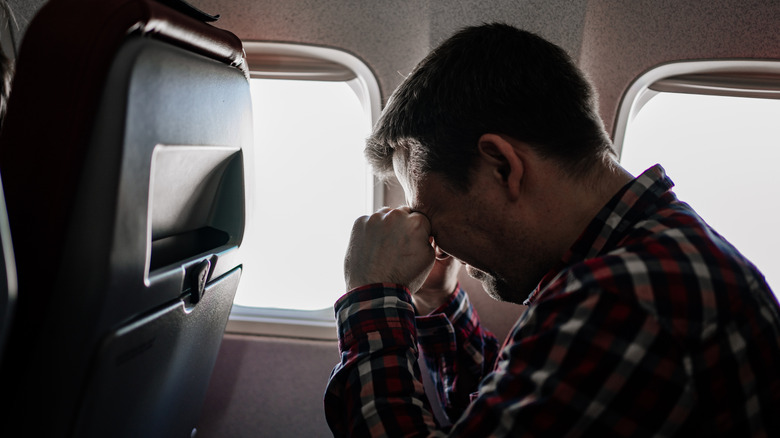
Ola Haggfeldt, CCO at aircraft humidity specialists CTT Systems AB, told Business Traveller that the human body dehydrates quickly when exposed to the atmospheric conditions in an aircraft cabin — and these effects are magnified on long-haul flights. "You're basically losing 70 grams of water every hour," she said, "so even if you're drinking water, you're going to dry out." But that doesn't mean you're completely out of options.
The Optometrists Network still advises proper hydration — before, during, and after the flight — as this can alleviate some of the irritation caused by dry eyes. Similarly, indulging in things that further dehydration, like alcohol, caffeine, and super salty foods, should be limited. Other useful tools include hydrating eye drops and a thick eye mask for sleeping, which reduces the amount of dry air reaching the eyes. It's also recommended that you close the air vents above your seat, avoid contact lenses (they're one of the things you should never wear on a plane), and try to ration your screen time, as staring into digital devices is another cause of dry eye symptoms. If you want to know how to survive a super long-haul flight, most of these tips are applicable. The important thing, for both long-haul flying and eye care, is to try and create comfortable conditions in an uncomfortable environment.
Optometry Times also emphasizes comfort in its advice for mitigating "traveler's dry eye." Its advice comes in two categories: ophthalmic and systemic. The ophthalmic advice, meaning relating to the eyes, suggests using flying glasses instead of contact lenses, preservative-free eye drops or artificial tears, and ophthalmic antihistamines. The systemic advice includes continued hydration when traveling — to reiterate: before, during, and after — and reconsidering decongestants and nasal sprays, which can cause dry eyes.