
The Heart Of Charleston's Historic District Brims With Iconic Pastel-Colored Homes For Unique Photo Ops
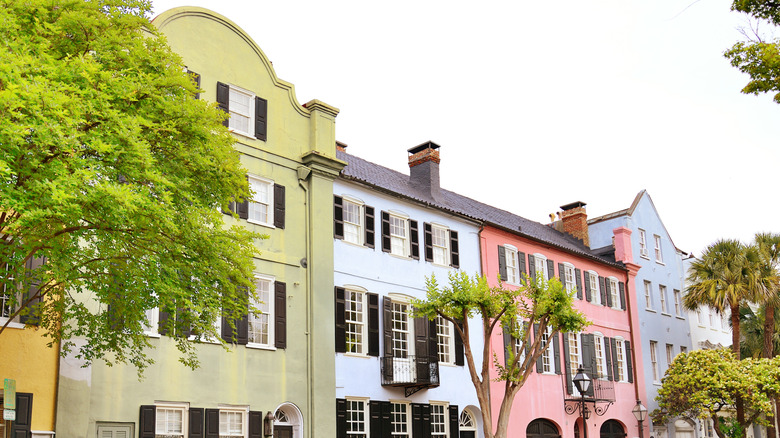
Tourists and locals love neighborhoods filled with colorful buildings. Copenhagen's Nyhavn harbor is known around the world for its vibrantly painted facades. Burano, Italy, one of Rick Steves' favorite islands near Venice, has its own colorful homes. And then there's Charleston's Rainbow Row. Appearing on countless postcards, artistic renderings, and social media posts, the area is an iconic symbol and must-see sight when visiting the gorgeous South Carolina city with a striking European appearance. But what's the story behind this famous street lined with pastel-colored homes — and what's the best way to capture photos of it?
Rainbow Row is a collection of 13 connected townhouses designed in different architectural styles on East Bay Street, north of Tradd Street and south of Elliott Street, in the heart of the city's Historic District. The houses date back to the late 18th century, with most being built by English and Scottish merchants after the end of the Revolutionary War (1783) and before the ratification of the Constitution (1788). The buildings served different functions in the years that followed, though most housed commercial spaces or private residences.
The Civil War changed the city's landscape, and after 1865, most of the houses along this stretch of East Bay Street were either abandoned or in poor condition. Decades later, prominent Charleston locals Susan Pringle Frost, founder of the city's Preservation Society, and Dorothy Haskell Porcher Legge, a fellow pioneer of urban preservation, were pivotal figures in the push to reclaim and restore the houses that now comprise Rainbow Row.
Get the best photos of Rainbow Row
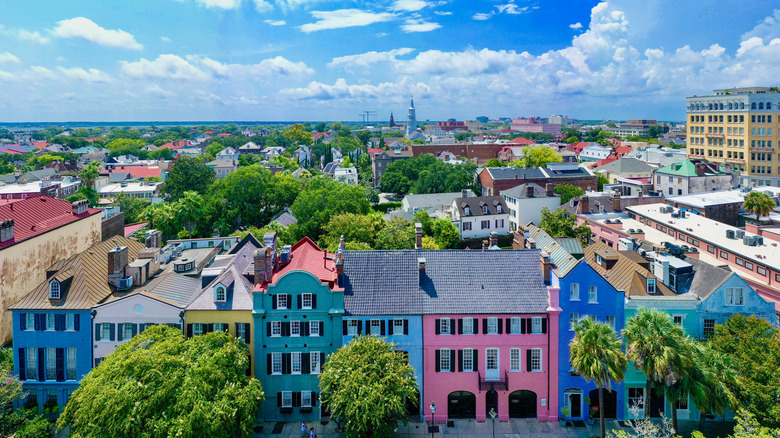
There's a little-known fact many visitors to Charleston never realize: the houses on Rainbow Row weren't colorfully painted until many decades after they were built. After a few of the houses were successfully restored in the 1930s, they were painted a vibrant shade of pink, representing the city's deep roots in Colonial Caribbean culture. The bold choice was a hit, and the other buildings' owners followed the trend, choosing to enliven the renovated landmarks in a range of pastel colors. The Rainbow Row we know today was born in the mid-century, and it's been a popular tourist destination ever since.
The landmark street is open to the public and free to visit (though you can't enter any of the privately owned buildings). If you're hoping to get the best photos of Rainbow Row's iconic facades, photographers say the best time to take pictures is early in the morning during spring and summer, when the light conditions are most favorable. Rainbow Row looks great on sunny days, but it doesn't photograph as well, thanks to reflections and shadows. Early morning on a weekday is also the optimal time to visit with respect to crowds: the landmark site gets very busy with tourists on weekends.
Rainbow Row is an easy 10-minute stroll south of central attractions like Charleston City Market. Take some time to explore this bustling marketplace in the French Quarter, as it's considered one of the top five things to do in Charleston during the winter. If you're driving, the closest garage to the colorful street is the East Bay/Prioleau Car Park, just a few blocks north.