
America's National Parks Have A Strict New ID Rule For 2026. Here's What To Know
If you're planning a trip to one of America's National Parks, you'll want to be aware of some big changes in 2026. One of the biggest is a "resident first" pricing system for the America the Beautiful Pass, which offers discounted access to thousands of federally-managed sites. This distinction between residents and non-residents means ID requirements are now more stringent, so Americans will want to pay close attention to avoid being turned away or charged a non-resident fee.
The annual America the Beautiful Pass costs $80 for U.S. residents and $250 for non-residents. The pass must only be used by the person named on the card and is non-transferable. If you present yourself at the gate and the name on your government-issued identification does not match the card, you could be turned away, or you could be made to pay the difference and upgrade to a non-resident pass. This makes it essential to match the name to your identification when making the purchase.
Even worse would be showing up to the park without any identification at all. As of January 1, National Park Service employees are required to inquire about the residency status of anyone age 16 and older entering the park and to ensure that anyone using a pass has a valid ID proving their residency. This is not only to verify the validity of a resident pass, but also because international visitors to America's 11 most popular National Parks will now need to pay an extra $100 fee to enter. According to the NPS website, acceptable forms of identification include a U.S. Passport, a U.S. government-issued driver's license or state ID, or a Permanent Resident card. Anyone without an ID proving their residency may be asked to pay additional non-resident fees.
New ID checks mean increased wait times to enter some National Parks
If you're organizing a trip to Acadia, Bryce Canyon, Everglades, Glacier, Grand Canyon, Grand Teton, Rocky Mountain, Sequoia and Kings Canyon, Yellowstone, Yosemite, and Zion National Parks, you'll want to be extra careful. These popular parks have an additional entry fee for non-residents, meaning you would pay $120 if entering on foot or $135 if entering in a standard vehicle to take in the incredible scenery.
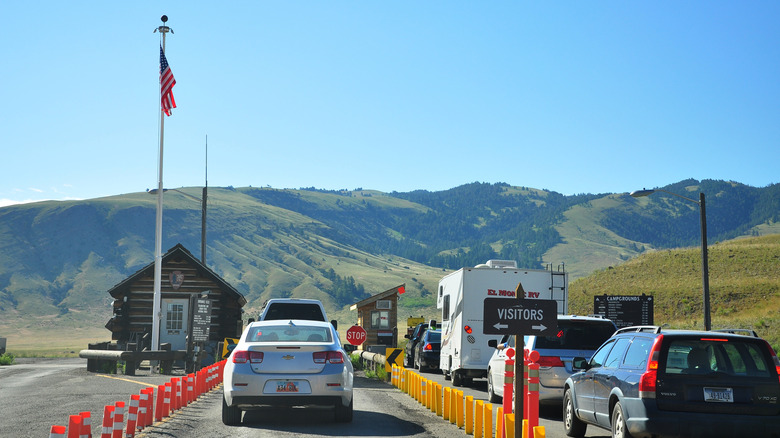
All of these changes are having a secondary impact that visitors will also want to be aware of — entry time. Given that park employees must now check identification and, in many cases, explain the non-resident fees to international visitors, the wait to get into some of the more popular national parks has already increased. "Wait times are absolutely longer because we have to ask more questions," one park employee told The Washington Post. "If someone doesn't meet residency requirements then we have to explain everything to them. This can be made extra difficult with language barriers."
So as you begin planning your next outdoor adventure at a National Park, whether you want to take advantage of some of the best National Park camping experiences or hit the trails for a strenuous hike, you'll want to be aware of these changes. Just add your ID to your packing list, and you'll be able to enter the National Parks without any unwelcome surprises.