
New Mexico's Suburb Near Albuquerque Has Stunning Mediterranean Homes And Scenic Parks
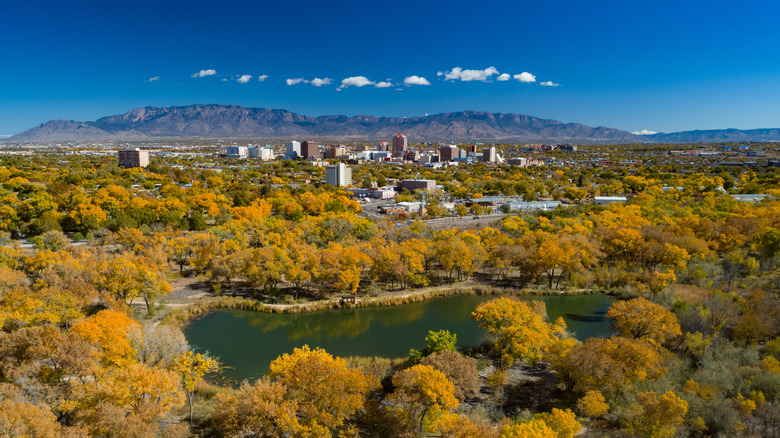
You might know Albuquerque as the vibrant heart of New Mexico, the state's largest city, boasting incredible riverside neighborhoods full of trails, like the North Valley. But there are plenty more standout areas in the city that you might have never heard of. Enter Paradise Hills. With fewer than 5,000 residents and a prime position on the West Mesa, not far from the rugged landscapes and scenic routes of the High Desert neighborhood, this census-designated place is rapidly gaining recognition as one of the most desirable places to live in the Duke City. As promised by its name, this Bernalillo County neighborhood offers paradisiacal views of the Rio Grande valley and the Sandia Mountains glowing pink at sunrise — a phenomenon locals refer to as a "watermelon" glow (sandia meaning watermelon in Spanish). It's something so romantic that it alone might well justify a visit or even a move there.
Still, Paradise Hills offers plenty more to appeal to residents at every stage of life. While retirees and empty-nesters might be drawn to the area's low crime rate and abundance of green spaces (including the beloved 170-acre Paradise Hills Golf Club), families can take advantage of the proximity to excellent public schools.
A look at the numbers is encouraging, too: The median household income sits at $74,403 (compared with an average of $62,125 across other parts of the "Land of Enchantment"), while unemployment remains at a modest 3.2%, significantly below the national average. Long-term residents highlight that the neighborhood and surrounding area have steadily improved over the last 30 years, evolving into a calm, walkable place from early morning to after dark. If you're in Albuquerque, it's worth checking out, especially if you're thinking about relocating.
Walking around Paradise Hills
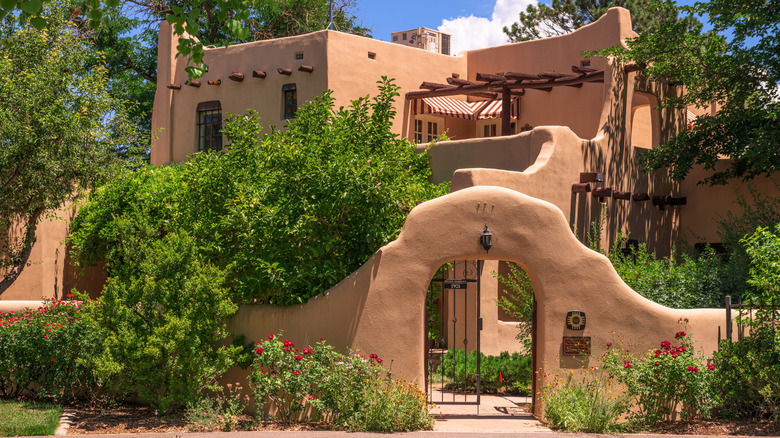
Walking around Paradise Hills is a treat in itself. Despite its small size (a little over one square mile), the neighborhood boasts an eclectic range of housing styles. During your morning walk, you will pass by everything from classic Southwestern ranches with low-pitched roofs and wide porches to Pueblo- and Spanish Revival-inspired adobes, easily recognizable for their stucco walls, terracotta rooftops, and vaulted doorways.
While the district's culinary scene is somewhat limited, there are still a few gems here that are worth a stop. With only 5-star Google Reviews, Red Taco Shop delivers some of "the best tacos ever," according to one satisfied patron, along with a handful of Mexican- and Asian-inspired plates, all served with the ever-present cilantro-and-salsa duo. On Paradise Boulevard, Clay Pot Ethiopian Cuisine is a small yet cozy venue serving some of the best East African food in the city. The restaurant also hosts cooking classes and special events, from vegan nights to live jazz evenings. However, if you are looking for a wider variety of options, venture east to Coors Boulevard, and you will find the neighborhood's commercial side, including more than 130 shops and dining venues at the Cottonwood Mall.
Paradise Hills is conveniently located, far enough away to be quiet but not a pain to reach anywhere central. Downtown Albuquerque is about 12 miles away (roughly a 20‑minute drive) and is serviced by convenient public transport options, including ABQ RIDE bus routes (notably the 157). Cyclists can also follow a section of the scenic Paseo del Bosque Trail, which runs along the Rio Grande and, in less than an hour, reaches the heart of the city.
Exploring the outdoors near Paradise Hills
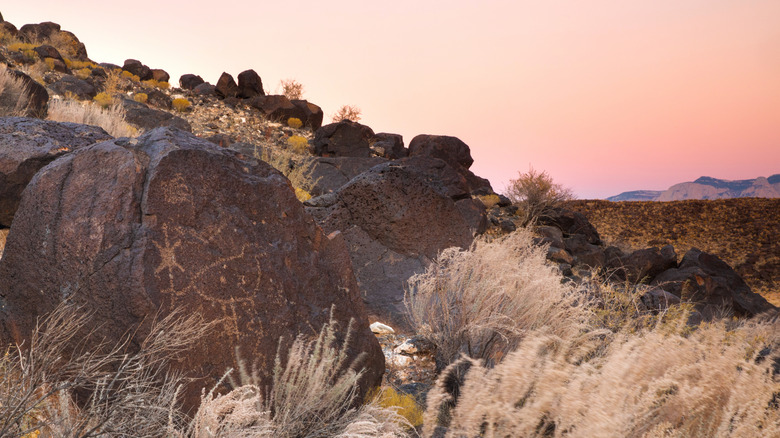
With the West Mesa and the Sandia Mountains right at its doorstep, Paradise Hills offers the perfect gateway to experience a variety of outdoor adventures. Less than a 20-minute drive southwest brings you to one of the region's most fascinating cultural sites: the Petroglyph National Monument (one of several spectacular destinations to see ancient rock art in the States). Spanning more than 7,000 acres of volcanic terrain, the monument protects tens of thousands of ancient rock carvings (petroglyphs) etched into basalt by ancestral Pueblo peoples between the 14th and 17th centuries. The site also features four hiking trails of varying lengths and difficulties, including the Rinconada Canyon Trail, which spans 2.2 miles and passes more than 300 rock carvings. There's also the Petroglyph Viewing Trail in Piedras Marcadas Canyon, an unpaved trail that's under 2 miles round-trip and features around 400 petroglyphs.
South of Paradise Hills (roughly 15–20 minutes by car) is the expansive Rio Grande Nature Center State Park, an urban wildlife preserve established in the late 1970s along the banks of the Rio Grande, one of the five longest waterways in the country. The park is a dream destination for birdwatchers, hosting hundreds of species year-round, and it also features a handful of biking and walking pathways to explore.
Within the neighborhood itself is Paradise Hills Playground, described by visitors on Google Reviews as "spacious" and well-maintained." It features a play area for kids, shaded picnic tables, volleyball courts, and even a skate park for teens. Whatever your plans include, you won't be wanting for gorgeous outdoor spaces here, so whether you're visiting or planning on a move here, be sure to take advantage of them.