
The 5 Best New Mexico National Parks And Monuments, According To Visitors
Sitting at the intersection of the southern Rocky Mountains and the sweeping deserts between Texas and Arizona, New Mexico has virtually everything needed for a memorable Southwestern adventure. Major cities like Albuquerque and Santa Fe are rich in some of the Southwest's most distinctive cultural treasures, while smaller towns like the appropriately named Rodeo are artsy havens full of Western vibes and natural beauty. Outside its cities and towns, New Mexico is equally notable for its dramatic landscapes and major historical sites. Many of these natural and cultural wonders are protected by the National Park Service (NPS), making the Land of Enchantment also home to exceptional national parks and monuments.
As of this writing, New Mexico has 15 different NPS-administered sites, including self-contained national parks and sections of longer, multi-state national historic trails. While all of these locations offer some combination of scenery, history, and recreation, some consistently stand out in visitor reviews. Based on cumulative ratings from platforms such as Tripadvisor, New Mexico's highest-reviewed NPS sites include its two national parks and three national monuments. Though any NPS site in the state is worth a visit, these five locations offer the best of the state's one-of-a-kind scenery, historical wealth, and overall experience — according to previous visitors, at least.
Capulin Volcano National Monument
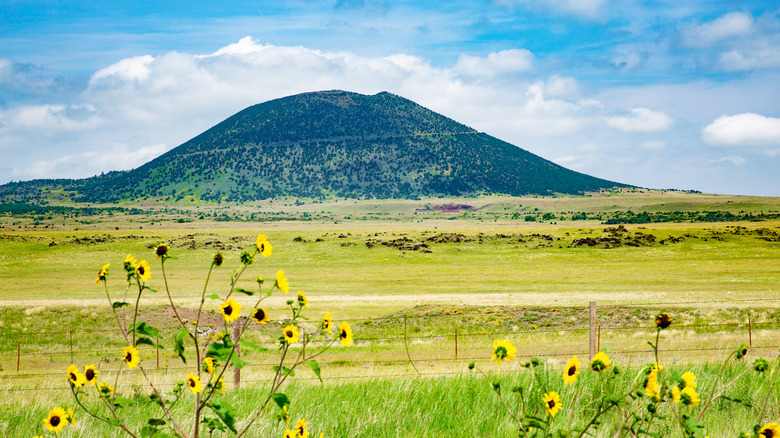
Although volcanoes are not commonly associated with New Mexico, the state's northern regions were once shaped by intense volcanic activity. One of the most striking remnants of this fiery geologic history is on display at Capulin Volcano National Monument, with an entry fee of $10 to $20. Located just south of the Colorado border, about 2.5 hours from Taos, the Capulin Volcano is one of North America's best-preserved examples of a cinder cone, a type of volcano with a cone-like shape, steep sides, and a defined crater.
Rising about 1,000 feet above the surrounding plains, the Capulin Volcano likely formed during an eruption that occurred around 60,000 years ago as part of the 8,000-square-mile Raton-Clayton Volcanic Field. While this field produced several volcanoes in what is today northern New Mexico, Capulin is the only one with a visible crater and clear "cinder cone" characteristics.
Reviews on Tripadvisor rave about Capulin's "amazing" views and "friendly and helpful" staff, with many noting how well the park's infrastructure preserves the volcano's delicate ecosystem while making it accessible and visitor-friendly. A standout feature is Volcano Road, which allows visitors to drive up and park right next to the crater rim. Of course, you can also explore the volcano on foot thanks to the park's many comprehensive trails that let you walk around the rim, explore preserved lava flows, and even climb down into the crater itself. The park's Visitor Center also offers informative indoor exhibits on Capulin Volcano's geology, ecology, and history.
Aztec Ruins National Monument
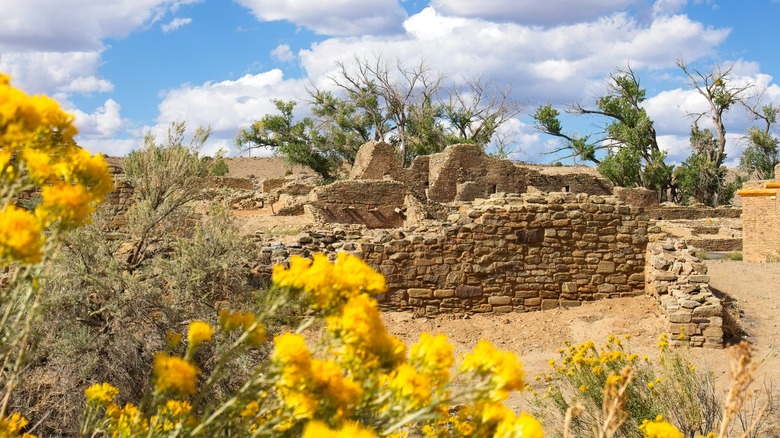
The American Southwest is dotted with amazing archaeological sites that preserve the sophisticated architecture of native peoples. New Mexico is very much in this club, and the Southwest outdoor playground that is Aztec Ruins National Monument stands out as an impressive display of the state's rich cultural heritage and landscapes. Despite its name, the structures at Aztec Ruins were not built by the Aztecs (a misattribution made by early settlers), but by another group, the Ancestral Puebloans. These structures are associated with the Chaco culture, the same people who constructed the sites at Chaco Culture National Historic Park to the south.
More than a thousand years after they were built, the structures at Aztec Ruins still showcase the advanced engineering skills and community planning. Visitors can explore the many kivas (special meeting places built by the Ancestral Puebloans for political and ceremonial purposes), including a 40-foot central structure known as the Great Kiva. Aztec Ruins National Monument is part of the UNESCO-designated Chaco Culture World Heritage Site, alongside Chaco Culture National Historical Park and other regional sites.
Reviewers on Tripadvisor commend the monument's educational value, helpful staff, and well-preserved ruins. "This park is so well done. Can't praise it enough. Amazing history that you can actually see," one wrote. Visitors can take an approximately 45-minute walking tour through the park's main kiva structures, then learn about the Chaco Culture's ceramic artistry, explore the park's Heritage Garden, or gaze at the Animas River on the Old Spanish Trail Retracement. Located about 15 miles from Farmington, the Aztec Ruins is free to enter.
Bandelier National Monument
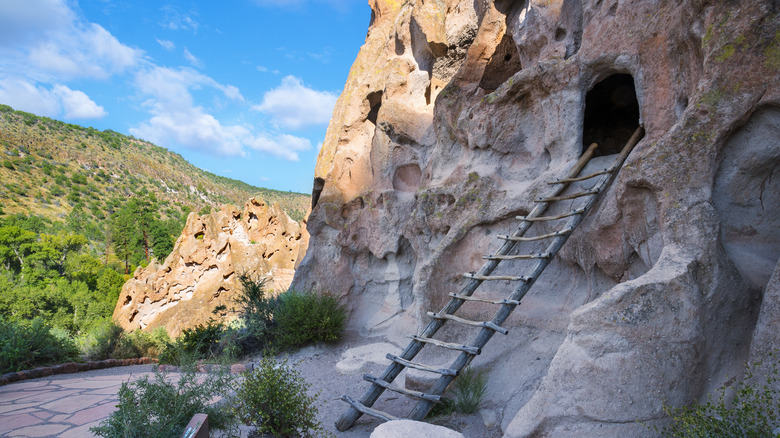
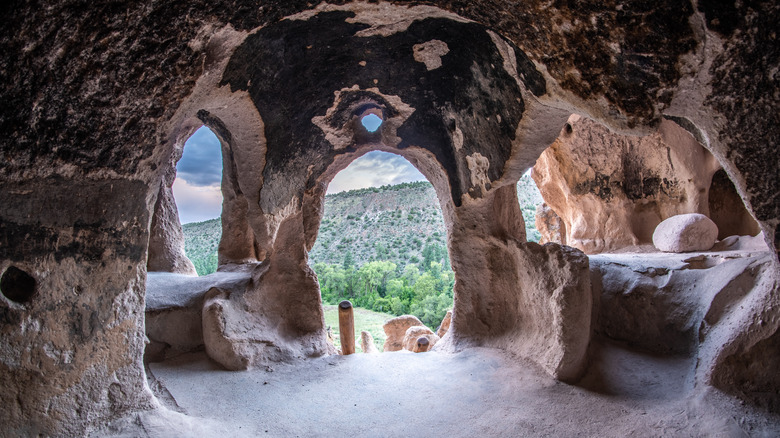
Another unforgettable living museum of Ancestral Puebloan dwellings is found in New Mexico's highly reviewed Bandelier National Monument. Established in 1916, Bandelier is one of the oldest sites in the National Park Service. The ancient homes and pueblos found here are slightly newer than those at Aztec Ruins, having been built sometime between 1150 and 1550 CE. Despite their relative youth, they're still an immersive snapshot of a centuries-old past.
Visitors can explore a complete city of expertly crafted stone buildings, ingenious cliff dwellings, and elaborate petroglyphs built between the Rio Grande and the Valles Caldera, less than an hour from the modern city of Santa Fe. This site includes some of the nation's most important archaeological structures, including the cliffside Long House, Alcove House, and the aptly-named Big Kiva. It also preserves more recent history, including infrastructure built by the Civilian Conservation Corps in the 1930s, and buildings that housed Manhattan Project scientists in the 1940s. Even without these structures, Bandelier would still be a worthwhile destination for its natural scenery, including majestic canyons, mesas, and volcanic tuff formations.
Bandelier National Monument draws particularly positive reviews from visitors on Tripadvisor for its near-perfect blend of historical significance and outdoor grandeur. "I didn't expect how large, well laid out and well done this place is," one penned. "The visitor center was well staffed, and had interesting exhibits." While vehicle access is somewhat limited, Bandelier can also be great for hiking. The park's many trails cover 70 miles total, including routes past all of the major archeological sites and natural features. Visitors can also enjoy informative ranger programs, cultural demonstrations from affiliated tribes, and even overnight camping at the Juniper and Ponderosa Campgrounds. As of this writing, entrance fees are $25 per vehicle or $15 per individual.
White Sands National Park
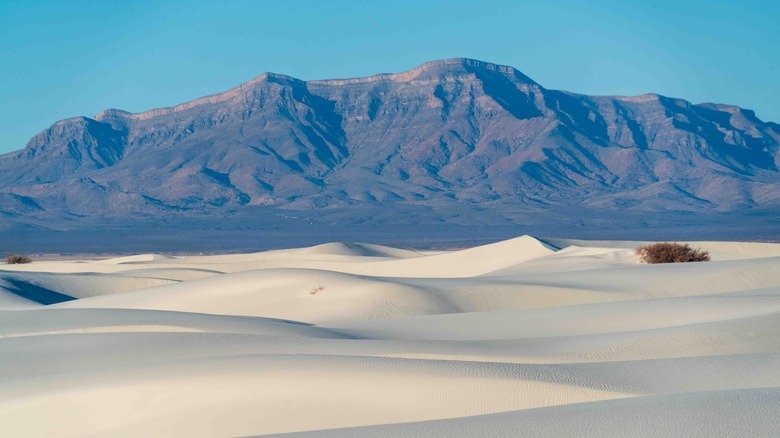
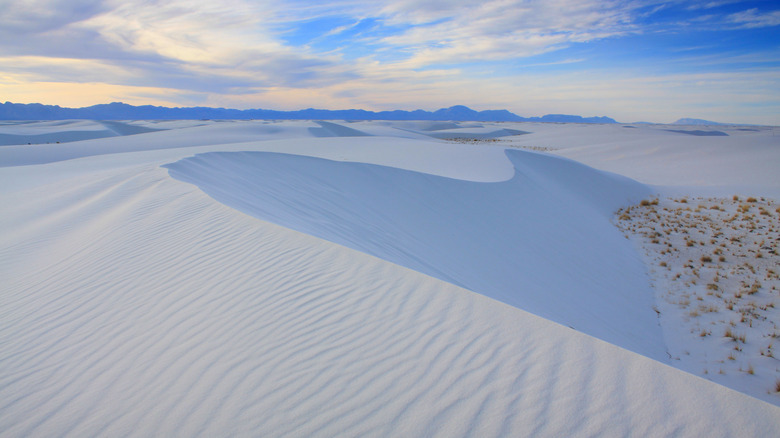
White Sands National Park may have the most accurate name of any national park. Sitting about 15 miles outside the city of Alamogordo, it's an expanse of pure white sand dunes glistening in the New Mexico desert. While this one-of-a-kind scenery may look like something from an alien planet, it actually has Earthly origins. The white sands stretch across 275 square miles and are composed of gypsum crystals formed in the Tularosa Basin. Over time, weather conditions transform these crystals into dunes — so rare that the park actually has the world's largest gypsum dune field.
While the park draws excellent reviews for its surreal scenery and peaceful atmosphere, reviewers on Tripadvisor also praise the park's terrific infrastructure (much of it handicap-accessible) and unique experiences. "White Sands felt like stepping onto another planet — and I mean that in the best way. This place is unreal," a past visitor raved. "Despite its otherworldly look, it's incredibly accessible. You can drive through the park with plenty of pull-offs for short hikes, sand sledding, or just wandering out into the soft dunes. And scattered throughout the visitor areas are these metal awnings — super well-built picnic structures with shade, tables, and nearby parking."
Recreation-wise, White Sands offers both traditional and non-traditional opportunities amid one of North America's most distinctive landscapes. The park's many trails are excellent routes for hiking (or horseback riding), while the 8-mile Dunes Drive is ideal for exploring the gypsum dunes from your vehicle. Sledding down the dunes is also a popular activity, and the park preserves fossilized human and animal footprints dating back to the Ice Age, which paleontology fans may appreciate. If you're planning a visit, note that the park occasionally closes during missile tests at the adjacent White Sands Missile Range, so check alerts in advance. Entrance fees generally range from $15 to $25.
Carlsbad Caverns National Park
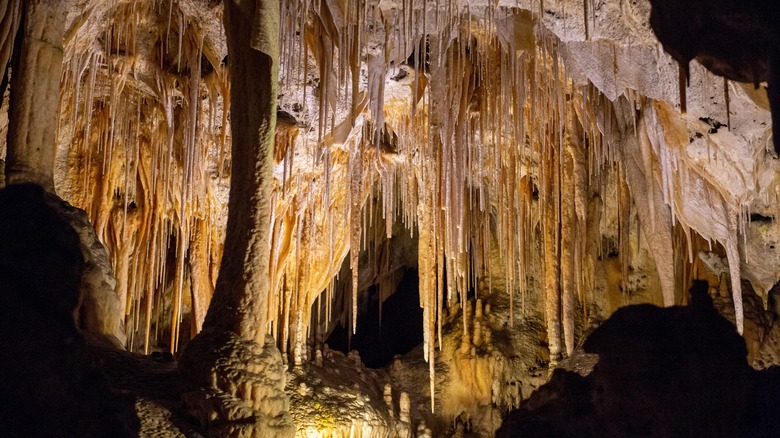
New Mexico's landscape is so rich in natural and cultural wonders that you may be surprised to learn that its best-reviewed national park site is largely underground. Of course, this will make complete sense once you see Carlsbad Caverns National Park. Sitting just beneath the Guadalupe Mountains in southwestern New Mexico (about 2 hours northeast of El Paso), Carlsbad Caverns is a subterranean masterpiece of geological artistry, displayed through more than 300 interconnected limestone caves.
The entire underground complex contains some of the largest caves in North America, all decorated with baroque displays of stalactites, stalagmites, and other geological formations. Though the entire cave seems like a large-scale modern art project, it was actually formed by a complex process involving hydrogen sulfide-rich water dissolving limestone deposits. Above ground, the park protects a lush, scenic region of the Chihuahuan Desert and offers exceptional stargazing opportunities. For its size, geological diversity, and scientific significance, Carlsbad Caverns is recognized as a UNESCO World Heritage Site.
The park's once-in-a-lifetime scenery and excellent guided tours have drawn positive reviews on forums like Tripadvisor. In fact, many of its specific sights have their own review threads. For example, the park's largest single cave chamber, appropriately called The Big Room, has wowed visitors with its "beautiful rock formations," accessible via convenient infrastructure and informative tours. While access to the cave itself requires timed reservations, the basic $15 entrance fee nets you access to the aboveground hiking trails – and maybe an evening show from the park's resident bats.
Methodology
New Mexico has 15 NPS-administered sites entirely within its borders, encompassing national parks, national monuments, national historical parks, and a national preserve. These include sites such as the Manhattan Project National Historical Park (preserving the Los Alamos site where the first atomic bomb was developed), the Pecos National Historical Park (preserving a complex of historic sites from prehistoric times through the 20th century), the Chaco Culture National Historical Park (preserving another major Ancestral Puebloan site), and the Valles Caldera National Preserve. For this list, we focused specifically on sites designated as national parks or national monuments.
Fortunately, the best-reviewed NPS sites in New Mexico are also its two national parks and three national monuments. To get a clear picture of the aggregate opinion of each park from past visitors, we primarily used Tripadvisor, with supplemental references to other platforms like Google. Tripadvisor proved useful due to its large review volume and helpful synopses of major themes for each park. All five sites on this list received average ratings of at least 4.6 out of 5 stars, based on at least 500 individual reviews. These benchmarks ensured that each location attracted both significant visitation and consistently positive feedback from past visitors.