
Arizona's Quiet Nature Sanctuary Near Tucson Has Cacti-Fringed Trails And Scenic Mountain Views
There's something sacred about the mountains, especially in the desert. Native American tribes such as the Navajo, Hopi, and Apache maintained deep spiritual connections to the Southwest's peaks that continue to this day. In a journal titled "Sacred Mountains: Themes and Teachings," Edwin Bernbaum of The Mountain Institute says, "As the highest and most impressive features of the landscape, mountains have an unusual power to awaken a sense of the sacred. Their soaring summits, the clouds and thunder that swirl about their peaks, the life-giving waters that flow from their heights, these and other characteristics imbue them with an aura of mystery and sanctity."
Tucson, Arizona, nestled in a valley between ranges like the Santa Catalinas and the Santa Ritas, is a city with several inspirational sites that beckon visitors. The vibrant, artsy city has been deemed part of a sky island system, where sudden elevation changes surrounded by low-desert basins create incredibly diverse ecosystems. One of its most special and intriguing destinations, Sanctuary Cove, is surrounded by this natural beauty.
Sanctuary Cove is a roughly 20-minute drive from the heart of the city but feels a world away. It's a quiet nature sanctuary and contemplative space. Tucson has its own international airport and is located along Interstate 10, making it easy to access and the ideal place for an unforgettable road trip, boasting hidden ghost towns and desert sunsets. And of course, the Southwest is full of other revered spaces to explore, like the New Mexico village of Chimayo, where tradition lingers, and the mountains feel sacred.
Tucson's desert Sanctuary Cove

Designed as a space for spiritual connection in nature, the 80-acre preserve at Sanctuary Cove offers scenic mountain views and pristine wilderness to explore. Immersed in splendid seclusion, the property attracts travelers with ample hiking trails and meditation spots, open every day from dawn until dusk.
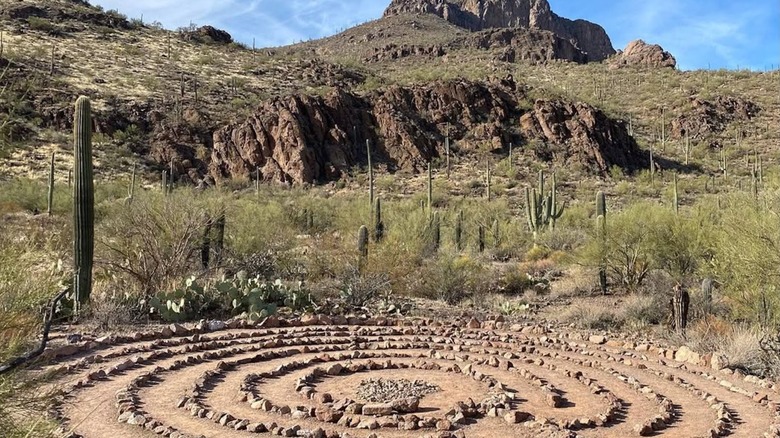
The property is home to a unicursal meditative labyrinth, with posted signage directing visitors to shed their stress as they walk its seven circuits, reflect in the center, and embrace inspiration on the way back out. For hikers, the sanctuary offers several trails to explore the desert. According to AllTrails, the Main Loop Trail is an easy 0.7-mile-long circuit that provides glimpses of the region's rugged terrain and peaceful surroundings. While you wander, you'll see things like young saguaro, a 60-year-old stone chapel with stained-glass windows, an open-air amphitheater, and wildlife like birds or rabbits. But beware, some reviewers claim it's rocky and has a bit of an incline.
You can dive deeper into the area's sacred spirit with an overnight stay in a guest cottage rented through Airbnb, featuring an inspiring library, gas grill, and sandstone patio overlooking the valley in one of the world's best stargazing destinations.
How Sanctuary Cove serves Tucson's spiritual community
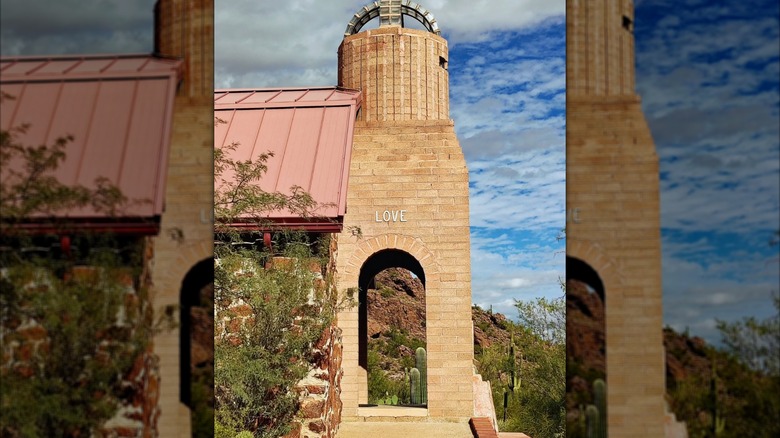
For more than 70 years, the land at Sanctuary Cove has been set aside for prayer and meditation. It was created by Elmer Amos Staggs, a military veteran who served in World War I and dedicated the space to "all of humanity" to inspire visitors to elevate their spirit. Staggs first came to the area in 1917 and formed the non-profit group All Creeds Brotherhood with a group of like-minded individuals. The All Creeds Chapel was built in 1964. It now holds many different types of events, from wedding and memorial services in the chapel to guided meditations, labyrinth walks, prayers for peace, non-denominational Easter sunrise services, family photo shoots, and trail restoration days.
Visitors seeking reflection and those gathering for special occasions on the grounds further the founder's vision for a serene retreat in a spectacular natural environment that actively promotes peace. Because the sanctuary is on the border of Saguaro National Park, the region already attracts more than a million visitors each year. As tourism continues to grow, the All Creeds Brotherhood hopes to increase donations, community, and sacred moments in the Sonoran Desert.