
Minnesota's Island-Hopping Canoe Trail Traverses Miles Of Peaceful Lake Terrain
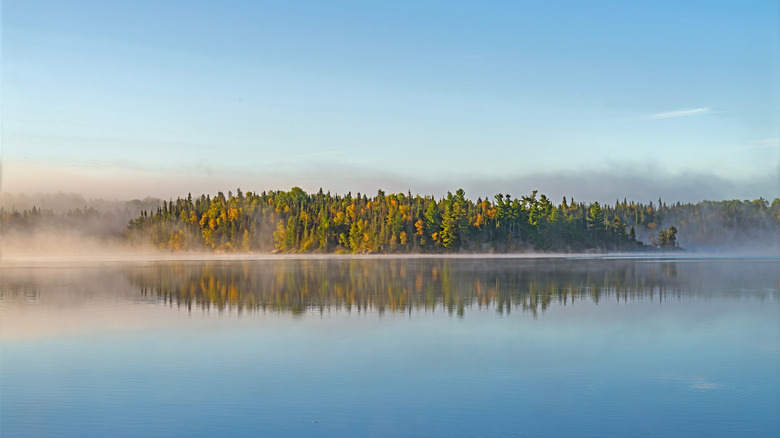
Minnesota is known as the Land of 10,000 Lakes, so experiencing lake life and getting out on the water are essential on any trip to the North Star State. Head to the far northern part of Minnesota to the remote Boundary Waters Canoe Area Wilderness, and set off on one of the 1,200 miles of canoe routes in this huge wilderness area. Whether you're a newbie to canoeing in the Boundary Waters or a seasoned pro after excellent fishing, the Seagull to Saganaga Loop is one of the best options for a short trip into the wild.
The Seagull to Saganaga Loop is 19.4 miles — while you can technically do it in one (very long) day, Seagull Outfitters recommends spending three to five days on the loop to fully enjoy it. From Entry Point No. 54 on Seagull Lake, paddle down and traverse either a 31-rod or 101-rod portage to reach Alpine Lake. From here, it's a 45-rod portage from Alpine to Red Rock Lake, where, after a short 9-rod portage to Red Rock Bay, you'll finally reach Saganaga Lake. After paddling on this vast, mighty body of water, you'll head back down the channel to Seagull Lake and your starting point. You can also do the loop in the opposite direction.
One of the prettiest features of this route is the vast number of islands you'll encounter on these lakes. Seagull Lake has over 100 islands that are 1 acre or more, and there are many islands in the middle of Alpine Lake. Seagull Outfitters notes that the islands on Saganaga Lake are "countless" and recommends having your map close by.
What to expect on the Seagull to Saganaga Loop
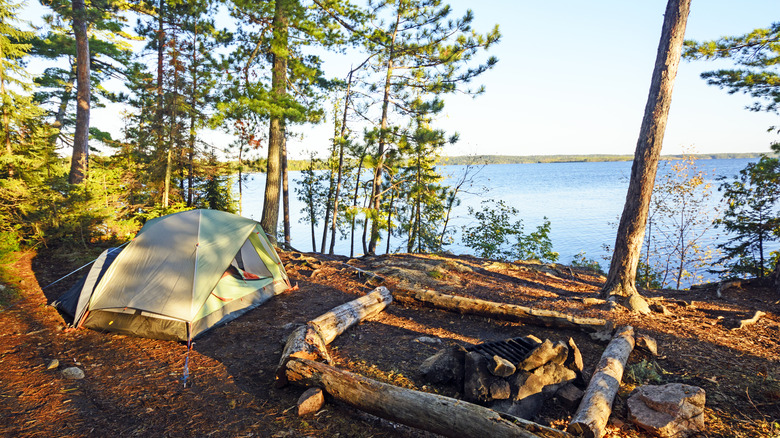
A trip to the Boundary Waters is all about soaking up the peace and serenity of the great outdoors. Seagull Lake is a popular option in this area, particularly for first-timers or less-experienced canoeists, as it's easy to access. Tuscarora Canoe notes that homes on the lake and motorboats — which are permitted on only a few designated lakes in the Boundary Waters — may detract from the experience. But with the size of Seagull Lake, Tuscarora Canoe says it's possible to "feel like you're deep in the wilderness without ever portaging," and guarantees "if you're at the far western end of the lake, you'll forget that you're on a lake with homes and motorboats on its eastern end."
Saganaga is a big lake and can be very windy. Kevin Proescholdt, conservation director for Wilderness Watch, who boasts an impressive 50 years of experience canoeing the Boundary Waters, advises it's "best to start early in the day to get across big water before the wind picks up midday" when paddling on Saganaga.
Proescholdt also highlights the great fishing on the Seagull to Saganaga Loop. Anglers can cast a line for walleye, smallmouth bass, northern pike, and lake trout on these lakes. Other attractions on the loop include the 80-foot rock cliffs of the Seagull Palisades on Seagull Lake — you can hike to the top for spectacular views.
Planning your trip to the Boundary Waters
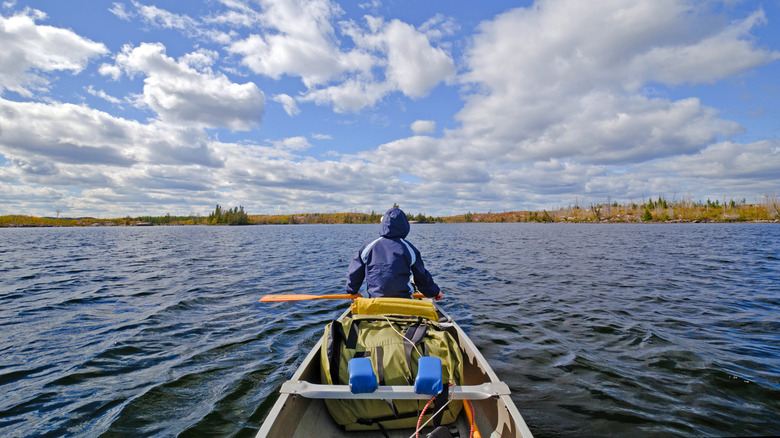
A trip to the Boundary Waters requires more planning than your normal camping trip. Permits from the U.S. Forest Service are required from May to September — for the Seagull to Saganaga Loop, you'll need a permit for Entry Point No. 54. A lot of outdoor gear is required, not least canoes, paddles, and packs; going through an outfitter can relieve a lot of stress, as they'll provide all the right equipment as well as secure permits.
Most trips to the Boundary Waters start from Ely, one of the most breathtaking places for outdoor recreation, or the artsy town of Grand Marais on Lake Superior. For this route, it's Grand Marais — leave town and drive on the Gunflint Trail to reach the starting point on Seagull Lake, which will take about one hour and 15 minutes. The closest major airport to Grand Marais is Thunder Bay International Airport across the border in Canada, which is a 1.5-hour drive away; Duluth International Airport, a two-hour drive down the North Shore of Lake Superior, is another option for flights.