
5 American Cities With Recent Redesigns That Will Make You Want To Plan Another Visit
While it's tempting to chase the cool train by traveling to up-and-coming cities across America, doing so means you may miss out on the glow-ups of popular destinations from the past. You may have been able to say "been there, done that," but new additions have given these destinations a completely different look and feel.
Over the last 15 to 20 years, cities like Detroit, Austin, and Buffalo have gone through big changes. They are now defined by modern waterfronts, high-rises, green spaces, and upgraded public transportation. In some cases, landmarks you hold dear in your memory may have been torn down and replaced.
These development projects have been a much-welcome quality-of-life upgrade for residents, but they also provide new entertainment venues and activities for tourists. Projects are often accompanied by a surge in new restaurants, hotels, and activities. Chances are that these cities are unrecognizable if your last visit was over a decade ago — consider this your sign to plan another trip.
Detroit, Michigan
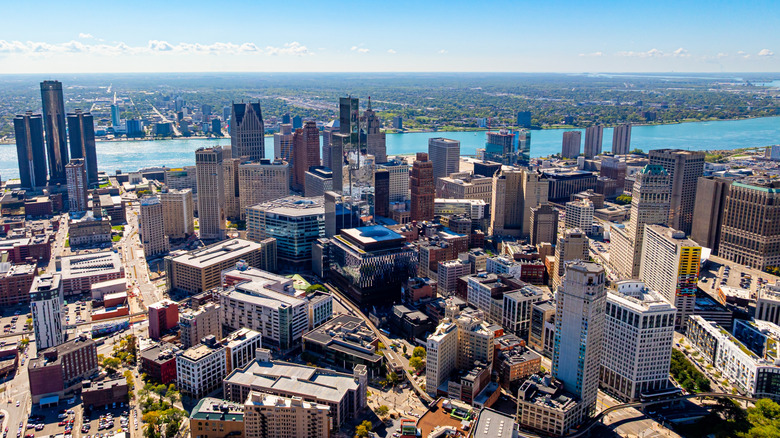
The city of Detroit filed for bankruptcy in 2013, exiting in the following year. In the ten years that followed, however, the Michigan city has centered all of its efforts on rebuilding itself, one district at a time.
Ralph C. Wilson Jr. Centennial Park, which opened in October 2025, is the latest Detroit Riverfront project. The 22-acre green space was built upon an already existing park, but added modern amenities, the main feature being an open-air, weather-protected sports center, to better suit the lifestyle and needs of Detroit residents and visitors. Before and after images of the riverfront reveal that more pathways were added, promoting smoother circulation around the park, as well as a water garden. The park is the newest addition to the roughly 100 acres of green spaces, connected by 8 miles of the Detroit Riverwalk and other trails, that line the city's waterfront.
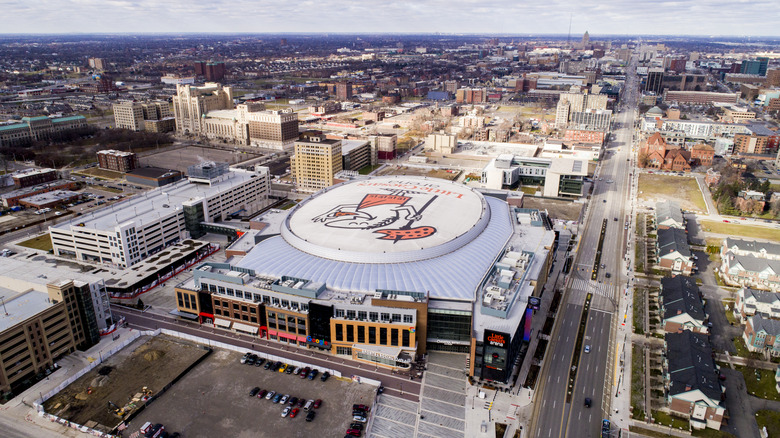
Fans of the Red Wings may remember that the hockey team called the Joe Louis Arena, built in 1979, home; this changed in 2017 with the opening of the Little Caesars Arena, where local partisans now head to cheer for their favorite athletes. Demolition of the Joe Louis Arena began in 2019, and the former arena lot is in the midst of a revitalization project called Water Square. The space will host luxury residences as well as a Marriott hotel scheduled to open in 2027. Related projects include updates to the transportation hubs in the area. In 2025, the Detroit People Mover station Joe Louis Arena was renamed West Riverfront to further solidify the overall spruce up of the neighborhood.
Pittsburgh, Pennsylvania
Toward the end of the 20th century, the Pennsylvania city shifted from a focus primarily on steel production to emerging industries and technology. Given how the city has completely reinvented itself over the last 20-plus years, it's clear it was a smart choice.
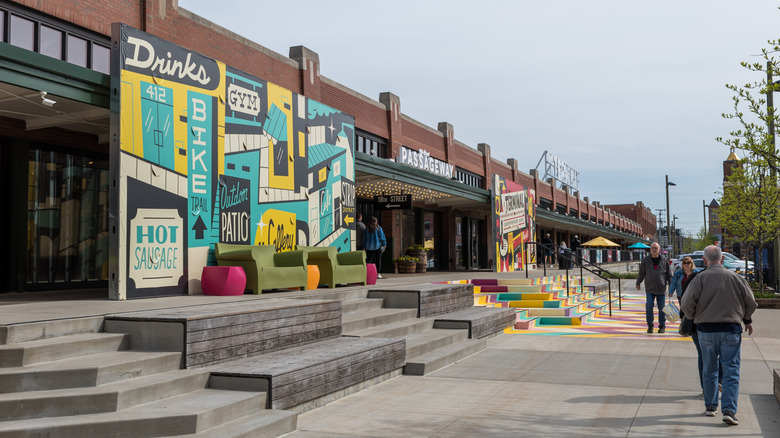
Changes start with the Pittsburgh skyline, which now includes buildings such as the award-winning The Tower at PNC Plaza, completed in 2015, and the FNB Financial Center, completed in 2024. Redevelopments were also aplenty in the last decade, with one of the major projects including the repurposing of the old Kauffman's department store building, now a multi-complex with luxury residences and a Target store. The Strip, a district right outside downtown, has evolved into a business and residential district with a number of robotics companies, whereas the area previously housed factories and warehouses. Today, it's also one of Pittsburgh's most vibrant neighborhoods, full of ethnic eats.
In 2023, the city of Pittsburgh kicked off its 10-year tourism development plan, with the hopes of improving the tourist experience. In 2025, the program focused heavily on developing experiences that highlight local culture, such as a walking tour of the city's art murals.
Austin, Texas
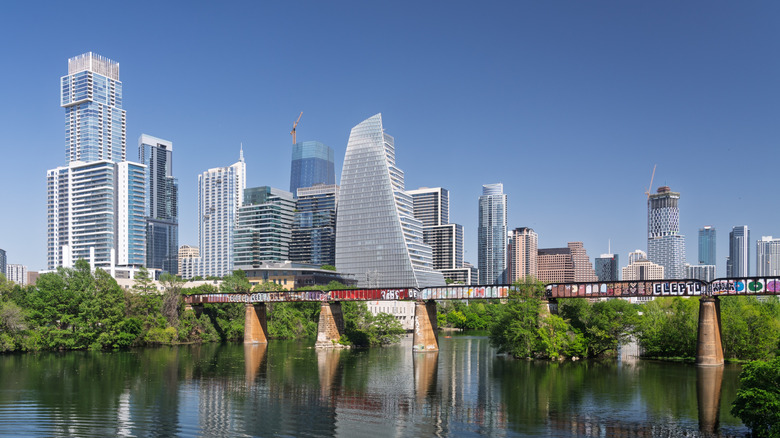
When you compare photos from Austin in the 2000s and 2010s and Austin in the 2020s, the changes are striking. There's only one way to describe it: The city has grown upward. Humble two to three-story buildings have been replaced by high-rises.
Notable constructions include the award-winning Block 185, a 600-foot-tall office tower with a striking facade that earned it its nickname of the Sailboat Building or Sail Tower. It was designed for office workers to have great views of the nearby Colorado River and surrounding neighborhoods, while bringing a surprising element to the Austin skyline. There is also the 66-story-tall Sixth and Guadalupe, and the Waterline skyscraper, which should open in 2026, is one of the tallest buildings in Texas. It will be home to a hotel, luxury residences, and retail stores.
Q2 Stadium, completed in 2021, is home to Major League Soccer's Austin FC. Q2 is Austin's first professional sports stadium, doubling as a concert venue and hosting community events. Previously a University of Texas parking lot, the Moody Center, which opened in 2022, functions as a basketball arena and entertainment venue, with world-renowned musicians scheduled to perform in 2026. It's safe to say that Austin's "Live Music Capital of Texas" title isn't going away anytime soon.
Milwaukee, Wisconsin
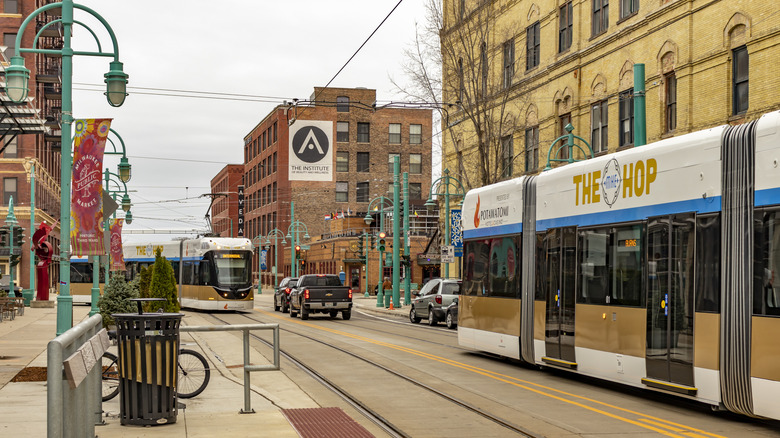
The city of Milwaukee is America's most affordable lake destination. Much effort has been put into the redevelopment of its waterfront amenities in recent years. Starting with the Riverwalk District, defined by a 3-mile-long promenade running along both sides of the Milwaukee River, connecting several downtown neighborhoods. The district has become the go-to spot for local festivals and events, with a special focus on art.
Keeping by the water, the Harbor District, located south of downtown Milwaukee, has also seen big changes, and not just as a center for freight ships. It's also a good place to find boat tours, waterfront eateries, and local brews. The Historic Third Ward continues to impress as one of the city's best walkable areas. There are multi-purpose spaces that suit residents and tourists alike, including the Henry Maier Festival Park, a 75-acre venue where Summerfest, the city's highly anticipated multi-day music festival, is held every year.
In addition to redevelopment projects, Milwaukee has seen major changes to how its residents and tourists can get around. In 2018, the city's downtown streetcar, The Hop, launched service, connecting major neighborhoods and landmarks — for free. According to Visit Milwaukee, there are 117 bars and restaurants, 59 shops, 17 entertainment venues, and 11 hotels within two blocks of the two main Hop lines. There has also been the launch of the CONNECT 1 Bus Rapid Transit (BRT), allowing residents and tourists to access major hot spots with buses passing every 10 to 15 minutes during peak hours. This makes it extra easy to go car-free.
Buffalo, New York
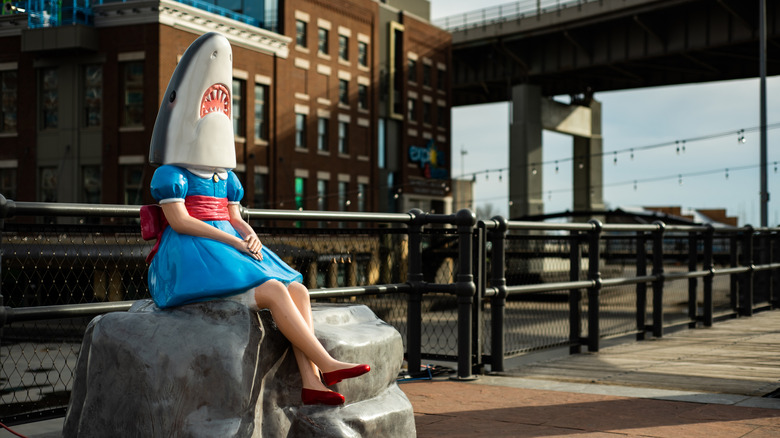
Another Great Lakes city, Buffalo, has also tapped into its waterfront to create a space where people can relax by the water. RiverWorks, an outdoor leisure area, has seen its list of activities expand. It now includes thrilling zip lines and rock climbing in the summer and ice hockey and curling in the winter. That's in addition to the waterfront dining, brewery, arcades, and entertainment venues that were already there. Waterfront improvements didn't stop there: Canalside, in the city's historic downtown area that runs along the Erie Canal, was also given a glow-up. It now offers destinations such as restaurants, outdoor activities like winter ice skating, several naval ships that serve as floating museums, and a children's museum.
Revitalization also happened inland, notably in the neighborhood known as Larkinville. Visit Buffalo calls the area "one of the city's most impressive transformations" thanks to its recent transformation from vacant warehouses and lots into hip breweries, restaurants, and venues for local festivals and events. Also worth mentioning is the Curtiss Hotel, a luxury accommodation best known for its urban hot springs located in downtown Buffalo. The 1912 hotel building, previously known as the Harlow C. Curtiss Building, was completely renovated into a luxury hotel in 2017. Despite its modern interior, the building remains on the National Register of Historic Places.