
The Gorgeous Norwegian Island With So Many Polar Bears You Can't Venture Outside Without A Rifle
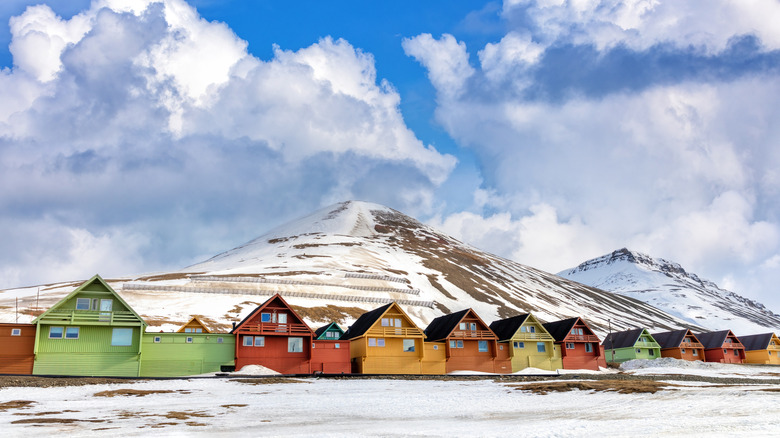
Norway has no shortage of destinations that could have been dreamed up in a fantasy novel. For example, there's Sommarøy, an island with 24-hour sunshine and no clocks (a result of the country's high latitude). Not to mention, the country is known for its mind-boggling scenery of sharp fjords cradling villages like Flåm, located on one of the world's steepest railways. There's only one Norwegian destination where you might need a gun, though, and it has nothing to do with crime. On the glacially sculpted island of Spitsbergen, the largest and only inhabited isle of the Svalbard archipelago, a rule states that you need to have a firearm with you outside of the villages due to the island's formidable polar bear population.
It may sound like a herculean undertaking to visit this area, but as the northernmost inhabited place in the world, Spitsbergen rewards travelers with Arctic nature and scenery you truly can't find anywhere else. Polar bear sightings are a given, but the island is also home to reindeer, walruses, and seabird colonies, among other wildlife. Spitsbergen boasts sublime frozen landscapes spliced with plunging fjords and glaciers splitting off into icebergs, and from September through March, it's well-known as a Northern Lights hunting destination.
The polar bears of Spitsbergen
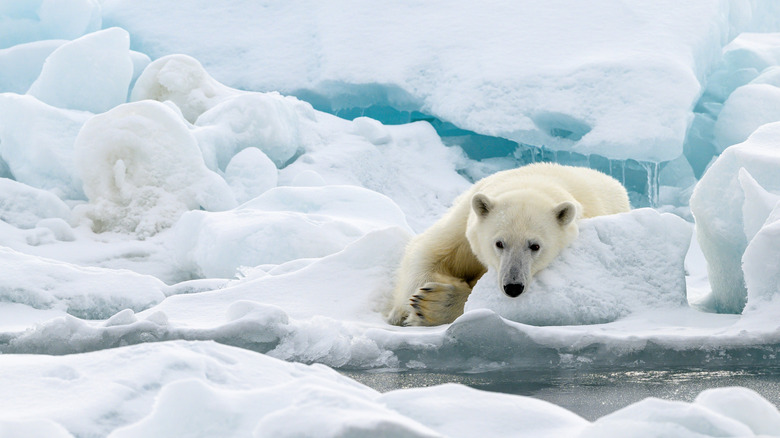
Longyearbyen is the most populated settlement on Spitsbergen and Svalbard's capital. Outside of the few settlements and research stations, Spitsbergen is inhabited largely by polar bears. According to Visit Svalbard, the archipelago has about 3,000 polar bears, which roam freely around the island and sometimes can be seen even just beyond the settlements. For both the safety of yourself and for the polar bear population, there are strict rules about what to do when encountering the bears and entering their domain.
First of all, you need a gun, or at least a guide who carries one, when you leave the settlements, as protection. Firearms are only allowed outside of the settlements, and you'll need to apply for a permit to have the gun, which can take up to four weeks to process. According to guidelines from the Governor of Svalbard, the recommended firearm to carry is a rifle, due to its power and reliability in the cold.
There aren't any official, dedicated polar bear tours, since the chances of seeing the animal is quite unpredictable, and they're protected by international law. Your best bet of getting to spot the magnificent animals with an experienced guide present is on an expedition cruise, especially if it's a multi-day trip. There are many options out there, but Better Moments is one of the top-rated on Tripadvisor and has a 2025 Traveler's Choice award from the site. Several reviewers noted seeing polar bears while doing a tour with the operator. If you do encounter a polar bear, on a tour or not, the island rules that you have to keep a distance of at least around 1,000 feet.
What else to know about visiting Spitsbergen
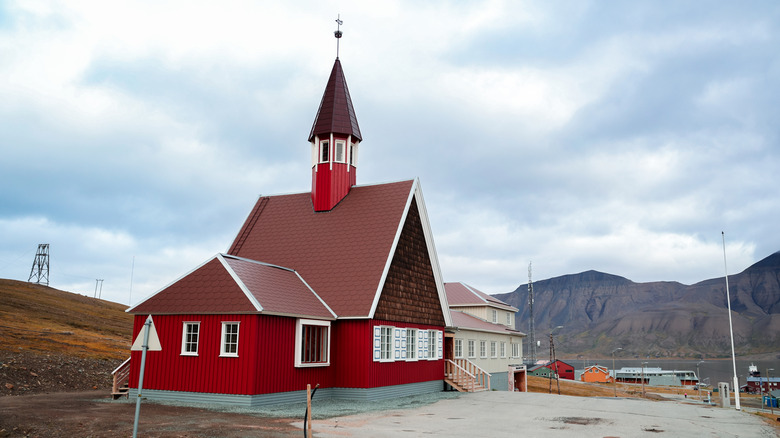
Spitsbergen is quite distant from the rest of Norway, sitting about halfway between the uppermost end of Norway's mainland and the North Pole. Luckily, though, Norway is known to be "well coordinated," as Rick Steves' protégé put it. You can find flights directly to Longyearbyen year-round from Oslo or Tromsø. Longyearbyen is small and walkable, though there are also taxis, buses, and bicycles available at the Tourist Information Center. From the airport, it's about a five-minute drive into town, and there's an airport shuttle that goes to all the hotels and guesthouses.
As for where to stay in Longyearbyen, the Visit Svalbard site lists many hotels and accommodations. Most of the hotels fall within the $300 to $400 nightly rate range during the warmer season, but there are also guesthouses that are less costly just outside of the town. Serious adventurers can even stay at the northernmost campsite in the world along the coast to sleep under the stars.
For most travelers, Longyearbyen's appeal lies in its Arctic adventures. Ross Wollen, Rick Steves' travel companion in Norway, writes on Steves' website, "Snowshoeing, dogsledding, snowmobiling, and Nordic skiing make up the bulk of the winter activities ... Summer activities include hiking, glacier walks, rafting, and kayaking." For sightseeing, the Magdalenefjorden is one of the island's most grand fjords, with blue-white glaciers rising up against the sea and seabird colonies wheeling overhead. Note that Svalbard has many protected zones where access is restricted, and you need to report any excursions you plan to make into the wilderness beforehand.