
What To Look For (And Avoid) To Have An Ethical Wildlife Tourism Experience
There aren few things that excite some people more than the chance to come face-to-face with wildlife. Whether at a local zoo or on safari, people have shown time and time again that they're more than willing to make a trip just to encounter their favorite animals — to the tune of a projected wildlife tourism market value of $286.86 billion by 2030. That's nothing to sneeze at, and in regions where wildlife is abundant, those who wish to bring in tourist traffic and revenue are well aware of its value. Countless travel experiences focus on wildlife, creating an industry so in-demand that wildlife-based tourism is frequently touted as a viable economic alternative to illegal hunting and trading of wildlife. This is fantastic, right? If tourists' desire to view wildlife is protecting species and creating economic opportunity, it must be a great idea.
It certainly can be. But if you're one of the many travelers excited to view the local wildlife at your destination, your visit comes with a responsibility. Wildlife tourism can be a vital source of income and a great way for travelers to engage with the natural world, but it can also create situations where animals are harmed or exploited. That's where it falls to you, the traveler, to know your stuff.
"Responsible travel," as the International Fund for Animal Welfare terms it, means being ready to dig deep before you book an experience and ask, "how is this operation affecting the animals I'm traveling to see?" But that's not always an easy task, nor is it obvious where to start. So when you're starting to look for ways to encounter your favorite animals, these are 10 things to look for to be sure your experience benefits wildlife, habitats, and locals as well as curious travelers.
Be skeptical: Read the reviews

It can be easy to take a good-faith approach to travel. Zoos take care of their animals, don't they? How could a cat café be anything but harmless? And when you go out into the vastness of the wilderness to watch wildlife, how could your presence possibly bother the creatures you want to see, let alone cause them harm? We all want to believe that wildlife tourism rests on a foundation of care for our fellow-creatures — but responsible travel means questioning that concept every time.
The fact is that many animal experiences bring animals into contact with humans in ways that are stressful, unpleasant, and often unhealthy. And animals can't exactly say "no." So, the first step if you want to enjoy ethical wildlife tourism is to be skeptical. Read every review you can find from third-party sites where travelers can post honest reviews of tours and attractions. Then look for any hint of ethical issues: Are past visitors or tour-takers noting that animals seem stressed or upset? Do reviews mention cramped enclosures or erratic behavior? And if your first pass doesn't turn anything up, try searching for the organization plus words like "ethical," "criticism," or "welfare." A pattern of negative reviews mentioning animal welfare concerns is a likely indicator of something being off.
This method isn't foolproof, and you may not be able to catch an ethical issue just by reading reviews. But in many cases, it'll put you on the alert to potential problems. And if you take the tour, visit the zoo, or go to the sanctuary and find out there are animal welfare concerns that nobody online took note of, you can help future travelers avoid that organization by posting a review yourself.
Look for accreditation

This one applies more to zoos, aquariums, and other facilities that focus on captive wildlife encounters, but is a major indicator of ethical credibility if you can find it. In countries where these facilities are regulated by law, there's one very easy way to figure out if they meet basic ethical standards of animal care. Most of these countries have governing bodies that regulate and inspect captive-animal facilities to ensure legal compliance with certain best practices. In the United States, look for accreditation by the Association of Zoos and Aquariums: It's so rigorous that less than 10% of animal exhibitors attain it. and if traveling abroad, the World Association of Zoos and Aquariums (WAZA) is an equivalent watchdog organization whose stamp of approval usually marks a facility as meeting ethical animal care standards. Similarly, the European Association of Zoos and Aquariums (EAZA) is a good resource if you're traveling to Europe.
While it's harder to find these kinds of hints at best practices for tour operators and other organizations that do not offer a facility-based animal experience, there are nevertheless third-party endorsements to look out for. For ocean-related experiences, Blue Flag certification denotes organizations that have passed a rigorous ethical and environmental examination. And if a tour operator or experience is backed by reputable wildlife conservation organizations like the World Wildlife Fund or Wildlife Conservation Society, you can bet that it's probably a great choice for ethical and conservation-oriented wildlife encounters.
Keep the five domains in mind
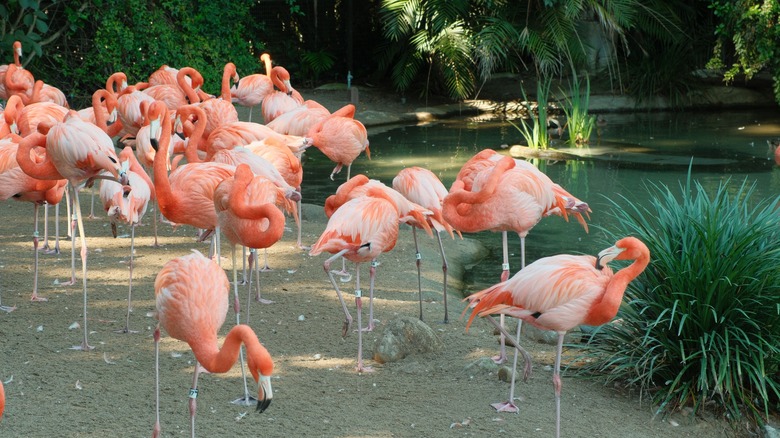
There are a lot of technicalities to account for when evaluating wildlife tourism experiences, so it helps to have a simpler set of principles to keep in mind. That's here the Five Domains of Animal Welfare model comes in. This commonly-used framework covers the major needs that must be met when caring for or interacting with animals in order to provide them with appropriate quality of life, and is extremely useful when you're trying to make a call on the ethical standing of a facility, company, or experience.
Luckily, there's nothing technical about them. They're simple needs that any pet owner will be familiar with: proper nutrition, a safe and appropriate living environment, proper medical care and attention to health, appropriate and positive social interactions, and the reduction of stress for a healthy mental state. They're the difference between a zoo that provides naturalistic exhibits mimicking the wild habitats of its animals with plenty of opportunities for stimulation and solitude when needed, and one where animals are kept in bare enclosures with no escape from the public eye. And even out in the wild, they're the reason responsible tour operators keep a respectful distance from wildlife.
Though these principles are all more nuanced and multifaceted than that brief description makes them sound, they're the bedrock principles of ethical wildlife tourism. And if you see any of those conditions not being met when you read reviews, look at photos, or watch videos pertaining to an experience you're considering, that's likely a sign that it's one to avoid. As you read through the rest of these tips, remember that they're not arbitrary: These five basic needs are at the heart of them all.
Seek out no-touch encounters

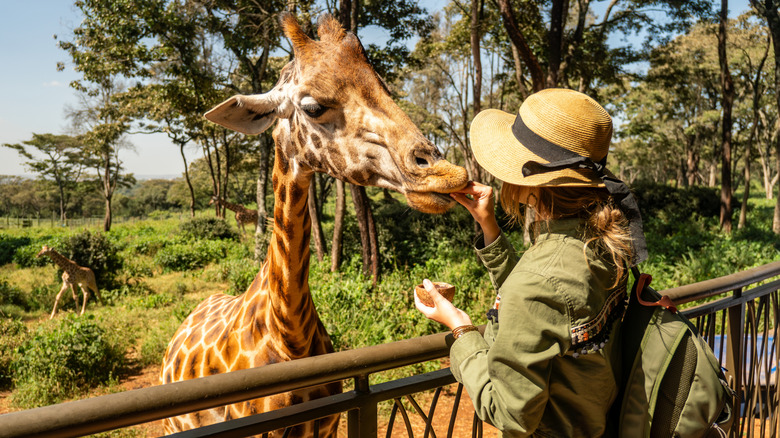
Generally speaking, good ethical practices when bringing humans closer to the natural world dictate that any physical contact between humans and wild animals should be avoided because of its potential to cause stress and inhibit natural behaviors. This includes everything from Thailand's controversial elephant rides to the globally-common tourist draw of posing for a photo holding a baby animal. And if you see any indication in the advertising of a certain experience, company, or facility that guests will ride, pet, hold, or feed non-domesticated animals, that's a major sign of a less-than-ethical operation. As a rule of thumb, if there's a compelling reason not to keep an animal as a pet at home, you probably shouldn't be touching that animal in any other context.
While you may love the idea of petting, feeding, or cuddling with an exotic animal, the risk of running into ethical issues in such contexts is unfortunately high. Instead, prioritize experiences that let animals remain wild, even if they're in captivity. Think about it this way: How stressful would it be to have no choice but to be petted and prodded by a string of guests, with no way of leaving if you were feeling overwhelmed? When you put it like that, no touching is a no-brainer when evaluating wildlife experiences.
Keep your distance, even while observing
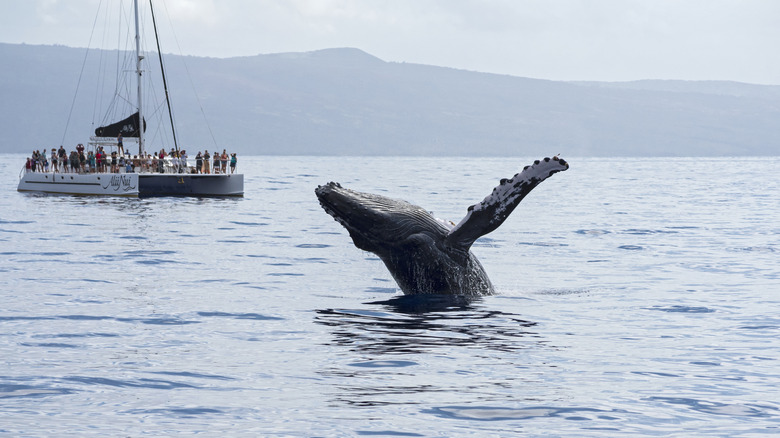
Here's one that applies mostly to in-the-wild encounters: If you're getting up close and personal with wildlife, you're probably not in the hands of an ethical tour operator. In fact, even if you've signed up for a "no-touch" encounter, you should also make sure you're not getting too close to the wildlife. Giving wild animals space is so vital to their well-being that some countries have even codified it into law. Whale watching boats operating in U.S. waters (and at many of these top whale watching spots) are not allowed to get within a certain distance of an animal, to give one example, and it's worth checking out these kinds of regulations in the country you're visiting if traveling internationally. But even in instances where approach distances aren't legally-binding, keeping a respectful distance is a surefire sign that a company is prioritizing animal welfare.
Naturally, there's an element of safety in this. Whether you're whale-watching or on safari, you're watching an animal that could do serious damage to a human or vehicle that got too close. But it's also vital for the animals. When humans get too close, animals' behavior will often change, and that's a surefire sign that your presence isn't conducive to that animal's well-being.
Crowding is disruptive and stressful, so when booking a wildlife tour, it's a good idea to ask specific questions about approach distances before booking to make sure your chosen tour provider is familiar with local laws and committed to letting animals carry on with their lives unimpeded. And, perhaps, choose underrated wildlife destinations like this top safari spot.
As a rule, avoid animal cafés

If you're traveling to East Asia, you may have seen videos on social media of tourists hanging out in cafés at your destination surrounded by animals ranging in rarity from cats to capybaras. There's an undeniable appeal: Who doesn't love playing with cute critters from time to time? And sometimes, when the animals are domesticated (like cats, the prototypical "café animal") and well cared-for, with plenty of places to get away from people if need be, the concept can be fun for both people and animals. But more often than not, that isn't the case.
Firstly, there's the matter of keeping exotic animals in cafés. Some animals simply cannot thrive in a café environment — nocturnal owls, for one, or semi-aquatic capybaras and otters for another — and this has gotten to be such an ethical issue with the proliferation of exotic animal cafés that some countries have outright banned the practice of exhibiting live wild animals in cafés. That should be a good signal that these are experiences to avoid.
But it's not just exotic animals that don't always thrive in these conditions. Even totally domesticated cats and dogs can easily become stressed and unhealthy when they're kept in an environment where they have no control over their interactions with human guests, making it hard to find animal cafés that don't raise ethical red flags. So while there are definite exceptions in the form of responsibly-managed dog and cat cafés (some of them dedicated to helping animals find forever homes), the industry as a whole is so rife with potential for ethical issues that it may be best to avoid them wholesale unless you find a café that is absolutely crystal-clear about its animal welfare practices.
Skip performance encounters
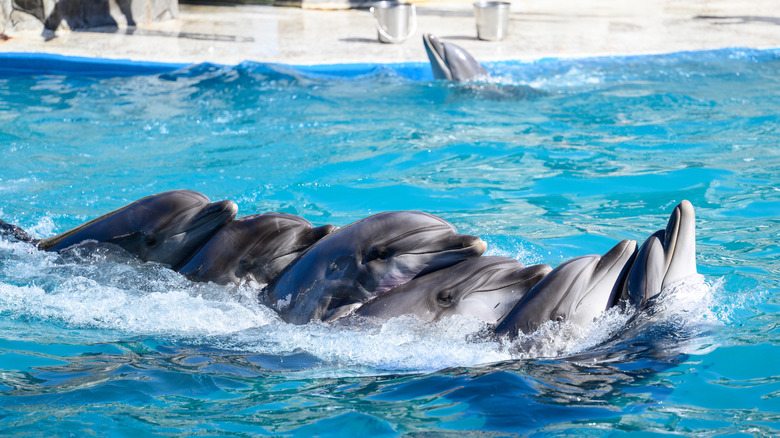
From circuses to aquarium dolphin shows, the history of animal performances of popular entertainment is long. But the tide is beginning to turn. Popular review site Tripadvisor no longer promotes attractions where wild animals perform unnatural behaviors for audiences, popular show-based animal attractions like SeaWorld have ceased shows after coming under fire for their animal welfare policies, and clearly, the public attitude towards the idea of wild animals as entertainers has changed. All of these are good indicators that animal performances might be experiences to avoid.
Though animal shows remain popular in many places, it's generally seen as a poor animal welfare practice to ask animals to perform behaviors that they wouldn't in the wild. So if you're researching a facility or an organization and see photos of performing animals or mentions of shows in reviews, you may want to a deeper dive. A demonstration of an animal's natural behaviors that benefits the animal by providing stimulation or exercise might not be ethically problematic, but if that doesn't seem to be what's going on, ask questions before you book.
Look for a conservation focus
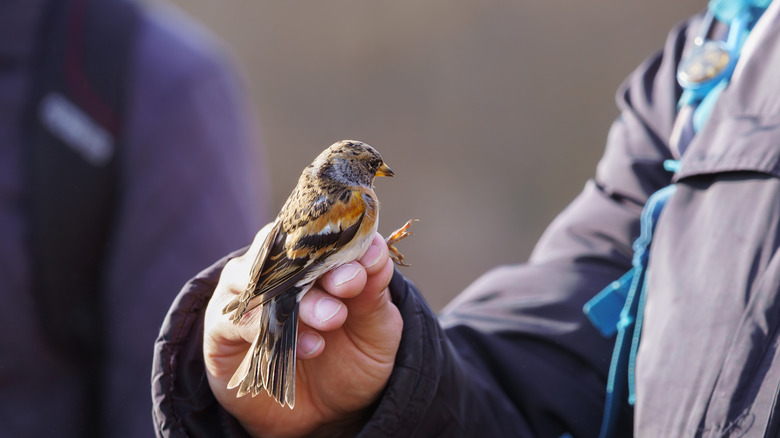
It's one thing to be sure that your wildlife travels aren't harmful to the animals or ecosystems you visit, but ecotourism can be much more than just damage control. The best wildlife tourism operators actually contribute to conservation efforts: giving communities economic incentive to safeguard their local ecosystems and wildlife, creating revenue that can be invested in conservation efforts, and contributing to research that helps scientists save species. The same is true of zoos, aquariums, and sanctuaries: The best choices are more concerned with conservation and research than they are with entertainment, and many are doing lifesaving work to pull species back from the brink of extinction.
Although the language of science and conservation has often been co-opted to legitimize organizations that don't really have animals' best interests at heart, any stated focus on conservation is a good first sign of an ethical wildlife experience. If that's backed up with third-party accreditations, endorsements from reputable nonprofits, or wildlife experts on staff (more on all of that below), you're very likely in good hands. For wildlife facilities you're considering visiting, look first for proven participation in research and conservation, and then for a focus on education in their programming. Of course, a good reputation for meeting the rest of the ethical principles laid out on this list.
Listen to the experts
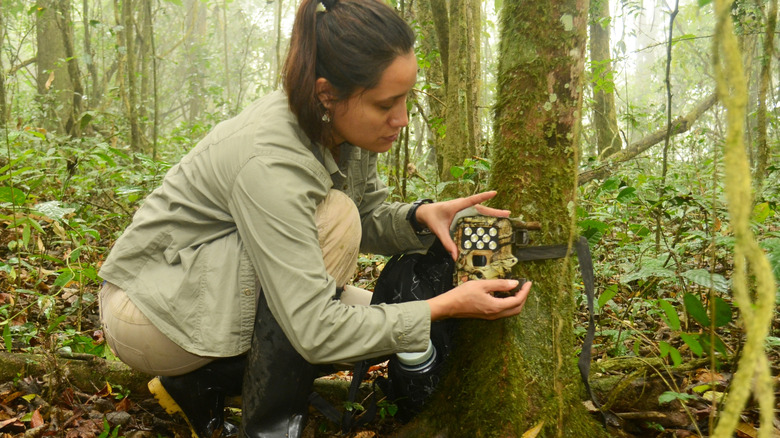
A genuine and verifiable background in animal care or conservation is a likely signal that somebody is committed to caring for animals and their habitats, so when you find a wildlife tourism opportunity led by an expert in the field, you've likely found an ethically sound way to appreciate the local wildlife. Many of the most reputable wildlife tourism companies and organizations employ scientists who are or have been involved in fieldwork and research, and that kind of credibility is usually a good sign of best practices. What's more, that information is typically easy to find on a company's website: What company wouldn't want to advertise the superior experience you'll have with a guide who truly knows what you're looking at?
But this isn't only an ethical green flag. Whether you're taking a tour or staying at one of these top educational ecotourism resorts, it's also a great way to enhance your own experience. You'll learn much more and come away with a much greater appreciation of the places you've been and the wildlife you've seen if your guide is able to provide firsthand knowledge. And expert-led wildlife tourism tends to be local, much more deeply rooted in the communities that will ultimately be responsible for stewarding that wildlife when the tourists go back home. So if you find a wildlife tourism experience led by experts in small groups for a more in-depth experience, such as these eight islands with top community engagement in conservation, you've struck gold on all fronts.
Be careful of misleading terminology
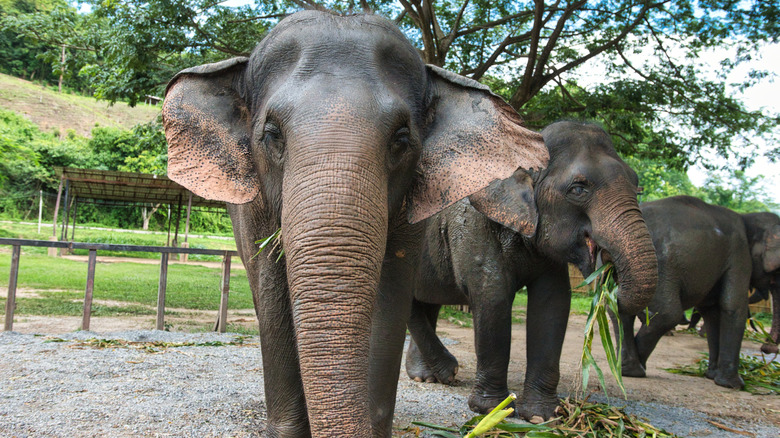
It's undeniably positive that animal welfare is gaining more traction as a tourism issue, but like any hot-button topic, it's kicked up a lot of confusing dust around the idea of sustainable or wildlife-friendly travel. As travelers become more savvy to the idea of vetting wildlife tourism for ethical issues, it's become extremely profitable to appear to be checking those ethical boxes even when that's not quite the case in reality. It's especially easy to see this playing out in the form of "greenwashing," a recent trend that co-opts the language of conservation and animal welfare to make facilities and experiences seem more positive for the animals involved than they are.
You'll often see this in organizations that call themselves "sanctuaries" or claim to be carrying out conservation activities that are dubiously verifiable at best. When you read language that sounds wholesome and eco-friendly, don't take it at face value: Apply the same rigor in your research as you would when evaluating any other organization. And if an organization or institution claims to be participating in conservation efforts, look twice. Are they providing regular updates on their activities? Are local communities involved in these efforts? Do their environmental practices back up their stated commitment to sustainability? These are good questions to ask of any type of wildlife tourism, but you should be especially vigilant in asking them when you encounter language that implies above-board ethical principles. You may not actually be getting what it says on the tin.